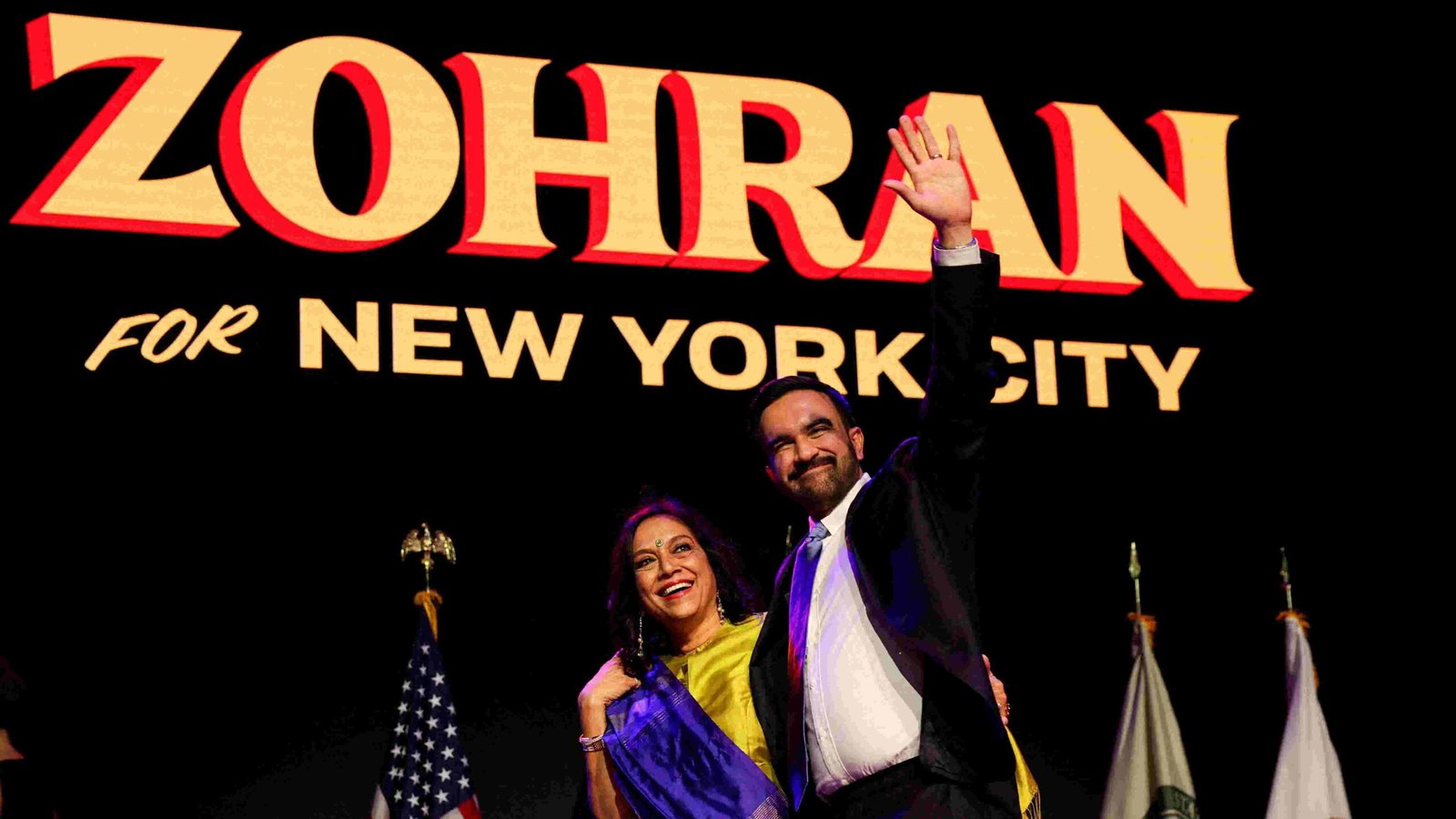
The air in Astoria was thick with the scent of diverse street food and the distant rumble of the N train, a typical Queens evening, yet something felt different, charged with an almost palpable energy. It was here, in the heart of a vibrant working-class district, that a young Democratic Socialist, Zohran Mamdani, defied expectations and carved out a significant niche for himself in New York’s political landscape. His victory wasn’t just a local triumph; it was a ripple effect, a potent signal sent across the nation that the progressive wing of the Democratic Party was not merely an anomaly but a growing force to be reckoned with. People gathered, discussing his impact, wondering aloud if this local success could translate into something much larger. (I remember standing on Steinway Street, hearing snippets of conversations, the excitement in people’s voices almost infectious.) The question now isn’t just about his local influence, but a far grander one: Could Zohran Mamdani reshape the DNC, the very heart of the Democratic Party’s national machinery? It’s a bold thought, perhaps even audacious, considering the entrenched interests and traditional power structures within the Democratic National Committee. Yet, the current political climate, fraught with economic anxiety and social unrest, seems ripe for such a transformation, pushing figures like Mamdani to the forefront and igniting debates about the future direction of national politics. The fight is real, and the stakes couldn’t be higher for the soul of American liberalism.
For decades, the Democratic National Committee has served as the central nervous system of the Democratic Party, a powerful entity responsible for fundraising, strategic messaging, and coordinating national campaigns. It’s often perceived as a somewhat monolithic, establishment-leaning institution, a gatekeeper of conventional wisdom and pragmatic politics. But voices from the party’s left flank, particularly those aligned with the democratic socialist movement, have increasingly challenged this narrative, arguing that the DNC is out of touch with the urgent needs of everyday Americans. This growing tension forms the backdrop against which we must consider Mamdani’s potential impact. He isn’t just another politician; he represents a new breed, one that prioritizes social justice, economic equality, and systemic change over corporate centrism, and it makes you wonder if the old guard is truly ready for what’s coming.
Zohran Mamdani, a first-term Assemblymember representing Astoria, Queens, is a prime example of this emerging progressive leadership. His journey into politics is fascinating, marked by a background in hip-hop (performing under the name Mr. Cardamom) and a deep commitment to community organizing. When he first ran, many dismissed him as a long shot, a passionate idealist challenging an established incumbent. Yet, he won, propelled by a platform that championed universal healthcare, affordable housing, climate justice, and a bold reinvestment in public services. This wasn’t just a campaign built on vague promises; it was a clear articulation of a democratic socialist vision, one that resonated deeply with a diverse, working-class electorate weary of incremental change. His win demonstrated that voters, even in historically moderate areas, are increasingly open to radical solutions to persistent problems.
The Progressive Wave: Mamdani’s Ascendance and Core Tenets
The rise of figures like Zohran Mamdani isn’t an isolated phenomenon; it’s part of a broader national trend reflecting a growing appetite for left-leaning policies within the Democratic Party. From Alexandria Ocasio-Cortez to Cori Bush, a new generation of progressives is making their mark, often by challenging centrist incumbents and championing policies once considered fringe. Mamdani’s success is rooted in his unwavering commitment to a clear policy agenda that directly addresses systemic inequalities. He’s not shy about his democratic socialist affiliations, openly advocating for policies like:
- Universal Healthcare: A single-payer system, believing healthcare is a human right, not a privilege.
- Affordable Housing: Rent control, tenant protections, and significant public investment in social housing.
- Climate Justice: A Green New Deal framework that prioritizes frontline communities and a rapid transition away from fossil fuels.
- Worker Protections: Strengthening unions, increasing minimum wages, and ensuring fair labor practices.
These aren’t just talking points for Mamdani; they are the bedrock of his political identity. “Zohran understands that our struggles are interconnected,” remarked Sarah Chen, a progressive organizer in Queens, during a recent rally. “He doesn’t just talk about issues; he talks about power, about who benefits and who gets left behind. That’s a fundamental difference from the old guard.” His ability to articulate these complex ideas in a relatable, passionate way is what truly sets him apart, drawing in supporters who feel genuinely represented for the first time.
Challenging the DNC Establishment: A Clash of Ideologies
The idea of someone like Zohran Mamdani attempting to reshape the DNC inherently implies a confrontation with the established order. The Democratic National Committee, while ostensibly serving the entire party, has long been criticized by its progressive wing for being too beholden to corporate donors, too cautious in its policy stances, and too focused on electability over ideology. This isn’t a new critique, of course. Bernie Sanders’ campaigns in 2016 and 2020 highlighted deep fissures within the party, revealing a significant disconnect between the grassroots progressive base and the party’s institutional leadership. Mamdani, though perhaps not as widely known as Sanders, represents the continuation and intensification of this internal struggle.
“The DNC, for all its good intentions, often seems stuck in a bygone era,” an anonymous DNC staffer confided, sipping coffee outside a Washington D.C. cafe. “They prioritize big donors and swing voters, sometimes at the expense of energizing the base with bold ideas. Someone like Zohran coming in would be a cultural earthquake, forcing them to re-evaluate everything.” The DNC’s operational framework, its committee appointments, its funding mechanisms, and even its platform drafting process are all areas where progressives believe systemic change is desperately needed. They argue that the DNC’s current structure inadvertently stifles the very energy and enthusiasm that movements like Mamdani’s generate. If the goal is to win elections, shouldn’t the party embrace the energy that truly mobilizes voters?
Pathways to Reshaping: Strategy and Influence
So, how exactly does a rising progressive like Mamdani go about reshaping the DNC? It’s not as simple as winning a single election. The DNC is a sprawling organization, governed by hundreds of members, committees, and rules. Direct leadership, like chairing the committee, is one path, but a challenging one for someone so new to national politics. More likely, his influence would come through a multi-pronged approach:
- Platform Influence: By advocating for specific policy planks within the party platform, Mamdani and his allies can push the DNC to adopt more progressive stances on issues like climate, healthcare, and economic justice.
- Delegate and Committee Representation: Supporting and electing more progressive delegates and committee members to DNC positions can gradually shift the organization’s internal balance of power.
- Grassroots Mobilization: Continuing to build and energize a powerful grassroots movement can exert external pressure on the DNC, demonstrating that progressive policies have widespread popular support.
- Candidate Endorsements and Support: Using his platform to endorse and campaign for other progressive candidates nationally can expand the progressive caucus, eventually leading to a stronger progressive voice within the party.
- Public Discourse: By consistently articulating a compelling progressive vision, Mamdani helps shape the national conversation, pushing mainstream Democrats to consider bolder solutions.
“Change within an institution as large as the DNC is rarely sudden,” observed Dr. Lena Sharma, a political science professor at CUNY. “It’s more like erosion, a constant pressure that slowly wears away old structures and forms new paths. Mamdani’s role is in contributing to that sustained pressure, bringing fresh energy and a clear moral vision.” His power lies not just in his legislative work but in his capacity as a mobilizer and an articulate advocate for a different kind of Democratic Party.
The challenge, of course, is that the DNC isn’t just a passive entity; it actively pushes back against what it perceives as radicalism, fearing it could alienate moderate voters and jeopardize electoral success. This fear of alienating the center is a constant refrain within the party establishment, often used to justify incrementalism. It’s a valid concern, given the delicate balance of electoral coalitions, but it also risks stifling innovation and enthusiasm. The struggle then becomes a strategic dance between pushing the envelope and maintaining party unity, a tightrope walk that requires both passion and political acumen.
Obstacles and Resistance to Progressive Transformation
Despite the growing momentum of the progressive movement, the path for Zohran Mamdani and his allies to significantly reshape the DNC is fraught with formidable obstacles. The first, and perhaps most significant, is the sheer inertia of an established political institution. The Democratic National Committee has deep roots, entrenched interests, and a long-standing way of operating that is resistant to rapid change. Funding, for instance, remains a major hurdle. Many DNC resources come from corporate donors and wealthy individuals who often prefer more moderate, business-friendly policies. Shifting this financial dependency would require a fundamental restructuring of the party’s fundraising apparatus, a monumental task.
Another major challenge is the argument of “electability.” Critics of the progressive agenda often argue that policies like universal healthcare or a Green New Deal are too radical for the American electorate, particularly in swing states. “Look, I admire Zohran’s passion, I really do,” a veteran Democratic strategist, who preferred to remain unnamed, told me during a recent campaign event. “But winning national elections requires broad appeal. You can’t just preach to the choir. We need to win over independents and moderate Republicans, and sometimes that means tempering our message.” This perspective, while understandable, often creates a self-fulfilling prophecy, where progressive ideas are never fully tested on a national scale because the party apparatus hesitates to fully embrace them. It creates a tension where boldness is often seen as a risk, rather than a potential pathway to new victories.
Furthermore, the DNC’s primary role is to win elections, and its strategies are often dictated by what it perceives as the most viable path to victory. This can mean prioritizing candidates who appeal to a wide range of voters, even if their policy positions are less aligned with the progressive wing. The structure of the DNC also includes a diverse array of members, from state party chairs to elected officials, many of whom have their own local and national priorities that may not always align with the progressive agenda. Overcoming this internal diversity of interests and building a cohesive movement capable of steering the entire committee in a new direction will require immense organizational skill and sustained effort. It’s not a sprint; it’s definitely a marathon.
The Long Game: What “Reshaping” Really Means for the DNC
Ultimately, the notion of Zohran Mamdani “reshaping” the DNC isn’t about a single person dictating the party’s future. It’s about the broader movement he represents and the lasting impact progressive voices will have on the Democratic National Committee over time. True reshaping isn’t a revolution that happens overnight; it’s an evolution, a continuous process of shifting priorities, incorporating new ideas, and empowering different voices. The presence of figures like Mamdani, even if they never hold the DNC chair, fundamentally alters the political discourse. They push the Overton window, making once-radical ideas seem more mainstream and forcing the party to respond.
A truly “reshaped” DNC would likely look less like a top-down corporate structure and more like a grassroots-driven movement. It would prioritize public financing over corporate donations, invest heavily in organizing and empowering local communities, and champion a bold, transformative policy agenda that directly addresses the economic and social crises facing the nation. It would be a party that isn’t afraid to challenge entrenched power and fight for a more equitable society. While the immediate future of the DNC may still be dominated by traditional figures, the long-term trajectory is undeniably influenced by the relentless advocacy of progressives. They are planting seeds that will eventually bear fruit, slowly but surely transforming the party from within and without. It’s a battle for the soul of American liberalism, and Zohran Mamdani is certainly a key player in that unfolding drama.
The journey for progressives like Mamdani is arduous, marked by both exhilarating victories and frustrating setbacks. Yet, their commitment to a more just and equitable society remains unwavering. As the political landscape continues to evolve, their influence will only grow, compelling the Democratic National Committee to confront the core questions of its identity and purpose. Whether it’s a gradual shift or a more dramatic reorientation, the pressure to adapt is mounting, and the future of the Democratic Party, and indeed, national politics, hangs in the balance. It’s a fascinating, sometimes frustrating, but always vital process to witness.
Frequently Asked Questions
| Could Zohran Mamdani significantly reshape the Democratic National Committee (DNC)? | While Zohran Mamdani himself may not directly lead the DNC in the near future, his significant influence stems from his role as a prominent voice within the progressive movement. He can reshape the DNC through advocating for policy shifts, supporting other progressive candidates, and mobilizing grassroots energy, pushing the party towards a more left-leaning agenda and challenging its traditional establishment. |
| What are the potential benefits of Mamdani’s progressive influence on the DNC? | His influence could bring several benefits, including a stronger focus on issues like universal healthcare, affordable housing, and climate justice. It could energize the party’s base, attract younger voters, diversify its leadership, and make the DNC more responsive to the needs of working-class communities, potentially leading to a more robust and ethically driven political platform. |
| How does the progressive movement typically implement changes within the DNC structure? | Progressives typically implement change through a multi-faceted approach: influencing the party platform, electing more progressive delegates and committee members, leveraging grassroots organizing for public pressure, endorsing and campaigning for aligned candidates, and consistently shaping public discourse to normalize more radical policy proposals within national politics. |
| What challenges would Zohran Mamdani and progressives face in reshaping the DNC? | Significant challenges include overcoming the DNC’s institutional inertia, challenging its deep financial ties to corporate donors, countering the “electability” argument often used against progressive policies, and navigating the diverse interests of the party’s various factions. The entrenched power of moderate and centrist wings also presents considerable resistance. |
| What does the future hold for the progressive wing’s impact on national politics through the DNC? | The future likely holds a continued, gradual evolution rather than a sudden revolution. The progressive wing, with figures like Mamdani, will continue to exert pressure, pushing the DNC to adopt bolder stances and strategies. Their long-term impact will be seen in shifting party priorities, empowering grassroots movements, and ultimately redefining what it means to be a Democrat in national politics. |
Important Notice
This FAQ section addresses the most common inquiries regarding the topic.