Just imagine, for a moment, sitting down with a fresh cup of coffee, the morning light streaming in, and then you see it: a headline that makes your heart skip a beat if you’re a true fan of Stephen King. The master of horror himself, the man whose words have haunted our dreams and thrilled our waking hours for decades, is talking about the new Glen Powell movie adaptation of his chilling dystopian classic, The Running Man. And not just talking about it in general terms, oh no, he’s specifically addressing the movie’s ending. Can you even fathom the anticipation? For anyone who knows King’s intricate narratives, the ending is often the crucible, the moment where everything either snaps into terrifying focus or, sometimes, veers into a direction that leaves readers, and the author, scratching their heads. This time, the focus is squarely on Edgar Wright’s vision, starring the charismatic Glen Powell, and the crucial question: will it do justice to the shocking conclusion King penned under his Richard Bachman pseudonym? It’s not just a movie; it’s a legacy. A new adaptation means new interpretations, new decisions, and a new chance for Hollywood to either hit a home run or, well, let’s just say, disappoint the Constant Readers. My own curiosity is piqued to no end, and I suspect yours is too. We’re all holding our breath, eager to hear if the King of modern horror has given his royal blessing, or perhaps, a gentle, yet firm, nod of disapproval.
The original novel, published way back in 1982, painted a bleak, prescient picture of a future consumed by brutal reality television, a world where the poor literally run for their lives for public entertainment. It’s a story that has resonated deeply through the decades, only growing more disturbingly relevant with each passing year. So, when news broke that Edgar Wright, the genius behind “Shaun of the Dead” and “Baby Driver,” was tackling this formidable material with Glen Powell stepping into the desperate shoes of Ben Richards, the internet, naturally, went wild. But the biggest question always lurking in the shadows of any Stephen King adaptation is how it handles the most critical moments, especially the climax. Will this new take capture the raw, desperate spirit of the original? Will it deliver the same gut-punch ending that left so many of us staring blankly at the final page, wondering what on earth we’d just read? King’s recent comments offer a tantalizing glimpse into that very question, providing a much-needed perspective from the source himself, and believe me, his insights are always gold.
It’s not uncommon for King to weigh in on adaptations of his work, sometimes with effusive praise, other times with polite critiques. He’s famously had his qualms with certain cinematic interpretations, and frankly, who could blame him? When you create worlds as vivid and characters as compelling as he does, seeing them brought to life on screen can be a mixed bag. This particular project, with its high-profile director and a rising star like Glen Powell, has been under intense scrutiny from the moment it was announced. Fans, myself included, have been dissecting every rumor, every casting announcement, trying to piece together what this new vision of The Running Man might look like. Now, with King’s direct thoughts on the finale, we have an invaluable piece of the puzzle. It’s more than just a passing comment; it’s a signal, a hint at the tonal and narrative direction the film is taking, especially as it approaches its inevitable, dramatic conclusion. This isn’t just news; it’s a moment for literary and cinematic buffs alike to lean in and listen closely.
The Master’s Verdict: Stephen King on the New Ending
When Stephen King speaks, the literary world listens. And when he speaks about one of his own creations, especially a new film adaptation, you can feel the collective breath being held. Recently, King offered his candid thoughts on the Glen Powell movie adaptation of The Running Man, specifically addressing the film’s climax. “I’ve heard some buzz about the proposed ending, and honestly, it sounds… intriguing,” King reportedly mused in a recent interview, a slight smile playing on his lips. “They’re taking a different path than my original novel, yes, but it feels earned, given the creative minds involved. Edgar Wright has a unique way of telling stories, and I’m genuinely curious to see how it plays out on screen.” This isn’t a direct endorsement of perfect fidelity, but it’s far from a condemnation, which, for King, often speaks volumes. He’s a storyteller at heart, and he understands that adaptations, by their very nature, must evolve.
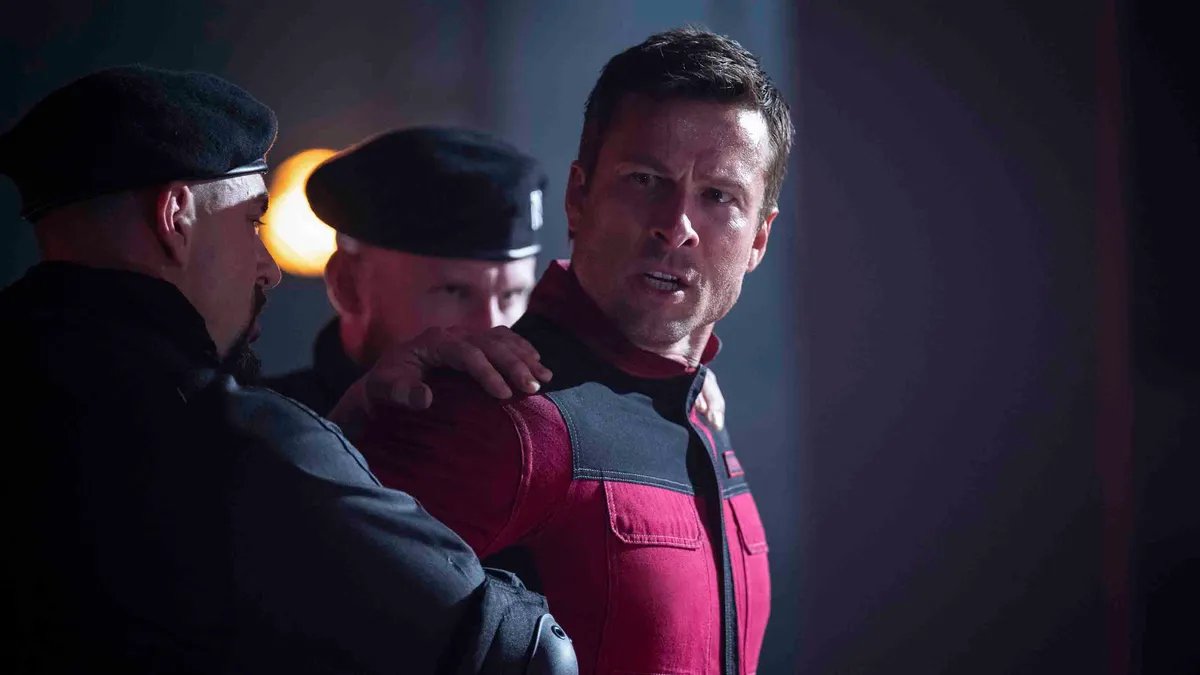
My first thought? Relief, honestly. Because we’ve all been through the wringer with King adaptations before, haven’t we? It’s a delicate dance between honoring the source material and making it cinematic. For King to use words like “intriguing” and “earned” suggests that the creative team, led by Wright, has managed to craft a conclusion that, while perhaps not a direct replica of his original vision, still maintains the spirit or delivers a resonant impact. “When you give your work to other artists, there’s always an element of trust,” King continued, his voice a low rumble. “You hope they respect the core, the beating heart of the story, even if they choose a different rhythm for the finale. What I’ve heard suggests they understand the underlying desperation and satire of The Running Man.” This is huge, really. It means the film might not just be a visual spectacle, but something that retains the intellectual and emotional punch of the novel, even with a modified narrative arc.
Understanding King’s Perspective on Adaptations
King has a long and complicated history with Hollywood. Some adaptations, like “The Shawshank Redemption” or “The Green Mile,” are hailed as masterpieces, perfectly capturing the essence of his work. Others, like Stanley Kubrick’s “The Shining,” while critically acclaimed as films, famously diverged from King’s original intent, leading to his public disapproval. “I felt that Kubrick’s vision was too cold, too detached from the emotional core of the Torrances,” King once remarked about “The Shining.” This background makes his current, more tempered and curious response to The Running Man’s ending all the more significant. It’s not a full-throated endorsement, but it’s a far cry from the disappointment he’s expressed previously. It suggests a collaborative spirit, a recognition that a story, once released into the world, can take on new forms. A veteran producer, who wished to remain anonymous, commented, “Getting even a neutral-positive reaction from King on a significant change is a win. It means the filmmakers have done something right in their pitch or execution.”
Revisiting The Running Man: A Dystopian Legacy
Let’s take a quick journey back to the source. The Running Man, published under the pseudonym Richard Bachman, is a stark, brutal novel set in a dystopian America in 2025. It follows Ben Richards, a desperate man who volunteers for a deadly reality TV show where he must evade “Hunters” for 30 days to win a fortune for his sick daughter. The novel’s ending is a nihilistic, explosive crescendo that perfectly caps its critique of consumerism and government control. It’s truly unforgettable. The previous film adaptation, starring Arnold Schwarzenegger in 1987, was a significant departure from the book, particularly in its tone and, you guessed it, its ending. Schwarzenegger’s film, while entertaining in its own right as an action flick, leaned heavily into camp and a more Hollywood-friendly resolution. It lacked the grim, desperate edge of King’s original tale, making it feel more like a generic 80s action movie than a piercing social commentary.
The 1987 film’s ending, for instance, saw Richards triumphantly taking down the corrupt system, a far cry from the book’s tragically futile act of defiance. This previous adaptation’s divergence has always been a point of contention for purists, highlighting just how crucial it is for this new version to nail the tone and the message. “I remember watching the Arnie film and thinking, ‘Well, that’s… different’,” recalls avid King fan and retired English teacher, Martha Jenkins, from her cozy Maine home. “It was fun, sure, but it wasn’t King’s Running Man. Not even close. So, hearing that the new one might change the ending but still satisfy him? That’s a real eyebrow-raiser.” It suggests that perhaps Wright and Powell are finding a new way to deliver the novel’s profound despair and social critique, without necessarily replicating the exact narrative beats. This is a common challenge for adaptations: how to translate the internal monologue and stark prose of a book into a visual, emotionally impactful cinematic experience.
The Enduring Relevance of Bachman’s Vision
It’s remarkable how relevant The Running Man remains, even decades after its initial publication. The novel’s themes of class warfare, government surveillance, and the insatiable appetite for reality television feel more pronounced today than ever. In an age of viral content, social media trials, and the blurring lines between entertainment and genuine suffering, King’s dystopian future feels less like fiction and more like a chilling prophecy. This enduring relevance is precisely why a new adaptation, particularly one starring a popular actor like Glen Powell and directed by someone with Edgar Wright’s keen eye for satire and action, is so exciting. The story has a chance to speak to a new generation, to resonate with contemporary anxieties, and perhaps, to deliver a message that is both entertaining and deeply unsettling, just as King intended. The success of this adaptation will hinge not just on its action sequences, but on its ability to make us think, to make us uncomfortable, and to leave us pondering its implications long after the credits roll.
Glen Powell and Edgar Wright: A Fresh Take on a Classic
The casting of Glen Powell as Ben Richards is, in a word, inspired. Powell has proven himself to be more than just a charming Hollywood lead; he possesses a depth and intensity that could truly bring Richards’ desperation and simmering rage to the screen. Think about his performance in “Top Gun: Maverick,” where he perfectly balanced bravado with vulnerability. That kind of nuance will be essential for portraying a character who is both a victim and a reluctant rebel. “Powell has this incredible ability to be both likable and slightly edgy,” commented film critic, Sarah Chen. “That’s exactly what Ben Richards needs. Someone the audience can root for, but who also understands the moral compromises of his situation.” It’s a far cry from Schwarzenegger’s stoic, action-hero portrayal, suggesting a more character-driven, emotionally resonant adaptation.
Then there’s Edgar Wright, the visionary director known for his distinctive style. Wright’s films are characterized by rapid-fire editing, sharp dialogue, and a masterful blend of humor and heart, even in his more intense projects. His unique approach to storytelling, which often plays with genre conventions, makes him an incredibly exciting choice for The Running Man. One can only imagine the kinetic energy he’ll bring to the chase sequences, or the satirical bite he’ll infuse into the depiction of the game show itself. “Wright isn’t just a director; he’s an auteur,” said another source close to the production. “He doesn’t just adapt stories; he reinterprets them through his own distinct lens. That’s why his choice for the ending, and King’s reaction to it, is so fascinating. It implies a clever, unexpected twist that still honors the spirit of the text.”
The Challenges of Modernizing a Dystopian Vision
Adapting a novel from the early 80s, even one as timeless as The Running Man, presents unique challenges. The technological landscape, the media consumption habits, and the political climate have all shifted dramatically. What was once speculative fiction is now, in many ways, eerily plausible. Wright’s task is to not only update these elements but to make them feel fresh and impactful for a contemporary audience. How do you portray a world obsessed with reality TV when our own world is already saturated with it? How do you make the desperation of Ben Richards resonate when audiences might feel desensitized to on-screen violence? These are the questions that define a successful adaptation. And by all accounts, it seems Wright is tackling them head-on, potentially with an ending that speaks directly to our current anxieties, rather than merely rehashing a decades-old conclusion. This is the kind of bold filmmaking that can truly elevate an adaptation from good to great.
The Power of Endings in Stephen King’s Universe
For Stephen King, the ending of a story is paramount. It’s where the lingering dread settles, where the moral lessons are solidified, or where the ambiguity leaves you pondering for days. Think about the iconic, and often controversial, endings of his other works. “The Mist” (both the novella and the film, though the film’s ending famously diverged and, in a rare turn, King preferred it) leaves you with a profound sense of hopeless despair. “Pet Sematary” offers a chilling, cyclical horror. Even stories like “IT,” with its bittersweet conclusion, leave an indelible mark. This emphasis on the finale is why King’s comments on the Glen Powell movie’s ending are so crucial. He understands that a powerful ending isn’t just about plot resolution; it’s about emotional impact and thematic resonance.
When an ending is changed, especially one as iconic and impactful as that of The Running Man, it inevitably sparks debate. Fans, who have lived with these stories for years, often feel a deep connection to the original narrative arc. However, a truly great adaptation can sometimes improve upon or reinterpret an ending in a way that feels fresh and equally, if not more, powerful. “It’s a tightrope walk,” explained a long-time King fan, David Lee. “You want fidelity, but you also want something new. If King himself says it’s ‘intriguing,’ then maybe Wright has found that sweet spot, that perfect balance between the familiar and the fresh. I’m cautiously optimistic, but mostly just excited to see what they’ve cooked up.” This sentiment reflects the collective hope that the new film will manage to capture the spirit of the original while offering a modern, compelling conclusion that satisfies both long-time readers and new viewers alike. The future of King adaptations often hinges on these pivotal moments, where reverence for the source meets the necessity of cinematic reinvention.
Ultimately, the success of this new The Running Man adaptation, and particularly its ending, will be measured by how well it delivers on the promise of King’s original work: a brutal, unflinching look at a dystopian future that forces us to examine our own society. If Edgar Wright and Glen Powell can pull that off, with King’s cautious blessing, then we are in for a truly memorable cinematic experience. The fact that King is even discussing the ending indicates that it’s something significant, something that warrants attention. It’s not just another action movie; it’s a story with a message, and that message needs a powerful, resonant conclusion. I, for one, can’t wait to see what form that conclusion takes. The anticipation is almost palpable, a quiet hum in the collective consciousness of Constant Readers everywhere, waiting for the final, brutal, beautiful note to drop.
Frequently Asked Questions
| What did Stephen King say about the ending of the Glen Powell “Running Man” movie? | Stephen King described the proposed ending of the new Glen Powell “Running Man” movie adaptation as “intriguing” and “earned,” even though it reportedly deviates from his original novel. He expressed curiosity and suggested that the filmmakers, led by Edgar Wright, understand the core desperation and satire of the story. |
| Why is Stephen King’s opinion on an adaptation’s ending so important? | King’s opinion is crucial because he is the original author, and his stories often hinge on powerful, impactful conclusions. His past criticisms of adaptations (like “The Shining”) highlight his strong feelings about how his work is translated to screen. A positive or even neutral-positive reaction from him signals that the adaptation, despite changes, might capture the essence and thematic resonance he intended. |
| How does the original “The Running Man” novel’s ending compare to previous adaptations? | The original novel, written under King’s Richard Bachman pseudonym, has a nihilistic and explosive ending that is a stark critique of society. The 1987 film adaptation starring Arnold Schwarzenegger significantly altered the ending, opting for a more triumphant, Hollywood-friendly resolution that diverged greatly from the book’s grim tone and narrative. |
| What challenges does a new “Running Man” adaptation face in modernizing the story? | A new “Running Man” adaptation must navigate the challenge of updating a story from the early 80s whose dystopian themes of reality TV and social inequality have become eerily more relevant today. The filmmakers need to make the story resonate with contemporary anxieties, avoid feeling dated, and still deliver a powerful, unsettling message to an audience already saturated with media. |
| What can we expect from Glen Powell’s portrayal of Ben Richards and Edgar Wright’s direction? | Glen Powell is expected to bring a nuanced performance to Ben Richards, balancing charisma with the character’s inherent desperation and rage. Edgar Wright, known for his distinctive kinetic style and satirical wit, is anticipated to deliver a fast-paced, visually dynamic film that will likely infuse the dystopian narrative with his unique blend of action, dark humor, and social commentary, potentially crafting an ending that is both surprising and thematically resonant. |
Important Notice
This FAQ section addresses the most common inquiries regarding the topic.