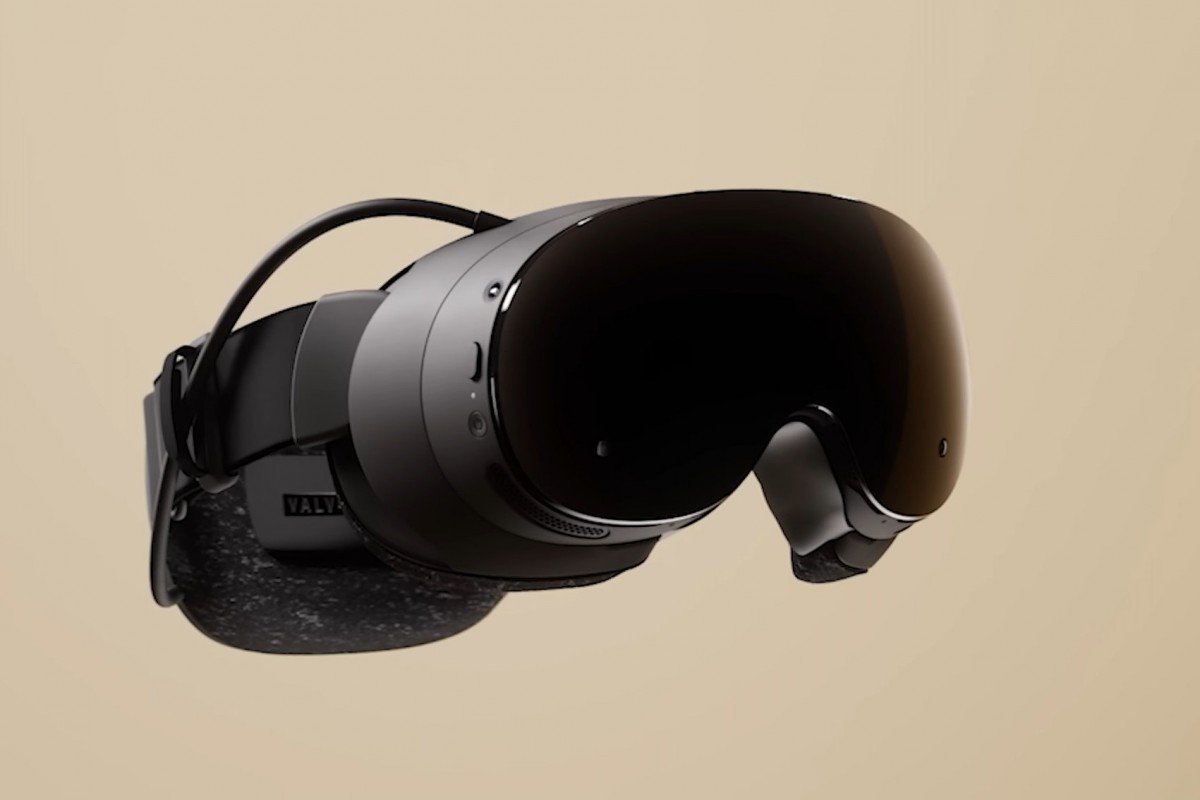
Valve just dropped a bombshell on the virtual reality landscape. Imagine this: You’re at a gaming convention, the air thick with anticipation. The lights dim, a hush falls over the crowd, and then…BOOM! Valve unveils the Steam Frame VR Headset. Not just another VR headset, mind you, but a fully integrated, standalone system powered by a Snapdragon Chipset, running on SteamOS, and boasting incredibly smooth 144Hz displays. My jaw actually dropped when I saw the specs. (And I wasn’t the only one! Someone near me yelled, “This is it! The future is here!”) It’s a game changer, folks, and it’s poised to redefine what we expect from VR gaming and immersive experiences. We’re talking about a level of performance and accessibility that could finally push VR into the mainstream.
This isn’t just a peripheral; it’s a complete VR ecosystem in a single device. Ditching the need for a high-end PC or external trackers, the Steam Frame VR Headset promises a seamless and intuitive user experience. The combination of the Snapdragon Chipset handling processing, SteamOS providing a familiar and robust software platform, and those buttery-smooth 144Hz displays delivering unparalleled visual fidelity? It’s a recipe for VR immersion like we’ve never seen before. And let’s be honest, the current VR market has been fragmented, with high barriers to entry for many gamers. This announcement feels like Valve is intentionally trying to break those walls down, to make VR accessible to everyone. The rumors have been circulating for months, whispers in the dark corners of Reddit and Discord. Now, they’re a reality.
The potential implications of this announcement are huge. Consider the developers. A standardized platform like SteamOS on a standalone headset could streamline development efforts and encourage the creation of more high-quality VR content. And for gamers? Imagine playing your favorite SteamVR titles without being tethered to a PC. Total freedom. No more tripping over cables or worrying about your graphics card meeting the minimum specs. Just pure, unadulterated VR gaming bliss. I overheard one developer saying, “This could finally be the thing that gets VR right. A self-contained unit with SteamOS? That’s brilliant!” The excitement is palpable, and for good reason. This isn’t just a new product; it’s a potential paradigm shift.

The Steam Frame: Hardware and Specifications
Let’s dive into the nitty-gritty details of the Steam Frame VR Headset. Valve isn’t holding back when it comes to packing cutting-edge technology into this device. At the heart of it all is, of course, the Snapdragon Chipset. While Valve hasn’t explicitly named the specific model, sources suggest it’s a custom-designed variant optimized for VR performance and power efficiency. This allows for standalone operation without sacrificing graphical fidelity or responsiveness. That’s crucial for a great VR experience, and it’s something many current headsets struggle with.
The 144Hz displays are another highlight. This high refresh rate translates to incredibly smooth and fluid visuals, reducing motion sickness and enhancing immersion. Think about it: less blur, sharper images, and a more comfortable overall experience. It’s a significant upgrade from the standard 90Hz or 120Hz found in many competing headsets. My first VR experience was plagued by motion sickness. This promises to be a different ballgame entirely.
Other confirmed specifications include:
* High-resolution per-eye displays (resolution details are still under wraps, but rumors point to a significant upgrade over the Valve Index).
* Integrated spatial audio for immersive soundscapes.
* Inside-out tracking, eliminating the need for external base stations.
* Ergonomic design for comfortable extended use.
SteamOS: A Familiar Foundation
One of the most exciting aspects of the Steam Frame VR Headset is its use of SteamOS. This Linux-based operating system is already well-known to PC gamers, providing a seamless transition to the VR world. SteamOS offers a familiar interface, access to the vast SteamVR library, and built-in support for various VR peripherals. But how will this differ from the SteamOS currently on the Steam Deck?
According to an anonymous source within Valve, the SteamOS version on the Steam Frame VR Headset is a “VR-optimized fork” of the Steam Deck’s operating system. This means it’s been specifically tailored for VR applications, with improvements to performance, latency, and power management. They also hinted at unique features and integrations designed to enhance the VR experience. “Think of it as SteamOS, but built from the ground up for VR,” the source said. “It’s going to be a game-changer.”
The integration of SteamOS also means that the Steam Frame VR Headset will likely support existing SteamVR features like:
* SteamVR Workshop: Allowing users to create and share custom VR content.
* SteamVR Input: Providing a standardized input system for different VR controllers.
* Steam Cloud: Enabling seamless synchronization of game saves and settings across devices.
Gaming and Beyond: The Potential Applications
While gaming is undoubtedly a primary focus, the Steam Frame VR Headset has the potential to revolutionize other industries as well. Imagine architects using it to design and visualize buildings in 3D, or doctors using it for surgical simulations. The possibilities are endless.
Here’s a breakdown of potential applications:
* Gaming: Immersive VR gaming experiences with high-fidelity graphics and smooth performance.
* Education: Interactive learning environments for students of all ages.
* Training: Realistic simulations for pilots, surgeons, and other professionals.
* Design: Collaborative design and prototyping in 3D.
* Entertainment: Virtual concerts, movies, and social experiences.
Price and Availability
Valve hasn’t officially announced the price or release date of the Steam Frame VR Headset yet. However, industry analysts predict a price point competitive with other high-end standalone VR headsets, likely in the $800-$1200 range. As for availability, rumors suggest a late 2025 release, possibly coinciding with the holiday season. One thing is for sure: If the Steam Deck is anything to go by, pre-orders will be a chaotic scramble. I’m already mentally preparing myself.
The Competition: How Does It Stack Up?
The VR market is becoming increasingly crowded, with established players like Meta, HTC, and Sony all vying for dominance. The Steam Frame VR Headset enters this arena with a unique combination of features that could give it a significant edge. The combination of the Snapdragon Chipset, SteamOS, and 144Hz displays, sets it apart from the competition.
Here’s a quick comparison:
| Feature | Steam Frame VR Headset | Meta Quest 3 | HTC Vive XR Elite |
|—————–|————————–|———————-|——————-|
| Chipset | Snapdragon (Custom) | Snapdragon XR2 Gen 2 | Snapdragon XR2 |
| Operating System| SteamOS | Android | Android |
| Refresh Rate | 144Hz | 120Hz | 90Hz |
| Tracking | Inside-out | Inside-out | Inside-out |
| Price (Est.) | $800-$1200 | $499 | $1099 |
While the Meta Quest 3 is more affordable, the Steam Frame VR Headset offers superior performance and a more open ecosystem thanks to SteamOS. The HTC Vive XR Elite is more expensive and doesn’t offer the same level of integration with the SteamVR platform.
Conclusion: A New Era for VR?
The announcement of the Steam Frame VR Headset has sent shockwaves through the virtual reality community. With its powerful Snapdragon Chipset, user-friendly SteamOS, and incredibly smooth 144Hz displays, this headset has the potential to be a true game-changer. Whether it will live up to the hype remains to be seen, but one thing is clear: Valve is serious about VR, and they’re not afraid to push the boundaries of what’s possible. The future of VR is looking brighter than ever, and I, for one, can’t wait to see what Valve has in store. I’m already clearing space in my gaming room, just in case. Are you?
Frequently Asked Questions
| What is the Steam Frame VR Headset? | The Steam Frame VR Headset is a standalone virtual reality headset developed by Valve. It features a Snapdragon chipset, runs on SteamOS, and boasts 144Hz displays for an immersive VR experience. |
| What are the benefits of the Steam Frame VR Headset? | The Steam Frame VR Headset offers several benefits, including standalone operation (no PC required), high-fidelity graphics, smooth performance thanks to the 144Hz displays, and seamless integration with the SteamVR ecosystem. |
| How will SteamOS be implemented on the Steam Frame? | SteamOS on the Steam Frame is expected to be a VR-optimized version of the Steam Deck’s operating system. It will provide a familiar interface, access to the SteamVR library, and VR-specific enhancements for performance and latency. |
| What are potential challenges for the Steam Frame VR Headset? | Potential challenges include competition from established VR headset manufacturers, ensuring optimal performance on the Snapdragon chipset, and addressing any potential motion sickness issues associated with VR. |
| What is the future outlook for the Steam Frame VR Headset? | The future looks promising for the Steam Frame VR Headset, with the potential to revolutionize VR gaming and other industries. Its combination of hardware and software could drive wider adoption of VR technology. |
Important Notice
This FAQ section addresses the most common inquiries regarding the topic.