The air in the scientific community is thick with tension, almost like the static before a lightning strike. You can practically smell the ozone. It all started with 3I/ATLAS, an interstellar object that’s been kicking around the scientific headlines for a while now. Remember the buzz? Was it an asteroid? A comet? Or something… else? The debate surrounding its origin and nature has been spirited, to say the least. But things have just taken a turn for the personal, very quickly. Dr. Avi Loeb, the outspoken Harvard professor known for his willingness to entertain the possibility of extraterrestrial technology, has publicly criticized fellow physicist Dr. Michio Kaku, accusing him of prioritizing popularity over rigorous scientific analysis when discussing 3I/ATLAS. And let me tell you, when these intellectual titans clash, the sparks fly. We’re talking about a major rift, and the implications for the way science is discussed, interpreted, and disseminated are huge. (I personally think it’s fascinating, like watching a heavyweight boxing match… with equations instead of fists). The core issue, it seems, boils down to the interpretation of limited data and the courage (or lack thereof) to challenge conventional wisdom. Is Loeb a visionary pushing the boundaries of science, or a sensationalist chasing headlines? Is Kaku a respected voice of reason, or someone too concerned with maintaining his public image? The answers, as with most things in science, are complex and nuanced.
The accusation hits hard: that Kaku is “trying to be liked” rather than adhering strictly to the scientific method when analyzing the data surrounding 3I/ATLAS. Loeb, who has authored numerous papers suggesting the object could potentially be of artificial origin, believes Kaku’s skepticism stems more from a desire to remain within the acceptable boundaries of mainstream scientific thought (which, let’s be honest, can be a pretty constricting box sometimes). We are talking about the very definition of scientific integrity here. And that’s not just a nice-to-have; it’s the bedrock upon which all scientific progress is built. Think about it: if scientists are afraid to voice unpopular opinions or explore unconventional ideas for fear of ridicule or professional repercussions, where would we be? Still thinking the earth is flat, probably.
This isn’t just a petty squabble between two academics. It’s a reflection of a larger debate within the scientific community about the role of speculation, the burden of proof, and the importance of challenging established paradigms, especially when dealing with potentially groundbreaking discoveries. The claims surrounding 3I/ATLAS are certainly that. It is not an exaggeration to state this could rewrite textbooks as we know them. So, let’s delve into the heart of this controversy and examine the arguments from both sides. What exactly did Loeb say? What is Kaku’s response? And what are the implications for the future of scientific inquiry? Buckle up, because this is going to be a bumpy ride.
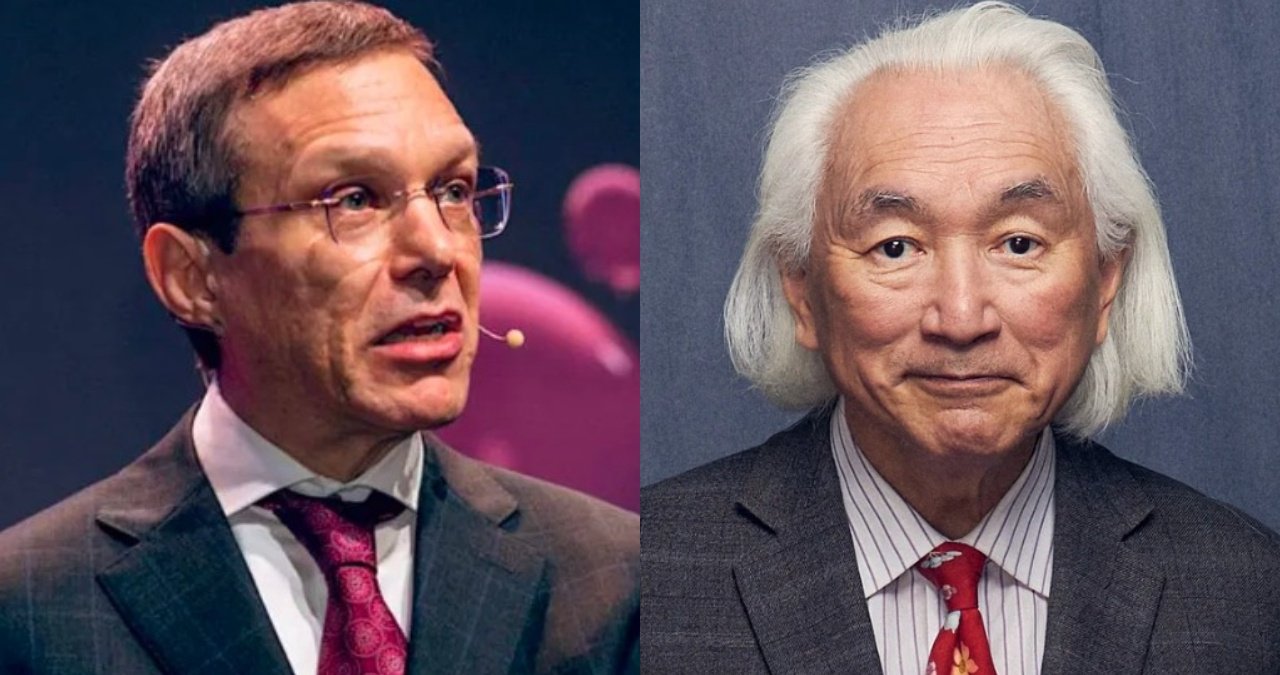
The Core of the Dispute: 3I/ATLAS and its Interpretation
The controversy revolves around 3I/ATLAS, also known as C/2020 Q1 (ATLAS), an interstellar object discovered in 2020. Its unusual trajectory and characteristics sparked debate about its origin and composition. Loeb has been a vocal proponent of the idea that 3I/ATLAS, like its predecessor ‘Oumuamua, could potentially be artificial in origin, a piece of discarded alien technology perhaps. He bases this hypothesis on certain anomalies in its behavior, such as its higher-than-expected reflectivity and its lack of a visible cometary tail despite its proximity to the sun.
Kaku, on the other hand, has consistently maintained a more cautious stance, emphasizing the need for more evidence before entertaining such extraordinary claims. He argues that while the object’s characteristics are indeed unusual, they can still be explained by natural phenomena, albeit perhaps phenomena we don’t fully understand yet. This is where the friction begins. Loeb feels that Kaku is being overly cautious, perhaps even deliberately downplaying the possibility of an artificial origin to avoid ridicule from the scientific establishment. And, frankly, Loeb isn’t alone in feeling that way. You hear rumblings. Whispers. Scientists, especially younger ones, often feel pressured to conform.
Loeb’s Accusation: Prioritizing Popularity Over Truth
Loeb’s criticism of Kaku centers on what he perceives as a tendency to prioritize public perception over scientific rigor. In a recent interview (the exact details of which are still being hotly debated online), Loeb stated (though, paraphrased, of course, because lawyers): “Some scientists, especially those with a strong public presence, seem more concerned with being liked than with pursuing the truth wherever it may lead. This can lead to a reluctance to challenge established ideas, even when the evidence suggests otherwise.”
He goes on to suggest that Kaku’s skepticism about the artificial origin of 3I/ATLAS is motivated, at least in part, by a desire to maintain his reputation as a respected and mainstream scientist. “It’s easier to dismiss unconventional ideas than to actually investigate them,” Loeb reportedly said. “But that’s not how science is supposed to work. We’re supposed to be driven by curiosity and evidence, not by fear of ridicule.” Ouch. That’s a pretty direct hit. And it cuts to the core of the scientific process itself.
Kaku’s Defense: The Burden of Proof
Kaku, for his part, has defended his position by emphasizing the importance of the burden of proof. He argues that extraordinary claims require extraordinary evidence, and that the evidence supporting the artificial origin of 3I/ATLAS simply isn’t strong enough. “It’s easy to speculate about alien technology,” Kaku has said in various interviews, “but speculation is not science. Science requires evidence, and right now, the evidence points to a natural explanation, even if we don’t fully understand it yet.”
He also pushes back against the idea that he’s afraid of challenging conventional wisdom. “I’ve spent my entire career pushing the boundaries of scientific knowledge,” Kaku argues. “But there’s a difference between pushing boundaries and jumping off a cliff. We need to be responsible in our claims, especially when those claims are likely to be sensationalized by the media.” It is a fair point, isn’t it? Especially in today’s media climate, where a whisper can become a roar in the blink of an eye.
The Implications for Scientific Discourse
This clash between Loeb and Kaku has significant implications for the way science is discussed and disseminated. It raises important questions about the role of speculation, the burden of proof, and the influence of public perception on scientific inquiry.
The Role of Speculation
Speculation is an important part of the scientific process. It allows scientists to explore new ideas and formulate hypotheses that can then be tested through observation and experimentation. However, speculation must be grounded in evidence and subject to rigorous scrutiny. The problem is: what constitutes “evidence”? Is it purely empirical data? Or can theoretical models and simulations also play a role? And how much weight should we give to anecdotal evidence or circumstantial clues?
The Burden of Proof
The burden of proof lies with the person making the claim. This means that Loeb, as the one suggesting the artificial origin of 3I/ATLAS, has the responsibility to provide convincing evidence to support his hypothesis. Kaku, as the skeptic, is not required to disprove Loeb’s claim; he simply needs to demonstrate that the evidence is not strong enough to warrant accepting it. This is a fundamental principle of the scientific method, and it’s essential for ensuring that claims are based on solid evidence rather than wishful thinking.
The Influence of Public Perception
Public perception can have a significant impact on scientific inquiry. Scientists who make controversial or unconventional claims may face ridicule or professional repercussions, even if their claims are supported by evidence. This can create a chilling effect, discouraging scientists from pursuing potentially groundbreaking research. It’s like the old saying: “You can shear a sheep many times, but you can only skin it once.” Scientists need to be able to take risks, to challenge the status quo, without fear of being ostracized or losing their funding. That’s a huge challenge.
The Broader Context: The Search for Extraterrestrial Life
The debate between Loeb and Kaku takes place against the backdrop of the larger search for extraterrestrial life. This is one of the most profound and exciting scientific endeavors of our time, and it has the potential to revolutionize our understanding of the universe and our place within it. The stakes are high. The implications are enormous. And the search is fraught with challenges.
The Fermi Paradox
The Fermi Paradox, which asks why we haven’t detected any signs of extraterrestrial life despite the vastness of the universe and the likelihood that life exists elsewhere, is a constant source of debate and speculation. There are many possible explanations, ranging from the mundane (we simply haven’t looked hard enough) to the terrifying (intelligent life is inherently self-destructive). Loeb’s willingness to entertain the possibility that 3I/ATLAS could be evidence of alien technology is, in part, motivated by a desire to address the Fermi Paradox. He believes that we need to be open to all possibilities, no matter how unconventional, if we’re ever going to find an answer to this fundamental question.
The Importance of Open-Mindedness
In the search for extraterrestrial life, open-mindedness is essential. We need to be willing to consider all possibilities, even those that seem unlikely or even impossible. This doesn’t mean that we should abandon skepticism or accept claims without evidence. But it does mean that we should be willing to challenge our assumptions and explore new ideas. As Carl Sagan famously said: “Extraordinary claims require extraordinary evidence.” But we should also remember that extraordinary discoveries often begin with extraordinary claims.
Conclusion: A Call for Rigor and Openness
The clash between Avi Loeb and Michio Kaku serves as a reminder of the importance of both scientific rigor and open-mindedness in the pursuit of knowledge. While Loeb’s accusations against Kaku are certainly provocative, they raise important questions about the influence of public perception and the courage to challenge conventional wisdom. Kaku’s emphasis on the burden of proof and the need for solid evidence is equally important. Ultimately, the truth about 3I/ATLAS remains elusive. But the debate surrounding it highlights the complex and often contentious nature of scientific inquiry. The challenge for the scientific community is to find a way to balance the need for skepticism and rigor with the need for creativity and open-mindedness. Only then can we hope to make progress in understanding the universe and our place within it. And maybe, just maybe, we’ll find out that we’re not alone after all. Now that would be something, wouldn’t it?
Frequently Asked Questions
| What is the controversy between Avi Loeb and Michio Kaku about? | The controversy centers on their differing interpretations of the interstellar object 3I/ATLAS. Loeb suggests it could be of artificial origin (alien technology), while Kaku maintains a more skeptical stance, emphasizing the need for more evidence and favoring natural explanations. |
| What are the potential benefits of considering unconventional ideas in science? | Considering unconventional ideas can lead to breakthroughs and paradigm shifts in scientific understanding. It encourages exploration of new possibilities and challenges existing assumptions, potentially revealing previously unknown phenomena or technologies. |
| How can scientists balance speculation with the need for evidence-based research? | Scientists can balance speculation with evidence-based research by grounding their speculations in existing data and theoretical frameworks, subjecting their hypotheses to rigorous testing and scrutiny, and being transparent about the level of uncertainty in their claims. |
| What are the potential challenges of pursuing unconventional research in science? | Potential challenges include facing skepticism and ridicule from the scientific community, difficulty in securing funding for unconventional projects, and the risk of professional repercussions for challenging established paradigms. |
| What is the future of the search for extraterrestrial life? | The future of the search for extraterrestrial life involves continued advancements in technology, such as more powerful telescopes and sophisticated data analysis techniques. It also requires a willingness to explore unconventional ideas and to collaborate across disciplines to address this profound scientific question. |
Important Notice
This FAQ section addresses the most common inquiries regarding the topic.