The air hung thick with anticipation, a palpable hum that vibrated through the very ground. You could almost hear the collective gasp of motorsport enthusiasts around the globe. Imagine the scene: a pristine white sheet draped over a shadowy form, lights strategically positioned, and the hushed whispers of engineers, strategists, and fans alike. This isn’t just another car reveal; this is the unveiling of a dream, a declaration of intent from one of the automotive world’s most revered brands. We’re talking, of course, about Audi’s first Formula 1 car, a machine poised to redefine the pinnacle of motorsport when it hits the grid in 2026. For years, the rumor mill churned, then the confirmation landed like a thunderclap – Audi, synonymous with endurance racing dominance and precision engineering, was coming to Formula 1. It felt almost surreal, didn’t it? Like watching a beloved classic get a thrilling new sequel. The question on everyone’s lips wasn’t just “if,” but “what will it look like?” What technological marvels will this German powerhouse bring to the table? The excitement is truly infectious, and I, for one, have been utterly captivated by every whisper and rendering, trying to piece together the puzzle of what this F1 challenger will embody. This isn’t merely about speed; it’s about prestige, innovation, and a bold new chapter for both Audi and the sport itself.
It’s a monumental undertaking, building a car from scratch to compete in the most technologically demanding series on the planet. Think about the legacy, the pressure, the sheer audacity of it all. This isn’t just another competitor; this is Audi, entering the fray with a reputation for meticulous engineering and a relentless pursuit of performance. The 2026 regulations represent a fresh slate, a perfect storm for a newcomer like Audi to stamp its authority. The shift towards greater electrical power and fully sustainable fuels isn’t just a regulatory tweak; it’s a philosophical pivot that aligns perfectly with Audi’s corporate direction, making their entry feel less like an opportunistic grab and more like an inevitable destiny. Every component, every curve, every digital line drawn in a CAD program is a statement, a testament to years of development and untold millions invested. It’s a car born not just of steel and carbon fiber, but of ambition and an unyielding desire to conquer.
The Genesis of a Giant: Audi’s F1 Ambition
Audi’s journey into Formula 1 has been a captivating saga, one that officially began with their announcement in August 2022. For years, the paddock buzzed with speculation. Would it be Porsche? Would it be Audi? The automotive giant Volkswagen Group had long flirted with F1, and finally, the stars aligned for Audi. Their decision to enter F1 for the 2026 season wasn’t made lightly; it was a strategic move, deeply rooted in the sport’s impending regulatory overhaul. “Formula 1 is a global stage, and the new regulations, especially around the power unit, presented an irresistible challenge that perfectly matches Audi’s future roadmap,” explained Markus Duesmann, then Chairman of the Board of Management of Audi AG, during the initial announcement. He stressed the importance of the shift towards electrification and sustainable fuels, which resonated deeply with Audi’s own corporate sustainability goals and technological advancements.
The partnership with the Swiss team Sauber Motorsport was a crucial piece of the puzzle. Sauber, a long-standing independent team with a rich history in F1 (remember their BMW Sauber days?), provides the ideal chassis expertise and operational infrastructure. Audi will acquire a minority stake in the Sauber Group, with a planned increase over time, ultimately creating the Audi F1 factory team. This collaboration means Audi will be developing its own power unit in Neuburg an der Donau, Germany, a massive undertaking, while Sauber will continue to develop and manufacture the chassis at its headquarters in Hinwil, Switzerland. It’s a formidable combination: German engineering prowess for the engine and Swiss precision for the aero and chassis. You can almost feel the synergy, the shared determination to forge a winning machine from two distinct, yet complementary, traditions.
Decoding the Beast: What the Regulations Dictate
Understanding what Audi’s first Formula 1 car will look like requires a deep dive into the 2026 regulations. These rules are a seismic shift, designed to make the sport more sustainable, financially viable, and exciting. The most significant change comes in the power unit. The complex MGU-H (Motor Generator Unit – Heat) is gone, simplifying the engine while dramatically increasing the electrical component. From 2026, the power units will feature a 1.6-liter V6 turbo internal combustion engine, similar to current specifications, but the electrical power output will skyrocket from 120 kW to 350 kW. That’s nearly three times the electrical power! Furthermore, the engines will run on 100% sustainable fuels.
These changes have profound implications for the car’s overall design. With more electrical power, battery packaging becomes critical, and the increased energy recovery means engineers will be looking for every possible advantage in braking and acceleration. Chassis regulations will also evolve, aiming for lighter, more agile cars. There’s talk of active aerodynamics, with movable front and rear wing elements to reduce drag on straights and increase downforce in corners – a thrilling prospect for both drivers and fans. “The new regulations are a blank canvas in many respects,” an engineer from a rival team, who wished to remain anonymous, confided recently. “It’s an opportunity for a brand like Audi to come in with fresh ideas and potentially leapfrog established players if they get their interpretation right. The focus on electrical power particularly opens up new avenues for innovation.” This is precisely where Audi, with its extensive experience in hybrid technology from its Le Mans prototypes, can truly shine. They’ve been here before, conquering endurance racing with hybrid power.
The Aerodynamic Philosophy: Form Follows Function, but with Flair
While the full details of the chassis regulations are still being ironed out, we can expect Audi’s F1 car to adhere to a philosophy of aggressive, yet elegant, aerodynamics. Think about Audi’s road cars: precise lines, a strong stance, and an undeniable sense of purpose. Translating that into an F1 car means a focus on clean airflow, meticulously sculpted surfaces, and minimal drag, especially with the introduction of potential active aero elements. The front wing will likely be redesigned to work in conjunction with the ground effect elements, creating significant downforce from the car’s underside. The sidepods, often a critical area for managing airflow to the rear of the car, will be a battleground for innovative design, perhaps featuring intricate cooling inlets and outlet geometries. We might see solutions that manage tire wake more effectively, a perpetual challenge in F1 design. It’s not just about pushing air down; it’s about guiding it, massaging it, and making it work for you.
The Heart of the Machine: Audi’s Power Unit Innovation
The heart of Audi’s Formula 1 car will be its bespoke power unit, developed entirely in-house at their state-of-the-art facility in Neuburg. This is a monumental task, often cited as the biggest hurdle for new entrants. Developing an F1 engine requires an immense investment in R&D, specialized personnel, and cutting-edge testing facilities. Audi, however, is no stranger to high-performance engine development. Their history in rallying, touring cars, and particularly their dominant era in endurance racing with complex diesel-hybrid powertrains, gives them a unique foundation.
The new 2026 regulations, favoring a higher electrical component and sustainable fuels, play directly into Audi’s strengths. We can expect their V6 turbo-hybrid engine to be a masterpiece of thermodynamic efficiency and electrical integration. The 350 kW electrical motor, combined with the energy recovery systems, will be key to both raw power and strategic deployment during a race. This increased electrical power means drivers will have significant bursts of energy available, making overtakes potentially more thrilling and strategy more dynamic. “The sound will be different, for sure,” remarked a long-time F1 fan at a recent motorsport forum. “But the engineering challenge? That’s what excites me. Audi’s going all-in on the hybrid side, and that could be a game-changer if they unlock its full potential.”

The sustainable fuel aspect is also significant. Audi has been a proponent of e-fuels and other sustainable energy solutions, and the F1 platform allows them to showcase this technology on a global scale. This isn’t just about racing; it’s about pushing the boundaries of automotive technology for a greener future. Imagine the learnings from the track feeding directly back into their road car development. It’s a powerful feedback loop.
Chassis and Suspension: Balancing Rigidity and Responsiveness
While Audi develops the power unit, Sauber’s expertise will be crucial for the chassis. The carbon fiber monocoque will be incredibly rigid, forming the safety cell for the driver and the structural backbone for the entire car. Suspension design will be a key area for performance differentiation. Modern F1 cars typically employ push-rod or pull-rod suspension systems, which dictate how forces are transmitted from the wheels to the chassis, influencing aerodynamics and handling characteristics. Sauber has decades of experience optimizing these systems for various regulations.
Expect a highly sophisticated kinetic energy recovery system (KERS) integration, not just for the power unit, but also in how the chassis manages weight distribution and center of gravity. The goal is a car that is not only fast in a straight line but also incredibly responsive through corners, giving drivers the confidence to push to the absolute limit. “Every gram counts, every millisecond matters,” a Sauber mechanic, who has witnessed countless car builds, once told me during a paddock tour. “The precision involved in fitting thousands of components into such a tight package, ensuring reliability and performance – it’s an art form as much as it is science.”
The Livery: A Canvas of Ambition
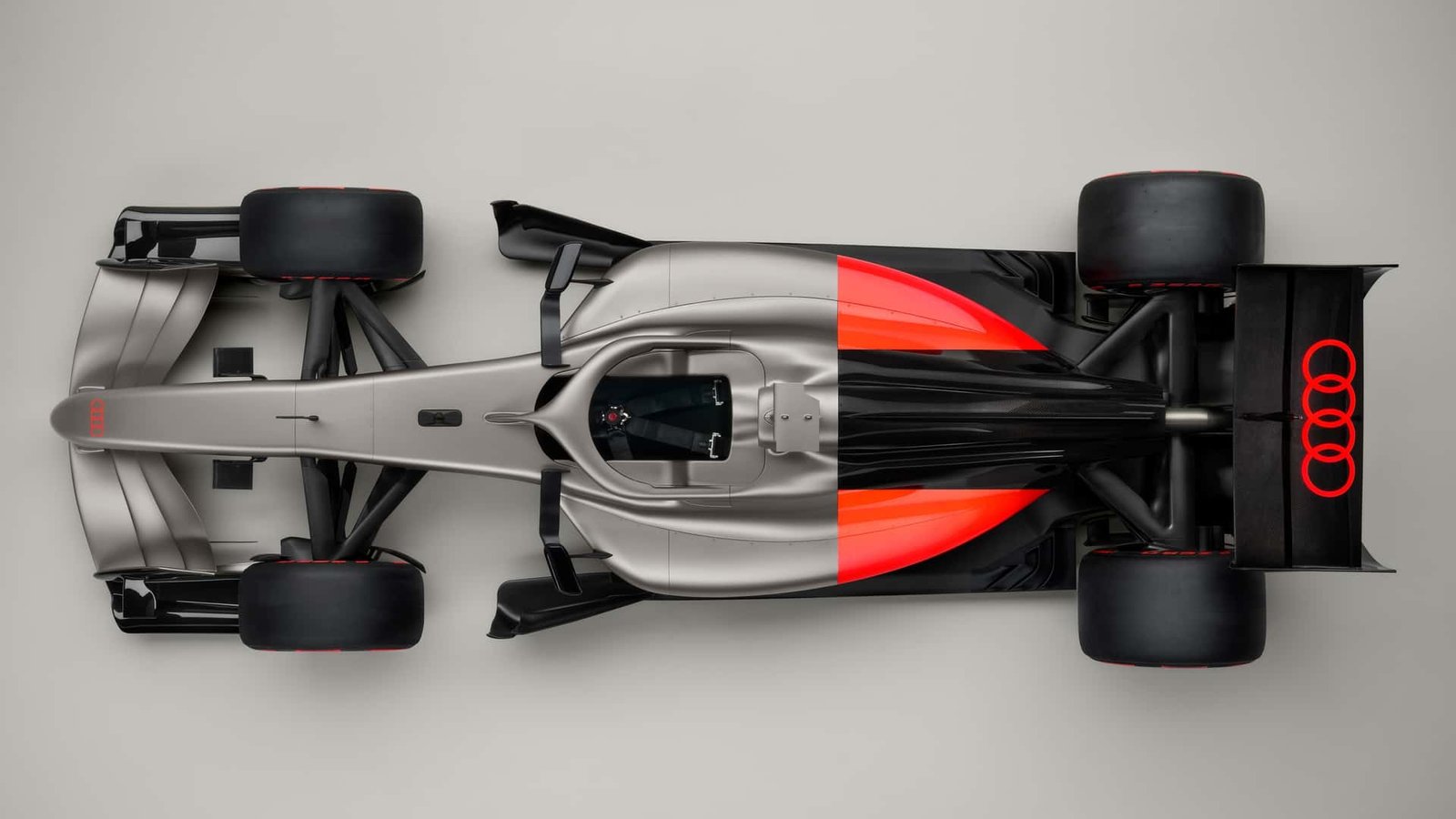
Beyond the technical marvels, the visual identity of Audi’s F1 car will be a significant moment. What colors will grace this new challenger? Audi’s traditional motorsport colors often involve silver, grey, and black, occasionally accented with red or white. For their F1 entry, it’s highly probable we’ll see a sleek, modern livery that reflects their brand identity. Will the iconic four rings be prominently displayed, perhaps in a shimmering chrome finish? I remember seeing initial concept sketches (purely speculative, mind you) that featured a metallic silver base with subtle, electric blue or vibrant green accents, hinting at the hybrid nature of the powertrain.
The choice of livery isn’t just about aesthetics; it’s about branding, recognition, and projecting an image of power and sophistication. Imagine the car zooming around Monaco, the four rings glinting under the Mediterranean sun. It’s a powerful statement, telling the world that Audi has arrived, not just to participate, but to contend. There’s something undeniably captivating about a new livery on the grid, isn’t there? It’s a fresh face, a new story waiting to be told on circuits worldwide.
The Road Ahead: Testing, Development, and Expectations
The journey from concept to actual track debut for Audi’s F1 car is long and arduous. It involves countless hours in simulators, rigorous component testing, and eventually, on-track shakedowns and extensive testing sessions. The development timeline for a new F1 car and power unit is incredibly tight, especially for a new entrant. Every single component must be designed, manufactured, tested, and integrated perfectly. Reliability will be a major hurdle in the initial stages.
What can we expect from Audi’s first season in 2026? Realistically, it will be a learning curve. New teams, even those backed by automotive giants, rarely hit the ground running at the front of the grid. It takes time to understand the nuances of F1 racing, the tires, the strategy, and to integrate a new power unit effectively. However, with Audi’s pedigree and the significant investment, expectations will be high for steady progress. “They won’t be winning races immediately, that’s almost a given,” a veteran F1 journalist recently commented. “But I wouldn’t be surprised to see them score points regularly and even challenge for podiums by their second or third season. Audi doesn’t do things by halves.”
The selection of drivers will also be crucial. Audi will need experienced F1 hands to develop the car and provide critical feedback, perhaps a mix of a seasoned veteran and an exciting young talent. The pressure on these drivers will be immense, not just to perform, but to be instrumental in shaping the car’s future. The entire F1 community, myself included, will be watching with bated breath, eager to witness the rise of this new force on the grid.
Conclusion
The prospect of Audi’s first Formula 1 car hitting the track in 2026 is truly electrifying. It represents a bold new chapter for Audi, demonstrating their commitment to high-performance motorsport and sustainable technology. From the aggressive aerodynamics dictated by the new regulations to the innovative hybrid power unit developed in Neuburg, every aspect of this car is designed to challenge the established order. It’s a fusion of German engineering precision and Swiss chassis expertise, promising a machine that is both technologically advanced and visually striking.
While the path to success in Formula 1 is notoriously difficult, Audi’s history suggests they are not easily deterred. Their meticulous approach, substantial resources, and clear vision for the future of motorsport position them as a formidable contender. I, for one, cannot wait for that first official reveal, to see the culmination of years of tireless work come to life. When those four rings roar down the pit lane for the first time, it won’t just be an engine note; it will be the sound of a new era beginning, a powerful declaration of intent from a brand ready to conquer the pinnacle of racing. Get ready, because 2026 is going to be an absolutely thrilling ride.
Frequently Asked Questions
| When will Audi officially join Formula 1? | Audi is set to officially join the Formula 1 grid as a power unit manufacturer and eventually a full factory team for the 2026 season, aligning with the sport’s new technical regulations. |
| What are the key features of Audi’s F1 power unit for 2026? | Audi’s F1 power unit will be a 1.6-liter V6 turbo-hybrid engine, significantly increasing electrical power output to 350 kW (from the current 120 kW) and running on 100% sustainable fuels. The complex MGU-H component will be removed. |
| Which team is Audi partnering with for its F1 entry? | Audi is partnering with Sauber Motorsport, acquiring a minority stake in the Swiss team. Sauber will continue to develop and manufacture the chassis, while Audi develops its power unit in Germany. |
| How will the 2026 F1 regulations influence Audi’s car design? | The 2026 regulations, emphasizing increased electrical power, sustainable fuels, and potentially active aerodynamics, will lead to a lighter, more agile car with different aerodynamic philosophies and sophisticated energy recovery systems. Audi’s design will reflect its engineering precision within these new parameters. |
| What are the expectations for Audi’s performance in its debut F1 season? | While initial seasons for new F1 entrants are typically a learning curve, Audi’s significant investment and motorsport pedigree suggest a strong development trajectory. While immediate race wins may be ambitious, consistent point-scoring and challenging for podiums in subsequent seasons are realistic expectations. |
Important Notice
This FAQ section addresses the most common inquiries regarding the topic.