Defying the Electric Wave: Ferrari Confident Gas Engines Are Far From Their Peak
Ferrari's Bold Stance: Why Maranello Believes the Internal Combustion Engine Still Has Much to Offer


The Enduring Roar: Ferrari’s Unwavering Stance on Internal Combustion
In a landscape where automakers globally are committing billions to developing purely electric lineups, Ferrari’s position feels like a breath of fresh, albeit fuel-scented, air. It’s a daring move, a double-down on tradition while simultaneously embracing innovation. Benedetto Vigna, Ferrari’s CEO, has been quite vocal about this, repeatedly asserting that the company sees significant room for further development in the internal combustion engine. “We believe there is still a lot of life for the internal combustion engine, not only in terms of power but also in terms of efficiency,” Vigna stated recently, a sentiment that resonated across the automotive world. You can almost picture him, standing amidst gleaming engines, a slight smile playing on his lips, knowing something others don’t. This isn’t just about sentimentality; it’s rooted in a deep conviction that the technological journey of the ICE is far from over. It’s about pushing boundaries, about squeezing every last drop of performance, and every ounce of character, from a concept that has powered cars for over a century.
Think about it: while many manufacturers are focused on making their electric vehicles faster and more efficient, Ferrari is looking at how to make their existing engine architecture even better. This involves a multi-pronged approach, focusing on everything from material science to advanced fuel injection systems and sophisticated engine management software. They’re not just trying to delay the inevitable; they genuinely believe there’s untapped potential. “We are only at the beginning of what the internal combustion engine can still achieve,” commented a veteran Ferrari engineer, who preferred to remain anonymous but whose eyes gleamed with passion when discussing the intricate dance of pistons and valves. He spoke of new combustion strategies and thermal management techniques that could redefine what we expect from a gas engine.
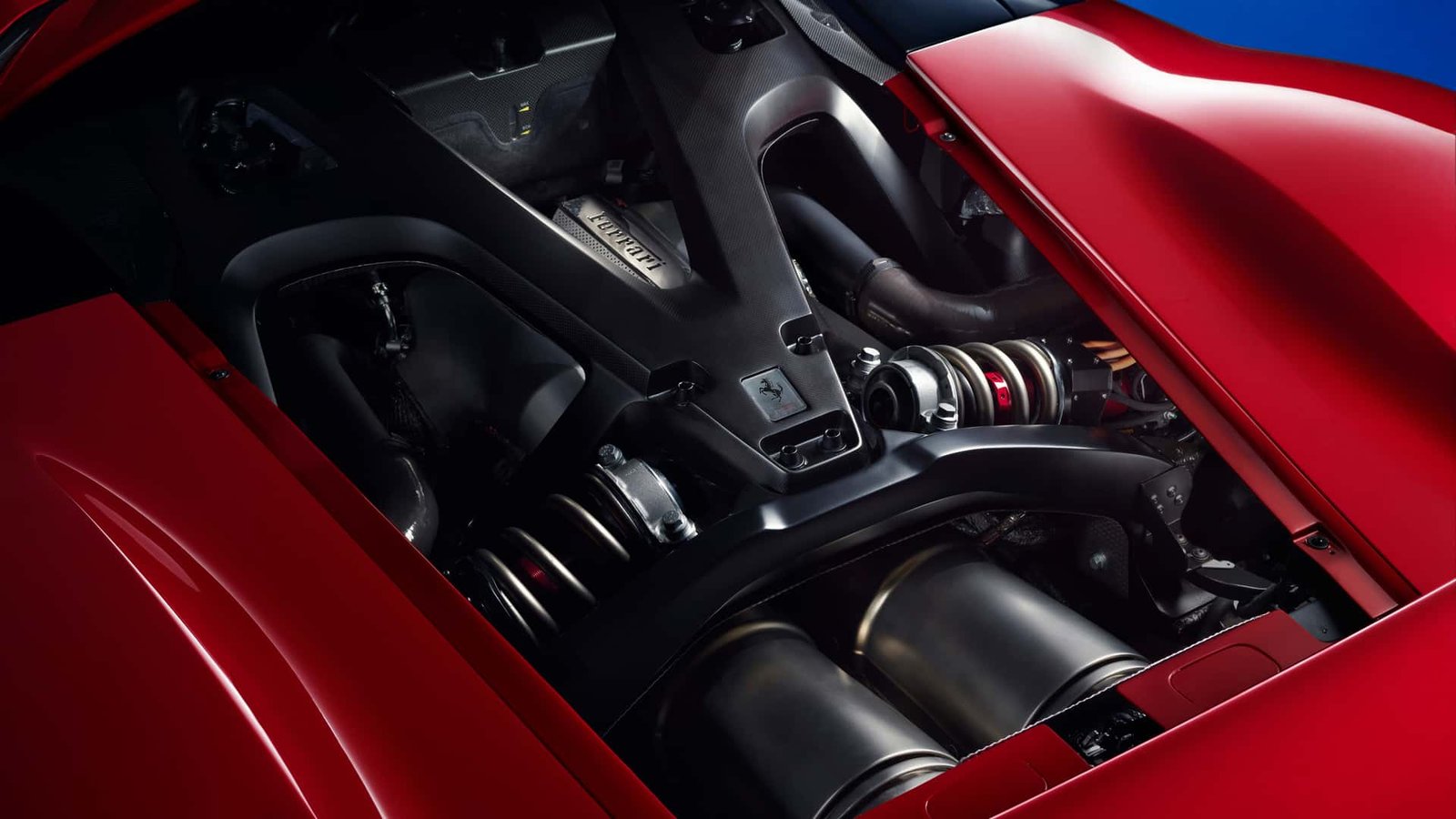
Beyond the Battery: The Technical Edge of Modern Gas Engines
It’s easy to assume that all the “innovation” is happening in the electric vehicle space. But Ferrari is demonstrating that significant strides are still being made in conventional powertrain design. Modern gas engines, especially those from Maranello, are a far cry from their ancestors. We’re talking about incredibly sophisticated pieces of machinery, capable of producing astonishing power from relatively small displacements, all while meeting increasingly stringent emissions standards. How do they do it? Through a relentless pursuit of efficiency and power density.
Consider variable valve timing, direct fuel injection, turbocharging, and even more exotic technologies like pre-chamber ignition (seen in Formula 1 and some cutting-edge road cars). These aren’t just incremental improvements; they are fundamental shifts in how engines breathe, burn fuel, and expel gases. Ferrari, known for its naturally aspirated masterpieces, has also embraced hybridization and turbocharging to enhance performance and efficiency. The SF90 Stradale and the 296 GTB are prime examples, blending electric motors with powerful ICEs to create astonishingly fast and responsive vehicles. “The synergy between electric power and the internal combustion engine is where true magic happens,” explained an industry analyst, Dr. Eleanor Vance, from her office overlooking a rainy London skyline. “It allows for instant torque fill, better low-end response, and overall a more exhilarating driving experience, while also reducing consumption when appropriate. It’s not just about adding power; it’s about refining the delivery.”
This approach isn’t just about brute force; it’s about intelligent engineering. Engines are lighter, stronger, and more thermally efficient than ever before. Materials science plays a huge role, with advanced alloys and composites allowing for higher operating temperatures and pressures, pushing the boundaries of what’s mechanically possible. Ferrari sees this as a continuous evolution, a journey with no discernible end point yet for the peak performance of its engines.
Synthetic Fuels: A Bridge to a Sustainable Future?
Here’s where Ferrari’s confidence takes a truly intriguing turn: their strong belief in synthetic fuels, also known as e-fuels. This isn’t just a fleeting interest; it’s a significant part of their long-term strategy to ensure the longevity of the internal combustion engine. Imagine, for a moment, being able to fill up your roaring V12 with a fuel that is carbon-neutral, or very nearly so. It’s a fascinating concept, isn’t it? A way to keep the symphony of a V12 alive, guilt-free, in an era demanding environmental responsibility. Ferrari has publicly backed the development and adoption of these fuels, viewing them as a viable pathway to decarbonization for both existing and future ICE vehicles.
Synthetic fuels are produced by combining captured CO2 with hydrogen generated from renewable electricity. The idea is that the carbon emitted during combustion is essentially recycled, creating a closed-loop system. This would allow traditional gas engines to operate without adding new net carbon to the atmosphere. “This is not some far-off dream; the technology is maturing rapidly,” said Marco Rossi, a chemical engineer specializing in sustainable energy solutions. “Companies are investing heavily, and the potential impact on legacy vehicles, as well as new ones, is immense.” For Ferrari, this means preserving the core identity of their brand – the visceral thrill of a high-revving engine – while also meeting future climate targets. It’s a pragmatic solution that acknowledges the emotional attachment people have to these machines. After all, if you can drive your classic Ferrari on a fuel that doesn’t harm the planet, why wouldn’t you?

The Emotional Core: Why Ferrari Owners Still Crave the Roar
Let’s be honest, buying a Ferrari isn’t just about getting from A to B, or even about raw speed alone. It’s an experience. It’s about passion, heritage, and that unmistakable sensory overload. A significant part of that experience is the sound, the feel, the mechanical ballet unfolding just behind you. The subtle vibrations, the throttle response that feels like an extension of your own will, the smell of warm oil and burning fuel – these are all integral to the Ferrari mystique. Can an electric car, no matter how fast or technologically advanced, truly replicate that? Many loyalists would vehemently argue no. “I own three Ferraris, and while I appreciate the advancements in EVs, nothing, absolutely nothing, compares to the feeling of that engine coming alive under me,” confided Marcus Thorne, a collector from Monaco, during a recent visit to Maranello. He gestured with his hands, as if trying to cup the very sound he was describing. “It’s a part of my soul, really. The electric cars are impressive, but they lack that… that heart.”
This emotional connection isn’t something to be dismissed lightly. For a brand like Ferrari, which trades heavily on its legacy and the visceral pleasure of driving, ignoring this sentiment would be commercially suicidal. Their customers are not merely looking for transportation; they are seeking an automotive art form, a moving sculpture that stirs the senses. The brand knows this intimately. Their commitment to the internal combustion engine is, in many ways, a commitment to their very identity and to the desires of their most passionate clientele. They’re selling dreams as much as they are selling cars.
It’s a balancing act, of course. Ferrari is also developing its first all-electric model, slated for release around 2025. This shows they are not ignoring the future, but rather approaching it with a nuanced strategy. They understand that there will be a market for electric Ferraris, perhaps for daily driving or for those who prioritize silence and instant torque above all else. But they also firmly believe that the traditional gas engine, especially when paired with advancements like synthetic fuels and hybridization, will continue to define the pinnacle of high-performance driving for a considerable time.
Navigating the Regulatory Landscape: A Fine Balance
The biggest challenge for Ferrari’s conviction might not be technological limitation, but rather the rapidly changing global regulatory environment. Governments worldwide are pushing aggressive timelines for the phasing out of internal combustion engines, particularly in regions like the European Union. These mandates are designed to curb emissions and accelerate the shift to zero-emission vehicles. This is where Ferrari’s strategy for synthetic fuels becomes critical.
If e-fuels can truly achieve carbon neutrality, or near-neutrality, they could provide a vital lifeline for the internal combustion engine. Imagine if regulatory bodies could be convinced that vehicles running on certified synthetic fuels are, from a lifecycle emissions perspective, equivalent to electric vehicles powered by renewable energy. This would create a parallel path for decarbonization, allowing for diversity in powertrain choices. “The lobbying efforts around e-fuels are intense, and for good reason,” noted an environmental policy advisor, Dr. Kai Schmidt, who has been following the discussions in Brussels. “If successful, it could profoundly alter the automotive landscape, offering a route for premium brands like Ferrari to continue their legacy without being completely forced into electric-only production within the next decade. It’s a very complex political and scientific debate.”
Ferrari, along with other high-performance brands, is actively engaging with policymakers to ensure that the potential of synthetic fuels is recognized. Their hybrid models, like the SF90 and 296, are also instrumental in bridging the gap, demonstrating a commitment to reduced emissions even within the current regulatory framework. These cars, with their ability to travel short distances on electric power alone, showcase how electrification can complement, rather than completely replace, the internal combustion experience.
The Road Ahead: Hybridization and Future Innovations
So, what does it truly mean when Ferrari says gas engines haven’t peaked yet? It suggests a vision of continuous improvement, where every component, every system, is subject to refinement. It means:
- Increased Efficiency: Not just for fuel economy, but for maximizing power output from every drop of fuel.
- Reduced Emissions: Through advanced combustion processes, better catalytic converters, and crucially, synthetic fuels.
- Enhanced Driving Dynamics: Integrating electric motors to fill torque gaps, improve responsiveness, and provide new levels of performance.
- Lighter Materials: Using advanced composites and alloys to reduce weight, improving handling and acceleration.
- Digital Integration: More sophisticated engine management systems that can adapt to driving conditions in real-time.
It’s a future where the internal combustion engine isn’t just surviving, but thriving, evolving into an even more sophisticated and potent machine. Ferrari isn’t just making a statement; they are laying down a gauntlet. They are challenging the notion that the ICE is a dead-end technology, instead positioning it as a canvas for ongoing innovation and passion. It’s a fascinating gamble, one that could truly distinguish them in an increasingly homogenized automotive world.
As the sun dipped below the horizon, casting long shadows across the Fiorano track, the faint smell of petrol lingered in the air, a reminder of the power and passion that defines Ferrari. Their confidence in the future of the gas engine isn’t just about defying trends; it’s about holding true to their heritage while pushing the boundaries of what’s possible. Whether they can truly convince the world that the roar of an ICE isn’t a dying gasp but a renewed battle cry, only time will tell. But one thing is for sure: Ferrari is not ready to let go of the symphony that defines them, and for enthusiasts worldwide, that’s incredibly exciting.
Frequently Asked Questions
| Why is Ferrari confident gas engines haven’t peaked yet? | Ferrari believes there’s still significant room for technological advancement in internal combustion engines, focusing on improvements in power, efficiency, and emissions reduction through continuous innovation in materials, design, and combustion processes. They also see great potential in synthetic fuels. |
| What are the key benefits of Ferrari’s approach? | This approach allows Ferrari to preserve the visceral, emotional driving experience synonymous with their brand, cater to customer demand for traditional engine sounds and feel, and potentially achieve carbon neutrality for their ICE vehicles through synthetic fuels, offering a diverse path alongside electrification. |
| How does Ferrari plan to implement this strategy? | Ferrari’s strategy involves continued investment in ICE research and development, further integration of hybrid powertrains (like in the SF90 and 296 GTB), and strong advocacy for and adoption of synthetic fuels. They are also developing their first all-electric model to complement their ICE offerings. |
| What challenges does Ferrari face with this stance? | The primary challenges include stringent global emissions regulations pushing for full electrification, the high cost and scaling of synthetic fuel production, and the perception that ICE technology is outdated. Ferrari must effectively lobby for e-fuel recognition and demonstrate the environmental viability of their approach. |
| What does the future hold for Ferrari’s internal combustion engines? | The future for Ferrari’s ICEs likely involves highly sophisticated hybrid systems, optimized for both performance and efficiency, running on advanced synthetic fuels. This would allow them to offer powerful, emotionally engaging vehicles that meet future environmental standards, coexisting with their upcoming fully electric models. |
Important Notice
This FAQ section addresses the most common inquiries regarding the topic.