The air crackled with a distinct tension, not from a political rally’s usual fervor, but from a growing, palpable unease. It wasn’t a bombastic speech from an opposing candidate or a scathing media report that had set the digital town square ablaze; no, this was something far more insidious for the loyalists of the Make America Great Again movement. It was their own champion, Donald Trump, who had uttered words that struck at the very heart of their unwavering devotion, specifically concerning U.S. workers. The sentiment was immediate, visceral. “Wait, did he just say what I think he said?” a common refrain echoed across conservative forums and social media feeds. A collective gasp, then a torrent of bewildered, angry, and outright betrayed comments began to flood the internet. This wasn’t just a misstep; for many, it felt like a direct contradiction of the “America First” ethos they had so passionately embraced. The shock quickly morphed into a profound sense of confusion, a jarring realization that perhaps, just perhaps, their steadfast leader had articulated a vision for American jobs and labor that simply didn’t align with their deeply held beliefs. It was a moment of stark reckoning, a glitch in the Matrix for a movement built on an almost unshakeable foundation of loyalty.
The Unsettling Words: What Exactly Was Said?
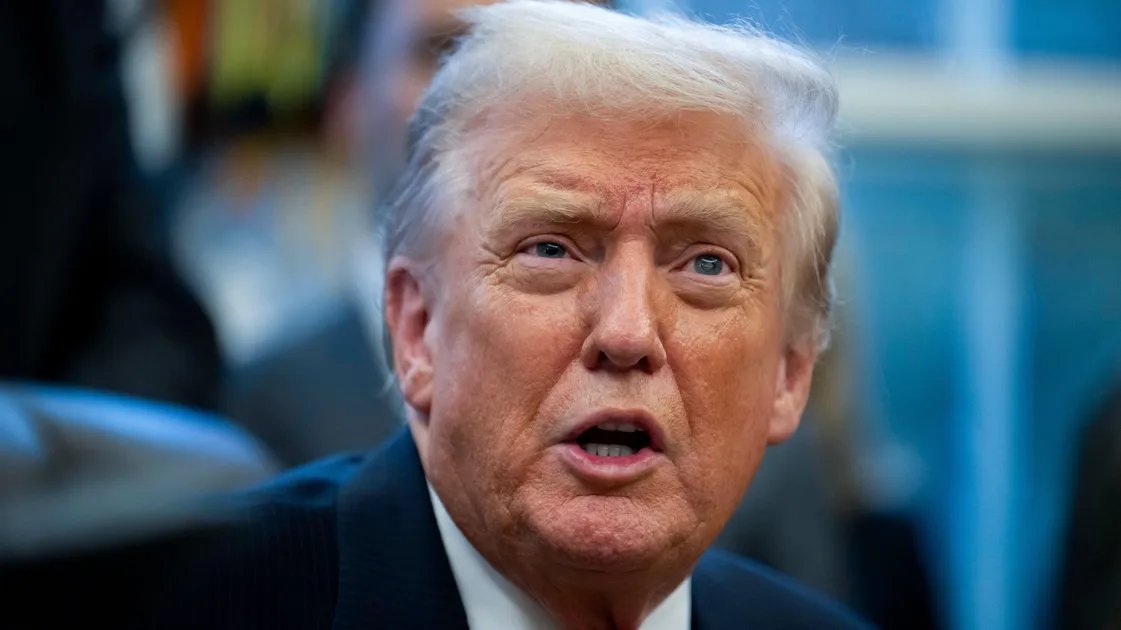
The epicenter of this unexpected quake was a series of comments made by Donald Trump during a recent interview, where he seemed to suggest that American workers might be asking for too much. Specifically, he remarked on the rising wages in the United States, implying that such increases could make the nation less competitive globally. “Our wages are too high,” he reportedly stated, or words to that effect, “we have to get them down to compete.” My jaw almost hit the floor when I first heard it, and I can only imagine the utter disbelief that swept through households across the country, particularly those who have been struggling with inflation and stagnant real wages for years. This wasn’t some off-the-cuff remark in a noisy rally, but a considered statement in a formal setting, adding weight to its perceived meaning.
Think about it: for years, Trump’s appeal to the working class was built on the promise of bringing back manufacturing jobs, protecting industries from foreign competition, and, implicitly, ensuring that American labor was valued and well-compensated. His entire “America First” economic platform, it felt like, was predicated on the idea that American workers deserved the best, that they were the backbone of the nation. To then hear him suggest that their wages were “too high” was, to put it mildly, a jarring betrayal of that narrative. It’s like watching your favorite superhero suddenly root for the villain – completely disorienting.
A Betrayal of the Base? The Core of MAGA’s Labor Appeal
The MAGA movement, at its very heart, has always championed the cause of the forgotten man and woman in America, particularly the blue-collar workers who felt left behind by globalization and shifting economic policies. Trump’s populist rhetoric resonated deeply with these communities, promising a return to an era where factory jobs were plentiful and American industries thrived. He often spoke of trade deals that decimated U.S. jobs and the need to protect the domestic labor force. This stance cemented his image as a defender of the working class, a stark contrast to what many perceived as the globalist leanings of previous administrations.
This latest comment, however, seemed to unravel that carefully constructed narrative in a single stroke. For a movement that prides itself on economic nationalism and protecting American interests, the idea of intentionally depressing worker wages to compete with lower-cost labor markets abroad felt, well, un-American. It cut against the very grain of what many supporters believed Trump stood for. “He’s always been about making sure Americans get the best deal, get good jobs, good pay,” one long-time supporter, who asked to remain anonymous, told me over a crackly phone line from Ohio. “To hear him say our wages are too high… it just doesn’t compute. It feels like he’s forgotten about us.” This sentiment was not isolated; it was a quiet hum of discontent that quickly grew into a roar.
The “America First” Economic Paradox
The crux of the outrage lies in this paradox. For years, Trump built his brand on prioritizing American industries and bringing jobs back home. He levied tariffs, renegotiated trade deals, and consistently lambasted companies that outsourced labor. The implication was always clear: American labor is valuable, indispensable, and deserves strong compensation. To suggest otherwise now, particularly as inflation eats into household budgets, felt less like a strategic economic policy and more like a concession to the very globalist pressures he once railed against. It’s a tightrope walk for any populist leader, but for someone whose entire political identity is wrapped up in empowering the working class, it’s an exceptionally dangerous one. The question inevitably arises: was the “America First” economic nationalism just a slogan, or a deeply held conviction? For many in the base, this comment threw that into serious doubt.
Echoes Across the Digital Sphere: Voices of Discontent
The moment Trump’s comments hit the airwaves, the internet exploded. Social media platforms, particularly X (formerly Twitter) and various conservative forums, became veritable battlegrounds of confusion, anger, and outright repudiation. Screenshots of the quote were shared thousands of times, often accompanied by exasperated captions. “What the f**k is this?” one prominent conservative influencer posted, summing up the collective bewilderment. “Did I just hear our supposed champion of the American worker say our wages are too high? This is insane.” Another user, typically a staunch defender of all things Trump, wrote, “I’m sorry, but this is completely unacceptable. We need higher wages, not lower. He’s lost the plot on this one.”
It wasn’t just anonymous users. Even some of Trump’s most loyal surrogates and media personalities found themselves in an awkward position, either attempting to deflect, reinterpret, or simply ignore the comments. The usual swift defense mechanisms of the MAGA media ecosystem seemed to sputter, caught off guard by the nature of the gaffe. It was a rare moment of discord within a movement often characterized by its monolithic support for Donald Trump. You could almost feel the scramble behind the scenes as campaign strategists tried to figure out how to address this unexpected friendly fire. One analyst I spoke with described it as a “self-inflicted wound of the highest order,” especially heading into an election cycle where working-class votes will be absolutely crucial.
The Puzzling Timing and Context
One of the most perplexing aspects of these remarks is their timing. With a presidential election looming, and with Trump actively campaigning on a platform of economic recovery and empowering the American worker, these comments felt like a self-sabotage. Was it a slip of the tongue? A poorly articulated thought? Or a deliberate, albeit risky, pivot towards a more traditional conservative economic stance that prioritizes corporate competitiveness over wage growth? The uncertainty fueled even more speculation and concern among the base. “It’s not just what he said, it’s *when* he said it,” remarked a political commentator known for his pro-Trump views, clearly struggling to reconcile the statement with the broader campaign message. “He’s usually so good at staying on message for his base. This… this is just baffling.” The silence from some of his staunchest defenders spoke volumes; they simply didn’t know how to spin this one.
The Campaign’s Tightrope Walk: Damage Control and Clarification
In the wake of such a significant gaffe, the immediate challenge for the Trump campaign is damage control. How do you walk back or reframe a statement that seems to directly contradict years of carefully cultivated populist appeal? The typical playbook involves either denying the statement was made, claiming it was taken out of context, or offering a convoluted clarification. We’ve seen all these tactics before, of course. But this particular comment is so stark, so seemingly unambiguous, that a simple “mischaracterization” might not cut it.
Sources close to the campaign, speaking anonymously due to the sensitivity of the situation, indicated a flurry of internal discussions. “Look, it’s not ideal,” one aide admitted, visibly stressed. “The boss was probably trying to make a broader point about economic competitiveness, but it didn’t land right. We’re working on clarifying his true stance, which has always been about putting American workers first.” The challenge, however, is that “clarifying” often sounds like backtracking, and for a figure like Trump, who prides himself on speaking his mind directly, any perceived retreat can be seen as a sign of weakness by his base. It’s a delicate dance, trying to appease a vocal and now confused segment of his supporters while not appearing to equivocate on his core principles. Expect to see surrogates hit the airwaves, emphasizing his past actions to protect jobs and perhaps even blaming “fake news” for twisting his words, even if the words themselves are clear.
Beyond the Backlash: Potential Political Ramifications
The long-term impact of this “wages are too high” remark could be significant, particularly as the election cycle heats up. Blue-collar workers in swing states, often union members or those in manufacturing industries, have historically been a critical demographic for Donald Trump. His ability to peel away some of these traditionally Democratic voters was key to his 2016 victory and remains crucial for any future electoral success. If these comments erode that support, even slightly, it could have profound implications.
Opponents, naturally, are already seizing on the statement, using it to paint Trump as out of touch with the struggles of everyday Americans. They will likely hammer home the point that while workers are grappling with the rising cost of living, Trump appears more concerned with corporate profit margins. This narrative, if it takes hold, could chip away at his populist image and make it harder for him to connect with the very voters who feel economically vulnerable. The irony, of course, is that these comments might push some disillusioned voters back into the arms of the Democratic party, which traditionally champions higher wages and stronger worker protections. It’s a fascinating, if concerning, turn of events that could genuinely shift the dynamics of the upcoming election, reminding us that even the most charismatic leaders can sometimes stumble on their own rhetoric.
In the end, this incident highlights the complex and often contradictory nature of modern populist movements. While they thrive on appealing directly to the concerns of the working class, the underlying economic philosophies can sometimes clash with those very promises. Trump’s comments have certainly peeled back a layer, revealing a potential crack in the foundation of his seemingly impenetrable support among U.S. workers, and it will be fascinating to watch how he attempts to mend it.
Frequently Asked Questions
| What sparked the MAGA meltdown over Trump’s comments on U.S. workers? | The meltdown was sparked by Donald Trump’s remarks suggesting that U.S. worker wages might be “too high,” implying a need to reduce them for global competitiveness. This statement directly contradicted his long-standing populist “America First” rhetoric, which positioned him as a champion of American labor and higher-paying jobs. |
| What are the potential consequences of such a statement for Trump’s political standing? | This statement could significantly damage Trump’s standing among blue-collar and working-class voters, a key demographic for his political base. It risks alienating supporters who embraced his promises of protecting American jobs and ensuring fair wages, potentially leading to reduced support in crucial swing states during an election cycle. |
| How did Trump’s base typically perceive his stance on American labor before this incident? | Before this incident, Trump’s base largely perceived him as a staunch defender of American labor, advocating for policies that brought back manufacturing jobs, imposed tariffs to protect domestic industries, and prioritized U.S. workers over globalist economic agendas. His rhetoric consistently supported the idea of strong wages and job security for Americans. |
| What challenges does this controversy pose for the Trump campaign? | The controversy poses significant challenges for the Trump campaign, primarily in terms of damage control and messaging. They must attempt to clarify or walk back the comments without appearing to equivocate or betray core principles, which is a difficult balancing act. It also provides ammunition for opponents to portray Trump as out of touch with the economic realities of working Americans. |
| How might this incident impact the broader Republican strategy moving forward? | This incident might force the Republican Party, especially those aligned with Trump, to re-evaluate their messaging on labor and economic policy. It highlights the tension between traditional conservative economic principles (e.g., lower labor costs for competitiveness) and populist appeals to the working class. It could lead to a renewed focus on explicitly pro-worker policies or more careful articulation of economic strategies to avoid alienating key voter segments. |
Important Notice
This FAQ section addresses the most common inquiries regarding the topic.