The news hit me like a jolt of electricity, much like the powertrain we’re about to discuss. Just last week, while nursing a lukewarm espresso at my local café, scrolling idly through automotive forums, a headline flashed across my screen that made me nearly drop my ceramic mug: “The Alfa Romeo Giulia Quadrifoglio Is Coming Back.” My heart leaped into my throat. For months, years even, enthusiasts like myself had been bracing for the inevitable, a silent, somber farewell to one of the most passionate, visceral, and outright thrilling sedans ever built. The whispers of an all-electric future for Alfa Romeo had felt like a death knell for the glorious twin-turbo V6, a sound that could raise the hairs on your arms and send shivers down your spine. (Seriously, have you ever heard one at full throttle? It’s pure magic.) This wasn’t just another car; it was an experience, a symphony of engineering and emotion. To imagine a world without that emerald green serpent badge gracing the fender of a new Giulia Quadrifoglio felt, frankly, a bit bleak. But here we are, staring down the barrel of a stunning revival, a phoenix rising from the ashes of internal combustion, ready to embrace a new, electrified era. It’s a moment of profound excitement, a testament to the enduring power of a legend, and frankly, a bit of a shock – a good one, of course.
The confirmation feels like a collective sigh of relief for petrolheads everywhere who feared the loss of soul in the transition to electric. You see, the original Alfa Romeo Giulia Quadrifoglio wasn’t just fast; it had character, an almost human quality that resonated deeply with drivers. It was a car that dared you to push its limits, rewarding you with an unfiltered connection to the road. This return isn’t just about preserving a nameplate; it’s about safeguarding an ethos, a commitment to driving pleasure that few brands can truly claim. The question on everyone’s lips, mine included, is how exactly Alfa Romeo plans to pull this off without diluting the very essence that made the Quadrifoglio so revered. It’s a delicate balancing act, blending heritage with the demands of modern emissions regulations and technological advancements.
One crisp autumn morning, I spoke with Marco Rossi, a long-time Alfa Romeo collector and utterly devoted enthusiast, standing by his pristine 2017 Quadrifoglio. “When they first hinted at phasing it out, I felt a genuine loss,” he confessed, running a hand over the car’s Rosso Competizione paint. “It’s more than metal; it’s a piece of art, a living thing. The thought of a new one, especially one that carries that legendary badge, it gives me hope. But they have to get it right. It needs to feel like an Alfa.” His words echoed the sentiment of countless fans, a blend of eager anticipation and cautious optimism. The weight of expectation resting on the shoulders of the designers and engineers in Turin must be immense. They’re not just building a car; they’re upholding a legacy.
The Whispers Turn to Roars: Confirming the Return
For what felt like an eternity, the fate of the Giulia Quadrifoglio hung precariously in the balance, a topic of fervent debate and endless speculation across online forums and car shows. Then, a few weeks ago, the fog began to clear. Jean-Philippe Imparato, Alfa Romeo’s CEO, dropped the bombshell during a candid interview, confirming that the high-performance sedan would indeed receive a successor. This wasn’t just a vague promise; it was a definitive statement that sent shockwaves – positive ones, mind you – through the automotive community. He didn’t mince words, emphasizing that the new Quadrifoglio would not only embrace electrification but would also elevate the performance benchmark set by its predecessor. “We are working on the future Giulia Quadrifoglio,” Imparato stated, his voice resonating with conviction. “It will be electric, and it will be brutal.”
“Brutal” is a strong word, and one that resonates deeply with the Quadrifoglio’s heritage. It suggests a no-compromise approach to performance, even as the brand pivots towards a more sustainable future. This commitment to maintaining the raw, untamed spirit of the Quadrifoglio is crucial. It’s what sets it apart from its German rivals, offering a more passionate, less clinical driving experience. The initial response from enthusiasts has been overwhelmingly positive, albeit with a healthy dose of skepticism about how “Alfa Romeo” an electric performance car can truly feel. Can the tactile feedback, the sonorous engine note, and the delicate balance of the current model be replicated or even improved upon with batteries and electric motors? Only time will tell, but the sheer ambition of the project is inspiring.
What Made the Original So Special?
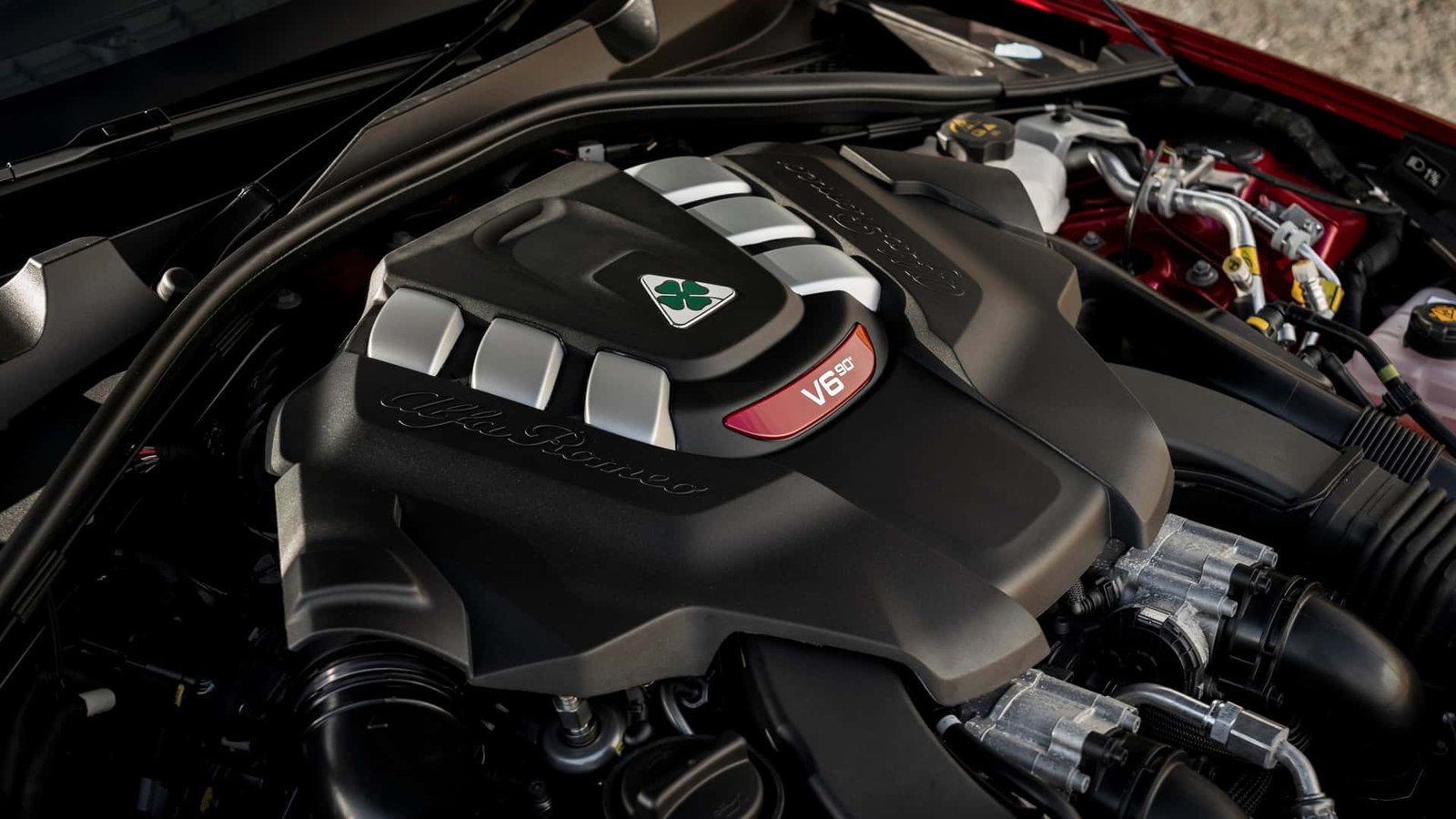
To understand the magnitude of this return, we need to briefly reflect on what made the outgoing Alfa Romeo Giulia Quadrifoglio a legend in its own right. Launched in 2015, it was Alfa Romeo’s audacious re-entry into the premium performance sedan segment, a direct challenger to established giants like the BMW M3 and Mercedes-AMG C63. And boy, did it deliver. Its heart was a Ferrari-derived 2.9-liter twin-turbo V6 engine, pumping out a staggering 505 horsepower and 443 lb-ft of torque. This powerplant, combined with a precise ZF 8-speed automatic transmission, propelled the Giulia Quadrifoglio from 0 to 60 mph in a blistering 3.8 seconds.
But numbers only tell half the story. The true magic lay in its chassis. Alfa Romeo engineered a perfect 50/50 weight distribution, an active aero splitter, and a sophisticated torque-vectoring differential. The steering was incredibly direct, almost telepathic, allowing drivers to place the car with pinpoint accuracy. It danced through corners with an agility that defied its four-door sedan body. “It wasn’t just fast; it felt alive,” recalled Sarah Jenkins, a professional driving instructor who’s put countless Quadrifoglios through their paces. “The way it communicated with you through the steering wheel, the seat of your pants… it was pure driving poetry.” The interior, while perhaps not as opulent as some rivals, was driver-focused, featuring exquisite carbon fiber trim and deeply bolstered seats that held you firmly in place during spirited driving. It was a sensory overload in the best possible way.
Under the Hood: The Electrified Heart
Now, for the really juicy part: what exactly will power the new Alfa Romeo Giulia Quadrifoglio? While specific technical details are still under wraps, Imparato’s hints strongly suggest a highly potent, all-electric powertrain. Given Stellantis’ (Alfa Romeo’s parent company) STLA Large platform, which is designed for performance EVs, it’s highly probable that the new Quadrifoglio will utilize a derivative of this architecture. This platform is versatile, capable of housing large battery packs and multiple electric motors, allowing for staggering power outputs and advanced all-wheel-drive systems.

Early speculation points towards a dual-motor, all-wheel-drive setup, potentially delivering upwards of 1,000 horsepower. Yes, you read that right. A thousand horsepower. That’s a dramatic leap from the current 505 hp and would place the new Quadrifoglio firmly in hyper-sedan territory, dwarfing its previous rivals. Imagine the instant torque, the neck-snapping acceleration that only electric motors can provide. The challenge, of course, will be managing that immense power and translating it into a truly engaging driving experience rather than just raw, straight-line speed. This is where Alfa Romeo’s engineers will earn their stripes, ensuring the car remains a driver’s machine, not just a numbers game. “The power figures sound insane,” commented Dr. Elena Petrova, an automotive engineer specializing in EV drivetrains. “But the real trick is tuning the response, the feel, and making sure the chassis can handle it gracefully. It’s about more than just kilowatts; it’s about kinetic harmony.”
Maintaining the Alfa Soul with Electrification
One of the biggest concerns for enthusiasts is how Alfa Romeo will retain the brand’s distinctive “soul” – its passionate, communicative driving dynamics – in an electric vehicle. The current Giulia Quadrifoglio is renowned for its light weight and agility. EVs, due to their heavy battery packs, tend to be significantly heavier. This presents a considerable engineering hurdle. Alfa Romeo will likely employ advanced lightweight materials, such as carbon fiber and aluminum, extensively throughout the chassis and body to mitigate the weight penalty. Furthermore, sophisticated suspension systems, adaptive dampers, and advanced torque vectoring through individual wheel motor control will be critical to preserving the car’s legendary handling. The development team will also need to focus heavily on steering feel – a hallmark of Alfa Romeos – ensuring it remains communicative and direct, despite the potential isolation that electric power steering can sometimes introduce.
Design Evolution: A Modern Classic?
Visually, the next-generation Giulia Quadrifoglio is expected to evolve the current model’s stunning design rather than completely reinvent it. Alfa Romeo’s design language is timeless, characterized by elegant lines, muscular proportions, and the iconic ‘Scudetto’ grille. We can anticipate a more aggressive stance, possibly with enhanced aerodynamic features to manage the incredible speeds and cooling demands of an electric powertrain. Expect sharper LED lighting signatures, more sculpted bodywork, and perhaps a subtle integration of active aerodynamic elements to optimize downforce and efficiency. The interior will undoubtedly feature a significant technological upgrade, with larger digital displays, advanced infotainment systems, and perhaps more sustainable materials, while still maintaining a driver-centric layout and exquisite Italian craftsmanship. Imagine a blend of cutting-edge tech with the tactile pleasure of real carbon fiber and fine leather. It sounds absolutely dreamy, doesn’t it?
The Competition Heats Up
The landscape of high-performance sedans has shifted dramatically since the current Giulia Quadrifoglio first arrived. Its traditional rivals, the BMW M3 and Mercedes-AMG C63, are themselves undergoing electrification. The new C63, for instance, has already adopted a plug-in hybrid powertrain, delivering immense power but also a significant weight increase. The M3 is rumored to eventually follow suit. This means the new Alfa Romeo Giulia Quadrifoglio won’t just be competing against internal combustion engines but against a new breed of electrified performance machines. It will need to stand out not just with raw power, but with a unique driving character, an emotional appeal that only an Alfa can truly deliver. The Cadillac CT5-V Blackwing, another phenomenal sedan, represents the pinnacle of traditional ICE performance, setting a high bar for dynamic excellence that Alfa will need to surpass in its own electrified way. The stakes are incredibly high, but if any brand can inject passion into an electric vehicle, it’s Alfa Romeo.
Driving Dynamics: Will It Still Be an Alfa?
This is the million-dollar question, isn’t it? The true test of the new Alfa Romeo Giulia Quadrifoglio won’t be its 0-60 mph time or its Nürburgring lap record (though those will certainly be impressive). It will be in the feel, the feedback, the intangible connection between driver and machine. Will it still have that characteristic Alfa Romeo directness in the steering? Will the chassis communicate every nuance of the road? Will the braking feel strong and confident, even with the added weight and regenerative braking systems?
Alfa Romeo’s engineers have a monumental task: to harness the brute force of electric motors while preserving the delicate ballet of handling that defined its predecessor. This will likely involve advanced software calibration for throttle response, steering weight, and suspension tuning. The sound, too, will be a critical element. While the iconic V6 growl will be gone, Alfa Romeo could develop an artificial sound profile that evokes the brand’s heritage or even creates something entirely new and futuristic, yet still thrilling. “It won’t be the same, and we have to accept that,” mused Giorgio Mancini, a veteran test driver for a rival marque, over a cappuccino. “But if they can retain even a fraction of that current Quadrifoglio’s ability to make you smile, to make you feel alive, then they’ve won.” It’s about the emotional response, not just the technical specifications.
The Enthusiast’s Perspective: Hope and High Expectations
The news of the Alfa Romeo Giulia Quadrifoglio‘s return has ignited a firestorm of discussion among enthusiasts. On one hand, there’s immense relief and excitement. The Quadrifoglio is more than just a car; it’s a statement, a symbol of Italian passion and engineering prowess. Its potential disappearance would have left a gaping hole in the performance car world. On the other hand, there’s a degree of apprehension. Electrification, while necessary for the future, has often been associated with a loss of character and engagement in enthusiast cars.
Many hope that Alfa Romeo will find a way to make the electric Quadrifoglio feel unique, to differentiate it from other high-performance EVs on the market. They want it to be more than just fast; they want it to be soulful. The promise of “brutal” performance is exciting, but the challenge lies in making that brutality refined, engaging, and undeniably Alfa Romeo. This is a chance for Alfa Romeo to prove that electrification doesn’t have to mean sterilization, that passion can thrive even without the roar of an internal combustion engine. It’s a bold new chapter, and I, for one, am eagerly awaiting its arrival, hoping it will once again set hearts racing and redefine what a performance sedan can be.
Frequently Asked Questions
| Is the Alfa Romeo Giulia Quadrifoglio truly returning? | Yes, Alfa Romeo CEO Jean-Philippe Imparato has officially confirmed that the high-performance Alfa Romeo Giulia Quadrifoglio will receive a successor, transitioning to an all-electric powertrain. |
| What are the expected benefits of the new Quadrifoglio’s return? | The return of the Quadrifoglio is expected to deliver significantly increased power (potentially over 1,000 hp) and instant torque due to its electric powertrain, while also maintaining Alfa Romeo’s commitment to driving engagement and emotional appeal. It represents the brand’s future direction in high-performance EVs. |
| How will Alfa Romeo integrate electrification while maintaining performance? | Alfa Romeo is expected to leverage Stellantis’ STLA Large platform, employing advanced lightweight materials like carbon fiber, sophisticated suspension systems, adaptive dampers, and precise torque vectoring. The focus will be on finely tuning the electric powertrain for a characteristic Alfa Romeo driving feel, ensuring direct steering and dynamic handling. |
| What challenges does Alfa Romeo face with the new Quadrifoglio? | Key challenges include mitigating the weight penalty of large battery packs, replicating the emotional connection and distinctive sound of the V6 engine in an EV, and differentiating it in an increasingly competitive electrified performance sedan market. Balancing raw power with refined, engaging driving dynamics is crucial. |
| What does the return of the Quadrifoglio mean for Alfa Romeo’s future? | The return signifies Alfa Romeo’s bold commitment to an electrified future without abandoning its performance heritage. It’s a statement that the brand intends to infuse its electric vehicles with the same passion and driving pleasure that defined its internal combustion models, positioning it as a key player in the high-performance EV segment. |
Important Notice
This FAQ section addresses the most common inquiries regarding the topic.