Washington’s Standoff: What Happens Next as a Government Shutdown Threatens?
Understanding the Government Shutdown: Its Impact and What Lies Ahead

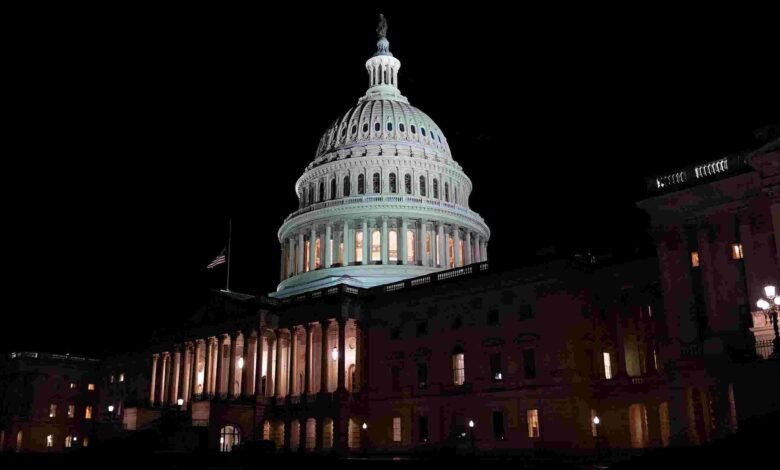
The Immediate Fallout: What Closes and Who Gets Hit?
Imagine waking up on the morning after the deadline, and suddenly, vast swathes of the federal government are simply… closed. It’s an odd, almost surreal concept for a nation accustomed to continuous public services. But that’s precisely what happens during a government shutdown. The immediate fallout is a cascade of closures and disruptions, hitting everyone from federal employees to everyday citizens. Non-essential agencies, like the Department of Education or the Environmental Protection Agency, would largely cease operations. Their employees, hundreds of thousands of them, would be furloughed, meaning they’re sent home without pay. Imagine that, a sudden, unexpected stop to your income, through no fault of your own.
“It’s like getting hit by a truck you saw coming, but couldn’t avoid,” shared a federal grants administrator, who asked to remain anonymous, reflecting on a previous shutdown. “You plan, you budget, you save a little, but the stress is immense. Will I make rent? Can I afford groceries this week? It’s not just about the money; it’s the uncertainty, the feeling that your livelihood is a bargaining chip in some distant political game.” This sentiment resonates deeply among the federal workforce.
Even “essential” employees, those deemed vital for public safety and national security – think air traffic controllers, border patrol agents, and certain medical personnel – are required to work without pay. Talk about a tough gig! While they are typically paid retroactively once the shutdown ends, the immediate financial strain can be devastating. For you and me, the impact is felt directly in various ways:
- National Parks and Museums: Many, if not all, would close their gates, disrupting tourism and recreation.
- Passport and Visa Services: Processing would likely slow down significantly or halt for non-emergency cases, potentially derailing international travel plans.
- IRS Services: Tax refunds could be delayed, and customer service lines would thin out considerably.
- Loan Applications: Processing of federal housing, small business, and student loans could be stalled.
- Scientific Research: Critical research projects across various agencies would be put on hold, potentially losing valuable time and data.
It truly feels like the gears of the nation seize up, creating a ripple effect that extends far beyond Washington’s Beltway.
The Political Dance: Who’s to Blame and Why?
Ah, the blame game. It’s a perennial fixture of any political crisis, and a government shutdown is no exception. The origins of these impasses are almost always rooted in deep ideological divides over federal spending and policy. Essentially, Congress has to pass 12 appropriations bills each year to fund the various government agencies. If they can’t agree on all of them, they pass a “continuing resolution” (CR) to keep things funded temporarily while negotiations continue. When even a CR can’t get through, that’s when the lights start to dim.
The key players are always the same: the House of Representatives, the Senate, and the President. Each holds significant leverage, and each has distinct priorities. Typically, the House, especially if controlled by a different party than the President or Senate, will push for specific spending cuts or attach policy riders – essentially unrelated legislative demands – to appropriation bills. These riders often touch on hot-button issues like immigration, healthcare, or environmental regulations, turning a routine budget debate into a full-blown political slugfest.
“It’s less about sound fiscal policy and more about political posturing these days,” observed Dr. Eleanor Vance, a veteran political science professor at Georgetown University. “Each side wants to demonstrate strength to their base, hoping the other side blinks first. The actual impact on people’s lives often feels secondary to scoring political points.” And she’s not wrong. The stakes are particularly high when an election cycle is on the horizon, as lawmakers become even more entrenched in their positions, fearing a backlash from their constituents if they appear to “give in.” This political stalemate is a frustrating spectacle for many, as essential governance gets bogged down in partisan squabbles.
Economic Ripples: Beyond the Beltway
While the immediate effects of a shutdown are often visible in closed federal offices or delayed services, the economic ripples spread far wider, often in less obvious ways. It’s not just about a federal employee missing a paycheck; it’s about the broader confidence in the U.S. economy, both domestically and internationally. A prolonged shutdown can significantly dampen consumer confidence. When people see the government struggling to perform its basic functions, they start to worry about the stability of the economy, leading them to tighten their belts, postpone large purchases, and generally reduce spending. This hesitation can quickly trickle down, affecting businesses across the country.
Consider the small business owner. Many small businesses rely on federal contracts, loans, or permits. A shutdown can freeze these processes, leaving businesses in limbo. Maria Rodriguez, who runs a small engineering firm that contracts with the Department of Energy, shared her anxieties. “Last time, we had invoices delayed for weeks, and a new project proposal just sat on someone’s desk. We’re not a big corporation; we don’t have endless cash reserves. Delays like that can put us in a really tight spot, making it hard to pay our own employees or invest in new equipment.” This illustrates the very real human cost beyond the abstract numbers.
The financial markets also react. Credit rating agencies often view shutdowns as a sign of political instability and fiscal mismanagement, which can negatively impact the nation’s credit rating. This, in turn, can lead to higher borrowing costs for the government and, eventually, for businesses and consumers. A report by the Congressional Budget Office (CBO) on the 2018-2019 shutdown estimated that it reduced economic growth in the fourth quarter of 2018 by 0.1 percentage point and in the first quarter of 2019 by 0.2 percentage points. While these numbers might seem small, they represent billions of dollars in lost economic activity, a direct hit to our nation’s prosperity. This disruption to economic stability is a concern for everyone.
Past Precedents: Lessons (Un)Learned from History
This isn’t our first rodeo with a government shutdown, and sadly, it probably won’t be our last. The U.S. has experienced numerous shutdowns throughout its history, with some of the most memorable occurring in recent decades. Each one offers a glimpse into the political dynamics of the time and the eventual path to resolution, though it often feels like lessons are quickly forgotten.
The mid-1990s saw two significant shutdowns during President Bill Clinton’s administration, largely over budget disagreements with a Republican-controlled Congress led by Speaker Newt Gingrich. The first, in November 1995, lasted five days, while the second, from December 1995 to January 1996, dragged on for a full 21 days. These shutdowns were largely seen as a political miscalculation by the Republicans, as public opinion ultimately blamed Congress more than the President. It highlighted the importance of public perception in these high-stakes standoffs.
More recently, we experienced the 2013 shutdown under President Barack Obama, which lasted 16 days and was triggered by Republican attempts to defund the Affordable Care Act. Then, the longest shutdown in U.S. history occurred from December 2018 to January 2019, spanning 35 days, over President Donald Trump’s demand for border wall funding. These recent events have firmly cemented the government shutdown as a recurring feature of modern American politics, often tied to highly charged policy debates rather than just spending levels.
What do these past events teach us?
- Public Opinion Matters: The party perceived as responsible for the shutdown often suffers politically.
- No Easy Victories: While one side might “win” a particular concession, the overall damage to governance and public trust is significant.
- Economic Costs are Real: Every shutdown, regardless of length, comes with a quantifiable price tag in lost productivity and economic growth.
- Compromise is Inevitable: Eventually, a deal is struck. The question is always how much damage will be done before that happens.
Despite the recurring pain, the willingness to use the budget as a political weapon seems to persist, leaving many to wonder if we’re trapped in a perpetual cycle of brinkmanship.
The Path Forward: Negotiating a Resolution
So, what does the endgame look like for a government shutdown? How do we eventually pull ourselves back from the brink and get the federal machinery running again? It almost always boils down to negotiation and, eventually, compromise. The path forward can take several forms, each with its own political hurdles and potential outcomes.
One common resolution is the passage of a “clean” continuing resolution, which simply funds the government at existing levels for a short period, allowing more time for a broader budget agreement. This is often seen as a temporary truce, kicking the can down the road rather than solving the underlying issues. Another scenario involves a “grand bargain,” where both sides make significant concessions on spending and policy to pass all 12 appropriations bills or a longer-term CR. This is usually the most difficult to achieve, given the entrenched positions of various factions within both parties.
Public pressure also plays an enormous role. As the shutdown drags on and its impacts become more widely felt – from national park closures to delayed paychecks for federal workers – the public’s frustration mounts. This pressure can be a powerful motivator for lawmakers to find common ground. “Nobody wants to be the face of a prolonged government shutdown,” explained a seasoned Congressional aide, speaking on background. “The calls start flooding in, the news cycles become relentlessly negative, and suddenly, the political calculus shifts. It pushes members towards the negotiating table, sometimes kicking and screaming, but they get there.”
The eventual compromise often involves a mixture of concessions: perhaps some minor spending cuts, a delay in implementing a controversial policy, or even a promise to address certain issues in future legislation. It’s rarely a clear victory for one side but rather a muddied agreement forged out of necessity. The real challenge, of course, is to find a way to make these agreements last, breaking the cycle of repeated impasses and ensuring the steady functioning of government.
What It Means for You: A Citizen’s Perspective
When we talk about a government shutdown, it’s easy to get lost in the high-level politics and economic statistics. But at its heart, it’s about people – you, me, our neighbors, and our communities. For the average citizen, understanding what happens next means being prepared for potential disruptions and recognizing the wider implications. It’s a sobering reminder that our lives are deeply intertwined with the often-messy process of governance.
If a shutdown looms, you might want to proactively check on any pending federal services you rely on. Is your passport renewal coming up? Are you expecting a federal loan disbursement? A quick call or online check with the relevant agency (if they’re still operating) could save you a headache. For those who live near national parks or rely on federal facilities for work or leisure, keeping an eye on local news for closure announcements is prudent. It’s also a time to consider the broader economic ripple effects. Reduced consumer spending and business uncertainty could impact local job markets or the availability of goods and services.
Beyond the practicalities, there’s the emotional toll. The constant threat of a shutdown, the uncertainty it breeds, and the visible dysfunction in Washington can be deeply frustrating. It erodes trust in institutions and can make people feel powerless. I often wonder what this cyclical chaos communicates about our capacity for collective problem-solving. It’s a call, perhaps, for greater engagement, for us to hold our elected officials accountable not just for their political stances, but for their ability to govern effectively and collaboratively. After all, the government’s primary purpose is to serve its citizens, and a shutdown, by definition, undermines that very mission. As the clock ticks down, we can only watch, hope, and perhaps, demand better from those we’ve entrusted with our nation’s future.
Frequently Asked Questions
| What exactly is a government shutdown and why does it happen? | A government shutdown occurs when Congress fails to pass appropriation bills or a continuing resolution to fund federal government operations by the deadline. This results in the cessation of non-essential government functions, furloughing of non-essential employees, and disruption of various public services due to a lack of legal authorization for spending. It typically stems from deep ideological disagreements over budget priorities or specific policy riders attached to spending bills. |
| Are there any “benefits” or positive outcomes from a government shutdown? | While not typically seen as beneficial, proponents sometimes argue that a shutdown can highlight the urgency of fiscal responsibility, force lawmakers to negotiate seriously, or draw attention to specific policy demands. However, these are often outweighed by the significant economic costs, public inconvenience, and damage to public trust. The “benefits” are usually political rather than practical for the country. |
| How does a government shutdown practically affect federal employees and citizens? | For federal employees, a shutdown means either being furloughed without pay (non-essential workers) or working without pay (essential workers). Citizens experience disruptions in services like passport processing, national park access, federal loan applications, and certain regulatory functions. While some critical services like Social Security payments usually continue, new applications or customer service might be delayed, causing widespread inconvenience and financial stress. |
| What are the main challenges in resolving a government shutdown? | The primary challenges in resolving a shutdown are deep partisan divisions over spending levels, policy riders, and often, political brinkmanship. Each side typically seeks to gain leverage, making compromise difficult. Public pressure and the accumulating economic and social costs eventually force a resolution, but finding common ground on contentious issues, especially when elections are looming, often proves to be a protracted and arduous process. |
| How might future government shutdowns be prevented or managed more effectively? | Preventing future shutdowns would require greater bipartisan cooperation and a willingness to compromise on budget priorities. Mechanisms like automatic continuing resolutions, which kick in if a budget isn’t passed, have been proposed but face political hurdles. Improving communication, setting realistic expectations, and focusing on the long-term impacts rather than short-term political gains could also help manage and potentially avert these disruptive events. |
Important Notice
This FAQ section addresses the most common inquiries regarding the topic.