The air hung thick with a volatile mix of anticipation and defiance that crisp autumn afternoon at UC Berkeley. Students, faculty, and community members streamed towards Sproul Plaza, their faces etched with a range of emotions – from determined anger to cautious curiosity. The iconic campus, a cradle of free speech, was once again poised on the brink of an eruption, all because of a scheduled visit from the conservative student organization, Turning Point USA. Chants began to ripple through the crowd, growing louder by the minute, a visceral symphony of dissent against what many perceived as an unwelcome ideology. (Honestly, you could feel the tension humming in your bones, like a storm was brewing right there on campus.) This wasn’t just another student gathering; it was a powder keg, and as the afternoon wore on, it became chillingly clear that the fuse had been lit. By sundown, the situation had spiraled dramatically, culminating in a series of arrests and, most alarmingly, the announcement of a looming DOJ probe at UC Berkeley. It really makes you wonder, doesn’t it, how quickly a peaceful assembly can devolve into a full-blown confrontation, and what that means for the very fabric of free expression in our most hallowed academic institutions? The events of that day didn’t just make headlines; they stirred a deep, uncomfortable conversation about the limits of protest, the boundaries of discourse, and the immense pressure universities face in navigating these increasingly polarized waters.
The Spark: Turning Point USA’s Controversial Campus Presence
Let’s be frank: Turning Point USA has a knack for stirring the pot, especially on historically liberal college campuses. Founded by Charlie Kirk, the organization aims to identify, educate, train, and organize students to promote the principles of freedom, free markets, and limited government. Sounds benign enough, right? But their tactics and the views espoused by their speakers often spark outrage among student bodies who see their presence as an endorsement of hate speech or policies that marginalize certain groups. This particular event at UC Berkeley was no exception; it was advertised as a discussion on “preserving academic freedom,” but for many, it felt more like a provocation.
“I came out here to show that hate has no home at Berkeley,” declared Maria Rodriguez, a third-year sociology student, her voice hoarse from hours of chanting through a megaphone. “Their ideas undermine everything this university stands for – equality, justice, inclusion. We have to stand up.” Maria, like many others, had been organizing for days, fueled by a deep sense of responsibility to push back against what she saw as harmful rhetoric. The banners they held painted a vivid picture of their concerns, decrying everything from racism to anti-immigrant sentiments, often directly quoting controversial statements attributed to Turning Point USA figures.
A Day of Disruption: Eyewitness Accounts of the Protest
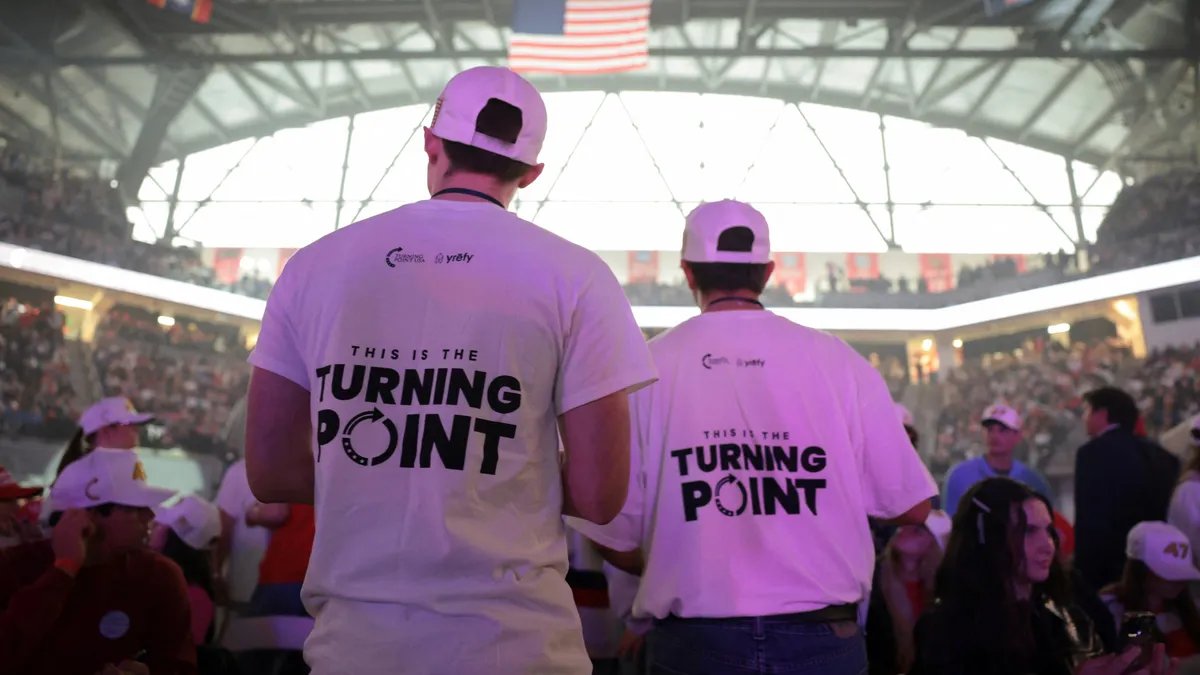
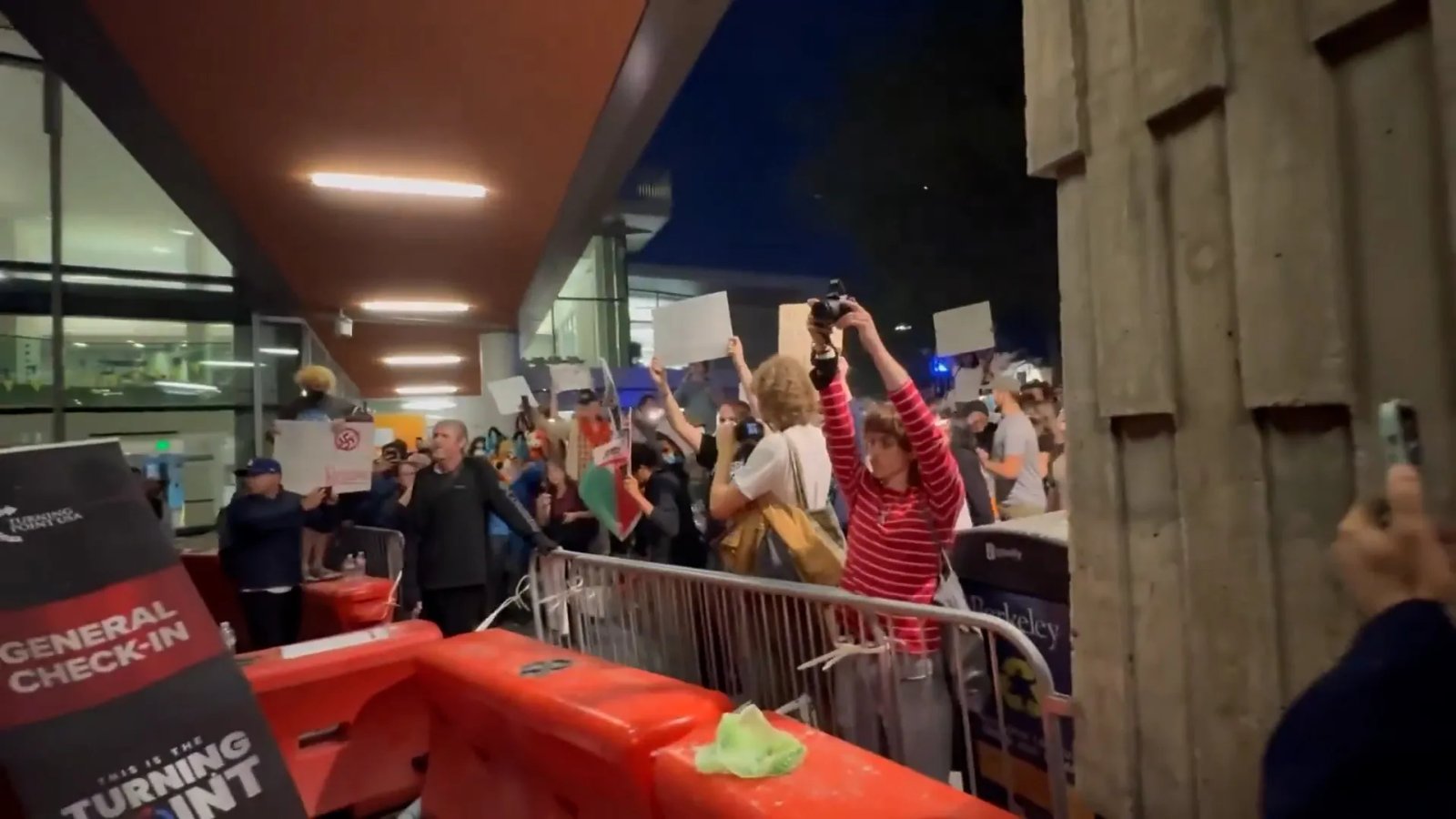
The scene unfolded with a kind of chaotic grandeur. By early afternoon, Sproul Plaza was a kaleidoscope of signs, human chains, and earnest faces. The air vibrated with drums, whistles, and the collective roar of hundreds of voices. Students had formed a human barricade near the entrance to the building where the Turning Point USA event was scheduled, making it incredibly difficult for attendees to enter. Some brave souls, attempting to cross the line, were met with jeers and shouts, occasionally a minor scuffle. “We have a right to be heard, too,” retorted Mark Jensen, a Turning Point USA member, amidst the din, pushing through the crowd with a small group of fellow attendees. “This is supposed to be a place for open dialogue, not censorship!” His face was flushed, a mixture of frustration and determination visible in his eyes. It was a tense standoff, a microcosm of the larger ideological battles playing out across the nation.
Escalation and Confrontation: The Moments Leading to Arrests
As the afternoon wore on, the initial passion of the protest began to curdle into something more volatile. The university police department (UCPD) had established a perimeter, but it quickly became clear they were outnumbered by the sheer volume of protestors. What started as a vocal demonstration began to involve physical confrontations. Reports flooded in of objects being thrown – water bottles, eggs, even a few smoke bombs. The sounds of chanting mixed with the blare of police sirens, a jarring soundtrack to the unfolding drama.
“The situation escalated quickly,” a UCPD officer, who wished to remain anonymous due to ongoing investigations, commented later that evening. “Our priority was safety, for everyone involved – protestors, attendees, and our own officers. But when projectiles are being thrown, and people are actively blocking emergency exits, we have to intervene.”
The decision was made to disperse the crowd using crowd control measures, including deploying pepper spray in some instances. This, understandably, only inflamed the situation further. That’s when the arrests began. Officers moved into the crowd, identifying individuals who were reportedly engaging in unlawful assembly, assault, or obstructing justice. One young man, clearly distraught, was seen being cuffed, his backpack slipping from his shoulder as he was led away. “I wasn’t doing anything!” he cried out, his voice cracking, as bystanders shouted in protest. It was a chaotic, painful moment for many witnessing the scene.
The Aftermath: Legal Ramifications and Student Voices
By the time the dust settled, at least 15 individuals had been arrested. Charges ranged from unlawful assembly and resisting arrest to battery on a peace officer. For the students involved, the immediate future looked uncertain, facing potential legal battles and disciplinary actions from the university. Civil liberties attorney Sarah Chen quickly stepped forward, offering legal aid to those arrested. “My client was simply exercising their First Amendment rights,” she stated emphatically in a press conference the following day. “The arrests, especially of those who were peacefully protesting, were an overreach and a clear violation of their constitutional freedoms.”
The arrests sent shockwaves across the UC Berkeley campus. Student organizations quickly mobilized, not only to support those arrested but also to demand accountability from the university administration and UCPD. A candlelight vigil was held the next evening, a quieter, more somber gathering, where students shared their fears and frustrations. “Honestly, it’s just exhausting,” confided Alex Kim, a senior looking visibly drained. “Every semester, it’s something new. It’s hard to focus on studies with all this tension. We come here to learn, but it feels like we’re constantly fighting for our values.”
The Shadow of the DOJ: What a Federal Investigation Means
Perhaps the most significant development following the protest and arrests was the announcement by the Department of Justice that it would be initiating a DOJ probe at UC Berkeley. This isn’t a casual inquiry; it’s a serious federal investigation. While the exact scope of the probe hasn’t been fully disclosed, sources suggest it will likely focus on several key areas:
- Whether the university adequately protected the free speech rights of the Turning Point USA attendees.
- The proportionality and legality of the UCPD’s response to the protestors, including the use of force and the criteria for arrests.
- Allegations that the university’s policies or actions might have inadvertently (or intentionally) contributed to the escalation of the conflict.
- Potential violations of civil liberties for both protestors and event attendees.
A federal investigation of this magnitude carries immense weight. It signifies that the events at Berkeley have transcended local campus politics and are now on the national radar, raising questions about broader issues of free speech on college campuses. “UC Berkeley is committed to upholding both free speech and campus safety,” read a statement from the university administration, emailed to students hours after the event. “We are cooperating fully with the Department of Justice and conducting our own internal review to ensure all policies and procedures were followed appropriately.” This kind of statement is standard, but the underlying pressure is anything but. The DOJ doesn’t launch probes lightly; they typically signal a belief that there may be systemic issues at play.
Campus Under Scrutiny: UC Berkeley’s Response and Future
The university now finds itself in an incredibly difficult position, caught between competing demands and principles. On one hand, it must uphold its foundational commitment to free speech, a principle that defines Berkeley’s very identity. On the other, it has a paramount responsibility to ensure the safety and well-being of its entire community. This requires navigating a minefield of conflicting viewpoints, legal precedents, and emotional intensity.
The administration will undoubtedly be forced to review and potentially revise its policies regarding:
- The booking and security protocols for controversial speakers.
- Guidelines for student protests and counter-protests.
- Training for campus police on crowd control and de-escalation tactics.
- Communication strategies with both student groups and the wider public during tense events.
This incident, and the resulting DOJ probe, will likely serve as a harsh lesson, not just for UC Berkeley but for universities nationwide grappling with similar challenges. The balance between allowing diverse viewpoints to be heard and preventing events from descending into chaos is incredibly delicate. For Berkeley, a place steeped in the history of protest, this moment is a profound test of its values and its ability to adapt in an increasingly polarized world. It forces everyone involved to ask tough questions about how to foster genuine dialogue without sacrificing safety or allowing one group’s expression to stifle another’s. The answers won’t be easy, and the path forward is sure to be fraught with challenges.
Frequently Asked Questions
| What specifically triggered the arrests and DOJ probe at UC Berkeley? | The arrests and subsequent Department of Justice probe at UC Berkeley were triggered by a contentious protest during a visit from the conservative student organization, Turning Point USA. Protesters clashed with attendees and law enforcement, leading to multiple arrests for various offenses and raising questions about free speech, campus security, and the handling of demonstrations. |
| What are the potential implications of a DOJ investigation for UC Berkeley? | A Department of Justice investigation can have significant implications for UC Berkeley, potentially leading to federal oversight, mandates for changes in campus security protocols, revised free speech policies, and even financial penalties. It could also impact the university’s reputation and its ability to host controversial speakers in the future, fostering a climate of increased scrutiny. |
| How does UC Berkeley typically handle controversial speakers and protests? | UC Berkeley has a long-standing history of being a hub for activism and free speech. The university typically endeavors to facilitate events for a wide range of speakers while also providing designated protest areas. However, balancing these rights with maintaining campus safety and preventing disruption has consistently been a challenge, requiring extensive planning and resource allocation. |
| What challenges do universities face in managing protests and ensuring free speech? | Universities face immense challenges in managing protests and ensuring free speech, including defining the line between protected speech and disruptive or dangerous behavior, allocating adequate security resources, protecting all students’ rights (both speakers and protestors), and navigating public and political pressure. The risk of escalating tensions and violence is ever-present. |
| What might be the long-term impact on free speech and protest culture at UC Berkeley? | The long-term impact on free speech and protest culture at UC Berkeley could be profound. It might lead to stricter enforcement of campus policies, a re-evaluation of how external groups are invited, and potentially a more cautious approach from students regarding protests. Conversely, it could also galvanize student activists, reinforcing Berkeley’s legacy as a battleground for civil liberties and free expression. |
Important Notice
This FAQ section addresses the most common inquiries regarding the topic.