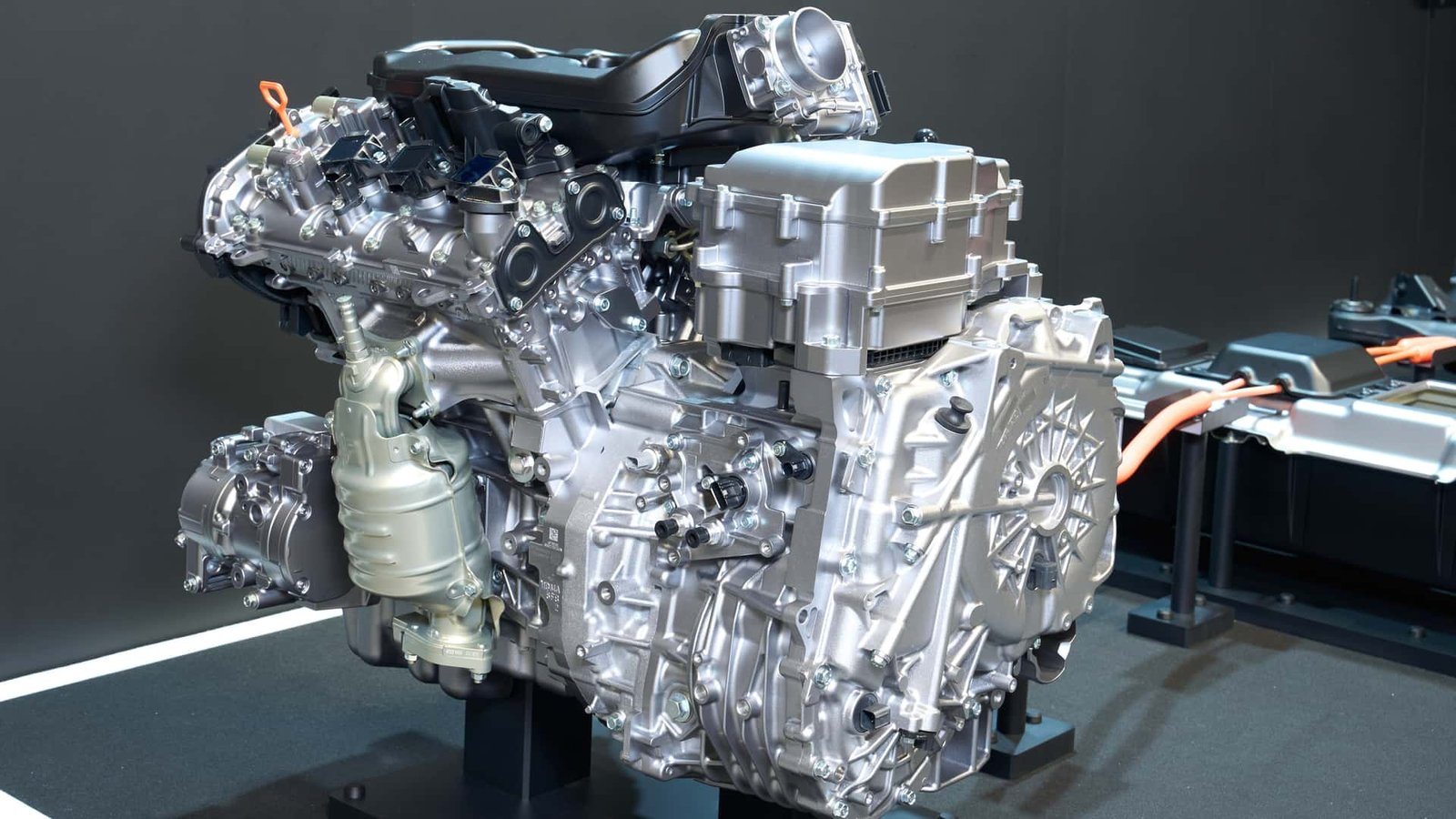
The hum of innovation at Honda’s research and development centers has always been a quiet, almost reverent sound, but lately, a different kind of buzz has been making waves through the automotive industry’s usually staid corridors. It’s the kind of news that makes you lean in a little closer, maybe even raise an eyebrow in pleasant surprise: word on the street, confirmed by a few well-placed whispers, is that Honda is developing a new V-6 for its upcoming hybrids. Yes, you read that correctly – a V-6, not a smaller four-cylinder, destined for hybrid applications. In an era where engine downsizing and electrification often go hand-in-hand, this feels like a powerful, almost defiant statement from the Japanese automaker. It’s a move that suggests Honda isn’t just playing the electrification game; they’re looking to redefine what a performance-oriented hybrid can be, pushing boundaries and challenging conventional wisdom about efficiency and power. For those of us who appreciate both exhilarating drives and a nod to environmental responsibility, this development feels like hitting the jackpot. It suggests that the future of hybrid vehicles might not solely be about maximizing miles per gallon, but also about delivering an uncompromised, engaging driving experience, perhaps even a luxurious one, that still carries the crucial “hybrid” badge. This commitment to marrying robust internal combustion with cutting-edge electric assistance could very well carve out a unique niche for Honda’s next-generation V-6 hybrids in a rapidly evolving market.
Think about it for a moment. While many manufacturers are scaling back to turbocharged three and four-cylinder engines, Honda appears to be zagging where others are zigging. This isn’t just about raw power, though a V-6 certainly brings plenty of that; it’s about the inherent refinement, the distinctive sound, and the effortless torque delivery that a larger displacement engine naturally offers. Coupled with sophisticated hybrid technology, this could create a driving sensation that’s truly exceptional, bridging the gap between traditional performance and future-forward efficiency. My mind immediately jumps to potential applications—could this be the heart of a successor to the legendary Acura NSX, perhaps a more accessible performance hybrid grand tourer, or even a luxury SUV that demands both grunt and green credentials? The possibilities are thrilling, hinting at a future where we don’t have to sacrifice our love for robust engines on the altar of sustainability.
This bold strategic pivot isn’t happening in a vacuum. The automotive landscape is fiercely competitive, with every major player vying for a piece of the burgeoning hybrid and EV market. Honda, known for its engineering prowess and innovative spirit, seems to be making a calculated gamble that there’s a significant segment of drivers who still crave the visceral connection of a multi-cylinder engine, even as they demand better fuel economy and reduced emissions. It’s a tricky tightrope walk, balancing power and responsibility, but if any company has the engineering chops to pull it off, it’s Honda. The whispers from inside suggest a meticulous approach, blending their renowned V-TEC heritage with advanced electric motor integration, promising something truly special for their upcoming hybrid lineup.
The “Why” Behind Honda’s V-6 Hybrid Strategy
Why now? Why a V-6? These are the questions buzzing among gearheads and industry analysts alike. Frankly, it’s a fascinating strategic decision given the industry’s pervasive trend towards smaller, forced-induction engines. “It’s a clear signal that Honda isn’t just chasing efficiency metrics; they’re pursuing a holistic driving experience,” remarked Alex Chen, an automotive powertrain consultant, during a recent online panel. “While everyone else is talking about three-cylinder plug-ins, Honda is asking, ‘What if a hybrid could also sound incredible and pull like a freight train?'” That really resonated with me. Sometimes, in the pursuit of pure numbers, we forget the joy of driving. A V-6, even hybridized, offers a smoothness and a torque band that a smaller engine often struggles to replicate, especially under heavy load or at higher speeds.
One key factor is the target market. This isn’t likely for entry-level Civics or even CR-Vs. We’re talking about premium vehicles, potentially under the Acura banner, where refinement, power, and prestige are paramount. Imagine a successor to the Acura RLX, or a larger, more luxurious SUV like the MDX, perhaps even a new performance coupe, all powered by a sophisticated Honda V-6 hybrid engine. These are vehicles where customers expect more than just decent fuel economy; they demand a powerful, quiet, and responsive powertrain that elevates the driving experience. The V-6 inherently provides a better foundation for this level of performance and luxury than a four-cylinder.
Furthermore, the integration of hybrid technology allows Honda to mitigate the traditional downsides of a larger engine, namely fuel consumption and emissions. By pairing the V-6 with electric motors, battery packs, and intelligent power management systems, the engine can operate in its most efficient range, with electric power filling in during low-speed driving, stop-and-go traffic, or for an instant torque boost. This synergy makes a V-6 viable in an increasingly environmentally conscious world, proving that a larger engine can indeed be part of a sustainable future.
Engineering the Next-Gen V-6 Hybrid
The engineering challenge here is immense, but Honda has a rich history of overcoming such hurdles. We can expect this new Honda V-6 for upcoming hybrids to be a marvel of modern automotive technology. Think direct injection, variable valve timing (VTEC, of course!), and potentially even cylinder deactivation, allowing the engine to run on fewer cylinders when full power isn’t required. These technologies, already impressive on their own, become truly transformative when integrated into a hybrid system.
An anonymous source, a former engineer who previously worked on Honda’s NSX powertrain, hinted at the complexity. “It’s not just slapping an electric motor onto an existing V-6. This is a ground-up integration. They’re looking at optimized combustion cycles, thermal management systems designed for both engine and battery, and power electronics that can handle significant loads.” He then paused, a smile playing on his lips, “Imagine the torque vectoring possibilities with multiple electric motors and a strong V-6 as the anchor. It’s going to be something else.” This really painted a vivid picture for me, imagining the precise control and instantaneous response such a system could offer.
Possible configurations might include:
- A single electric motor integrated into the transmission for parallel hybrid operation.
- A multi-motor system, similar to the previous Acura NSX, with motors on the front axle for all-wheel drive and enhanced performance.
- Plug-in hybrid (PHEV) capabilities, offering a significant all-electric range alongside the V-6 power.
The latter seems particularly appealing for luxury applications, providing guilt-free daily commutes on electric power, with the V-6 kicking in for longer journeys or spirited driving. This flexibility is what modern consumers are increasingly demanding.

Honda’s Hybrid Journey: A Historical Perspective
Honda isn’t new to hybrids. Remember the original Insight, introduced way back in 1999? It was a quirky, aerodynamic two-seater that prioritized fuel economy above all else. Then came the Civic Hybrid, and later the CR-Z, attempting to blend sportiness with efficiency. While these early efforts were commendable, they often felt like compromises, lacking the outright power or the seamless integration that true performance enthusiasts craved. This new V-6 hybrid initiative marks a distinct departure from that earlier philosophy.
“Honda learned a lot from its early hybrid experiments,” explained Maria Rodriguez, an automotive historian and lecturer. “They’ve always been innovators, but now they’re applying that knowledge not just to achieve efficiency, but to enhance performance without sacrificing it. This V-6 move is the culmination of decades of research, blending their internal combustion mastery with their growing expertise in electrification.” I couldn’t agree more; it feels like a natural evolution rather than a complete revolution, building on existing strengths in a very smart way. It reminds me of how they refined VTEC over the years, taking a good idea and making it truly iconic.
The previous Acura NSX, with its twin-turbo V-6 and three electric motors, was a technological tour de force, showcasing Honda’s ability to create a high-performance hybrid supercar. While expensive and niche, it provided a fantastic testbed for advanced hybrid powertrain concepts. It’s highly probable that many of the lessons learned from the NSX project are now being scaled and adapted for more mainstream, albeit still premium, applications. This trickle-down technology is precisely what makes automotive innovation so exciting.
Market Impact and Competitive Landscape
How will this new Honda V-6 hybrid engine stack up against the competition? The premium performance hybrid segment is becoming increasingly crowded. Lexus has its multi-stage hybrid systems, BMW is pushing plug-in hybrids across its lineup, and Mercedes-AMG is electrifying its performance models. However, Honda has a unique proposition. While many European competitors use smaller, often four-cylinder, engines for their more “eco-conscious” performance models, Honda is doubling down on the V-6.
This could give Honda a distinct advantage in terms of engine character. A V-6 typically offers a smoother power delivery, a more pleasing exhaust note, and a stronger sense of effortless acceleration compared to a highly boosted four-cylinder. For buyers in the luxury segment, these subjective qualities often matter as much, if not more, than pure horsepower figures. Imagine pulling away from a stoplight, the V-6 humming quietly, then roaring to life with electric assist, providing a surge of power that feels both refined and potent.
“It could be a major differentiator,” commented a dealership manager for a multi-brand luxury group, who preferred to remain unnamed. “Customers still come in asking for six-cylinder engines. There’s a perception of quality and longevity, and a certain sound. If Honda can deliver that with hybrid efficiency, they’ll turn heads. It’s an interesting play, giving people what they implicitly want, but with a modern twist.” This is a crucial point; sometimes, innovation isn’t about completely reinventing the wheel, but about making the familiar better in unexpected ways.
The Sound of Power and Efficiency
One aspect often overlooked in the hybrid discussion is the auditory experience. Electric vehicles are silent, which is great for quiet commutes, but sometimes, you crave the symphony of a well-tuned engine. A V-6 offers a far more engaging and characterful sound than a four-cylinder, especially under load. By integrating this engine into a hybrid system, Honda could offer drivers the best of both worlds: serene electric motoring for city driving and a thrilling V-6 soundtrack when the road opens up.
This focus on the emotional connection with the vehicle is a smart move. In a world increasingly saturated with similar-looking and similar-performing EVs, creating a unique and desirable driving experience will be paramount. A new V-6 hybrid from Honda could appeal to those who aren’t quite ready to go full electric but still want to embrace greener technology without sacrificing the traditional joys of driving. It’s about balance, a concept Honda has always championed.
Environmental Responsibility Meets Performance
The idea of a V-6 hybrid might seem counterintuitive to some environmentalists. “A V-6? For a hybrid? Isn’t that defeating the purpose?” I heard someone mutter at a recent industry event. But this overlooks the incredible advancements in hybrid technology. Modern hybrid systems are not just about adding an electric motor; they are about intelligently managing energy, optimizing engine operation, and recovering wasted energy.
When combined with a sophisticated hybrid system, a V-6 can actually be remarkably efficient. Electric motors can handle low-speed acceleration, meaning the V-6 doesn’t have to burn fuel in its least efficient range. Regenerative braking captures energy that would otherwise be lost as heat. And with plug-in capabilities, a significant portion of daily driving could be entirely emissions-free. This isn’t your grandpa’s V-6; this is a highly optimized, digitally controlled powertrain designed for the 21st century.
“It’s about finding the sweet spot between power, refinement, and environmental stewardship,” stated Dr. Kenji Tanaka, a professor of automotive engineering at a university in Japan. “A well-engineered V-6 hybrid can offer lower overall emissions and better real-world fuel economy than many smaller, non-hybridized engines, especially in larger, heavier vehicles where a four-cylinder might struggle and constantly be pushed to its limits.” This insight really put things into perspective for me, highlighting how context is everything when evaluating engine efficiency.
The Future is Exciting: What This Means for Honda
This commitment to a new V-6 for its upcoming hybrids signals a fascinating direction for Honda’s future powertrain strategy. It demonstrates a willingness to invest in internal combustion even as the world shifts towards electrification, suggesting a belief that there’s still a significant lifespan and market for high-performance, efficient hybrid vehicles. We might see this engine in a variety of premium Honda and Acura models over the next decade, from luxury sedans to powerful SUVs and perhaps even a new sports car.
It also solidifies Honda’s reputation as an engineering-driven company that isn’t afraid to chart its own course. While many are announcing timelines for phasing out ICE entirely, Honda seems to be embracing a multi-pronged approach, offering solutions for a diverse range of customer needs and preferences. For consumers, this means more choice, more innovation, and perhaps, more reasons to get excited about what Honda has coming next. I, for one, am eagerly anticipating the first test drives of these new V-6 hybrids – the sound, the power, the seamless transition, it promises to be a truly engaging experience. The future is not just electric; it’s also about intelligent power, and Honda seems poised to deliver on that promise in a big way.
Frequently Asked Questions
| What is Honda developing for its upcoming hybrids? | Honda is reportedly developing a brand-new V-6 engine specifically designed for integration into its next generation of hybrid vehicles. This is a significant move as many automakers are downsizing engines for hybrid applications. |
| What are the expected benefits of a V-6 in a hybrid system? | A V-6 engine offers inherent benefits such as superior refinement, smoother power delivery, a more engaging sound, and higher torque compared to smaller engines. When combined with hybrid technology, it can achieve strong performance with improved fuel efficiency and lower emissions, appealing to premium segments seeking both power and sustainability. |
| Which Honda or Acura models might feature this new V-6 hybrid engine? | While Honda has not officially confirmed specific models, industry speculation suggests it could power higher-end Honda vehicles and premium Acura models. Potential candidates include successors to luxury sedans like the Acura RLX, larger SUVs such as the Acura MDX, or even new performance-oriented coupes or sports cars, possibly drawing inspiration from the Acura NSX’s hybrid V-6. |
| How does a V-6 hybrid align with environmental goals and efficiency trends? | By integrating a V-6 with advanced hybrid technology, Honda aims to combine robust performance with environmental responsibility. The hybrid system allows the engine to operate efficiently, with electric motors assisting at low speeds, regenerative braking recovering energy, and potentially offering plug-in capabilities for emissions-free electric-only driving over significant distances. This negates many traditional efficiency concerns associated with larger engines. |
| What does this development mean for Honda’s overall powertrain strategy? | This development indicates Honda’s commitment to a diversified powertrain strategy, not solely relying on full electrification or engine downsizing. It suggests a belief in the continued relevance of high-performance, refined hybrid powertrains, catering to customers who desire the blend of traditional engine character with modern efficiency and lower emissions. It positions Honda as an innovator balancing various aspects of automotive future. |
Important Notice
This FAQ section addresses the most common inquiries regarding the topic.