What Makes a Car Truly Long-Lasting?
Before we dive into specific brands, let’s understand the bedrock of vehicle longevity. It’s not just luck; it’s a meticulous combination of engineering prowess, quality materials, and a manufacturer’s philosophy. Think about it: a car that lasts hundreds of thousands of miles isn’t just about a strong engine. It’s about transmissions built to endure constant shifting, rust-resistant body panels, robust electrical systems, and interiors that stand up to daily wear and tear. A commitment to quality control during manufacturing is paramount, ensuring every component, from the smallest bolt to the largest chassis piece, meets stringent standards.
“You can tell a lot about a brand’s priorities by how they build their suspension components,” remarked Sarah Chen, a veteran mechanic I chatted with last week at her garage, grease smudged on her cheek. “Some cut corners, others over-engineer. The ones that over-engineer? Those are the cars still rumbling through my shop decades later, just needing routine love.” It’s this dedication to durability that separates the fleeting from the enduring. These are the brands that consistently top reliability surveys, hold their value, and inspire fierce loyalty from owners who swear by their trusty steeds. It’s about more than just getting from point A to point B; it’s about a relationship with a machine you can truly depend on, year after year.
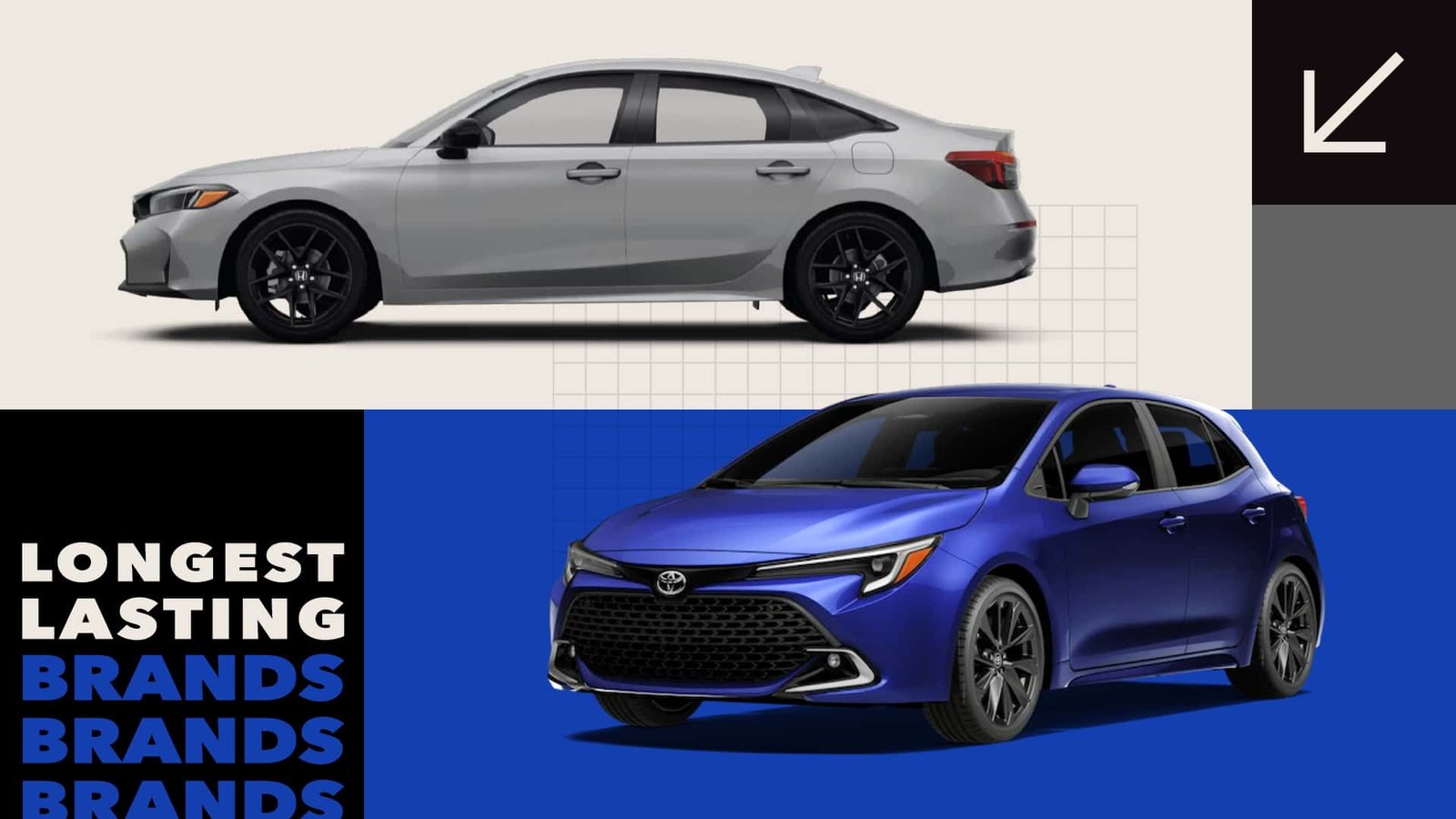
The Top 10 Longest-Lasting Car Brands
Now for the moment of truth. Based on extensive data from sources like iSeeCars.com, Consumer Reports, and countless owner testimonials, these are the brands that consistently demonstrate superior longevity. They are the champions of endurance, the brands you can confidently buy today, expecting them to serve you faithfully for years, perhaps even decades, to come.
1. Toyota: The Undisputed King of Durability
It should come as no surprise that Toyota often sits at the very pinnacle of reliability and longevity charts. Their reputation isn’t built on flashy marketing, but on a relentless pursuit of quality and engineering excellence. Models like the Toyota Camry, Corolla, Highlander, and especially the Tacoma pickup truck, are legendary for clocking hundreds of thousands of miles with minimal fuss. My own uncle still drives a 1998 4Runner, nearing 350,000 miles, and it starts every time, rain or shine. (He just calls it “Old Faithful,” with a proud grin.) Toyota’s philosophy of continuous improvement, coupled with readily available and affordable parts, makes them an obvious choice for anyone seeking a truly longest-lasting car. Their hybrid technology, seen in models like the Prius, also showcases incredible durability, often outlasting traditional gasoline powertrains.

2. Honda: Engineered for Endurance
Right on Toyota’s heels, Honda has carved out its own formidable niche in the world of durable vehicles. Known for their meticulously engineered engines and solid build quality, Hondas are a common sight with incredibly high mileage. The Honda CR-V, Civic, Accord, and Odyssey minivan are particularly well-regarded for their ability to withstand the test of time. I once met a delivery driver who swore his Accord had seen every corner of his state, boasting 400,000 miles on the original engine. “It’s all about the maintenance, mate, but she’s always given me a solid base,” he told me, wiping oil from his hands. Honda’s commitment to internal engineering and a focus on practical, user-friendly design translates directly into vehicles that are not only pleasant to drive but also remarkably resilient.
3. Subaru: All-Wheel Drive Toughness
Subaru often flies a bit under the radar compared to its Japanese counterparts, but its loyal following knows the secret: these cars are built tough. With their symmetrical all-wheel-drive systems and horizontally opposed “boxer” engines, Subarus are designed to handle diverse conditions and keep going. The Subaru Outback, Forester, and Legacy are frequently cited in studies for their high percentage of vehicles reaching over 200,000 miles. Living in a region with harsh winters, I see Subarus of every vintage thriving, a testament to their robust construction. “My Forester has climbed mountains and battled blizzards for ten years,” shared a local ski instructor recently. “Never once left me stranded. It’s more reliable than my alarm clock!”
4. Lexus: Luxury That Lasts
As Toyota’s luxury division, it’s natural that Lexus inherits much of its parent company’s legendary reliability. However, Lexus takes it a step further, combining that proven engineering with premium materials and exquisite craftsmanship. Models like the Lexus RX, ES, and GX are frequently found among the top percentile of cars to reach high mileage, often with their luxury features still fully functional. This means you don’t have to sacrifice comfort or refinement for longevity. It’s a fantastic blend, offering a smooth, quiet ride that continues for hundreds of thousands of miles. For discerning buyers who want both opulence and endurance, Lexus stands as a compelling, long-term investment.
5. Mazda: Understated Reliability
Mazda has steadily climbed the ranks of reliability, becoming a quiet contender among the longest-lasting car brands. While perhaps not as ubiquitous as Toyota or Honda in the high-mileage club, Mazda’s commitment to “Jinba Ittai” (horse and rider as one) driving dynamics also translates into solid engineering. Their Skyactiv technology focuses on efficiency and durability across the engine, transmission, chassis, and body. The Mazda3, CX-5, and Mazda6 have all shown impressive reliability, often surprising owners with their ability to shrug off years and miles. I’ve heard stories from owners who are genuinely shocked at how little trouble their Mazdas give them, even as the odometer ticks well past 150,000 miles. They’re a testament to thoughtful, well-executed design.
6. Nissan: Strong Contenders in Key Segments
While Nissan has had its ups and downs, certain models consistently prove to be incredibly long-lasting, particularly their trucks and SUVs. The Nissan Titan pickup and the Armada SUV are robust vehicles built for heavy-duty use and tend to rack up serious mileage. Even their sedans like the Altima and Sentra, especially earlier generations, have a reputation for being workhorses. My neighbor, who runs a landscaping business, swears by his old Frontier pickup. “It’s scratched, dented, and seen better days cosmetically,” he chuckled, “but that engine just won’t quit. Best money I ever spent.” Nissan’s VQ series engines, found in many models, are particularly celebrated for their durability and power, contributing significantly to the brand’s overall longevity.
7. Hyundai: The Rising Star of Durability
Hyundai’s transformation over the past two decades has been remarkable, moving from an economy brand to a serious competitor in terms of quality, design, and crucially, reliability. Their extended warranties were initially a huge draw, but now the vehicles themselves are proving their worth over the long haul. The Hyundai Elantra, Sonata, and Tucson are increasingly appearing in high-mileage lists, thanks to improved manufacturing processes and a focus on robust powertrains. “I bought my Santa Fe on a whim, thinking it was a cheap option,” confessed a friend recently. “Here I am, eight years later, 180,000 miles on it, and it’s still running like a top. Blew my expectations out of the water!” It’s a clear indicator that Hyundai is serious about building vehicles that last.
8. Kia: Sister Brand, Shared Reliability
Much like Hyundai, its corporate sibling, Kia has also made incredible strides in quality and longevity. Sharing many platforms and engineering principles with Hyundai, Kia vehicles benefit from the same dedication to improvement and robust construction. Models such as the Kia Optima (now K5), Sorento, and Sportage are frequently noted for their durability and ability to accumulate high mileage without major issues. The value proposition of Kia is also fantastic; you often get more features for your money, coupled with a vehicle designed to endure. Their focus on stylish designs hasn’t overshadowed their commitment to mechanical soundness, making them attractive to those who want both looks and lasting performance.
9. GMC: Truck and SUV Stamina
When it comes to American manufacturers, GMC consistently stands out for its heavy-duty trucks and SUVs. Built on robust platforms often shared with Chevrolet, GMC vehicles are designed for hauling, towing, and tackling tough conditions, which inherently demands superior durability. The GMC Sierra pickup and the Yukon SUV are powerhouses known for their longevity, frequently reaching well over 200,000 miles. These are the kinds of vehicles you see on construction sites or pulling boats to the lake, year after year. “My old Sierra has been through hell and back,” a contractor I know once told me, “but she keeps on chugging. You just can’t kill a good GMC.” Their V8 engines, in particular, have a reputation for being incredibly resilient.
10. Chevrolet: American Workhorses
Chevrolet, another American giant, earns its spot among the longest-lasting car brands primarily through its incredibly popular and durable truck and SUV lineup. The Chevrolet Silverado and Tahoe are legendary for their ability to withstand grueling work and high mileage. These vehicles are the backbone of many American families and businesses, proving their mettle day in and day out. While some of their passenger cars might not hit the same longevity highs as their Japanese counterparts, the trucks and large SUVs are undeniably built for the long haul. “We’ve had our Suburban for 15 years,” my cousin mentioned at a family gathering, “three kids, two dogs, countless road trips. It just keeps going. It’s practically part of the family now.” Their powerful engines and sturdy frames are designed to tackle almost anything.
The Long Road Ahead: Making Your Car Last
So there you have it, a definitive list of car brands that truly embody the spirit of longevity. While these manufacturers consistently produce durable vehicles, remember that even the most robust car needs a little love and attention. Regular maintenance—oil changes, fluid checks, tire rotations, and addressing minor issues before they become major problems—is absolutely crucial. A well-cared-for car from one of these brands isn’t just a purchase; it’s an investment in years of reliable service, fewer headaches, and more money in your pocket that isn’t going towards unexpected repairs.
Choosing a vehicle from one of these brands means you’re not just buying a mode of transport; you’re buying peace of mind. You’re buying the freedom to plan road trips without dread, the confidence to commute daily without worry, and the satisfaction of knowing you’ve made a truly smart, long-term decision. In a world increasingly focused on the new and disposable, embracing longevity in your vehicle choice feels refreshingly sensible, doesn’t it? It’s a quiet rebellion against planned obsolescence, a testament to quality that endures.
Frequently Asked Questions
| What factors contribute to a car brand’s longevity? | A car brand’s longevity is primarily driven by several key factors: engineering quality, the use of durable materials, rigorous testing standards, and a commitment to accessible and affordable parts and service. Brands that prioritize robust engine design, strong transmissions, and rust-resistant bodywork tend to last longer. Additionally, a strong dealership network and readily available parts make it easier for owners to maintain their vehicles for extended periods, directly impacting a car’s overall lifespan. |
| What are the main benefits of owning a long-lasting car? | The benefits of owning a long-lasting car are numerous and significant. Financially, it means lower depreciation over time, reduced monthly payments (or no payments if fully owned), and fewer repair costs compared to less reliable vehicles. Environmentally, keeping a car longer reduces manufacturing waste and the carbon footprint associated with new car production. Emotionally, it provides a sense of reliability and trust, knowing your vehicle will get you where you need to go without constant worry, offering peace of mind and often, a deeper connection to your ride. |
| How can I maximize the lifespan of my own vehicle? | Maximizing your vehicle’s lifespan involves consistent preventative maintenance. This includes regular oil changes, checking fluid levels, tire rotations, brake inspections, and adhering to the manufacturer’s recommended service schedule. Driving habits also play a crucial role: avoiding aggressive acceleration and braking, minimizing short trips, and protecting your car from harsh weather elements can significantly extend its life. Treating your car with care, much like a trusted companion, ensures it remains a reliable partner for years to come. |
| Are there any downsides to buying a car primarily for longevity? | While admirable, focusing solely on longevity might mean sacrificing some of the latest technological advancements, cutting-edge infotainment systems, or the most stylish designs. Long-lasting models often prioritize function over form, and sometimes the most robust engineering isn’t always paired with the most exciting driving experience. You might also find that while maintenance costs are low, some older models may not meet the latest safety or fuel efficiency standards of newer, albeit less durable, counterparts. |
| How might future automotive technologies impact car longevity? | Future automotive technologies are poised to dramatically impact car longevity. Electric vehicles (EVs), for instance, have fewer moving parts than internal combustion engines, potentially leading to lower maintenance needs and longer lifespans for their powertrains. Advanced diagnostics and predictive maintenance systems could alert owners to potential issues before they become critical, further extending vehicle life. However, the complexity of software and battery degradation remain factors that could influence overall longevity in unforeseen ways, making it an evolving landscape. |
Important Notice
This FAQ section addresses the most common inquiries regarding the topic.