The air hung heavy and humid over the Gualaca Migratory Reception Station in Chiriquí, Panama, a place usually teeming with weary travelers looking north, always north. But today, a different kind of movement was underway. A boat, not sleek or grand, but utilitarian and worn, bobbed gently on the muddy waters of a nearby river, its purpose starkly clear. It wasn’t heading toward the vast, enticing horizon of opportunity that so many had dreamt of; no, this vessel was turning its bow resolutely, undeniably, south. Onboard, faces etched with a blend of exhaustion, despair, and a profound sense of defeat stared out, their eyes reflecting the shattered fragments of what they had once held so dear: the American dream. It’s a cruel twist of fate, isn’t it? To endure treacherous jungles, perilous border crossings, only to find oneself on a boat in Panama, being ferried further away from that elusive promise. Each ripple in the water felt like a tear, each chug of the engine a sigh of resignation, as the reality sunk in: this was not the journey they had envisioned. This was the forced reversal, the bitter end of a hopeful beginning, a stark reminder that for some, the path to a better life is ruthlessly rerouted, leaving only the echo of what could have been.
For countless individuals, the journey through the infamous Darién Gap and across Central America represents the ultimate gamble, a desperate bid for a new life. They walk for weeks, sometimes months, braving nature’s fury and criminal gangs, all for the chance to touch American soil. To see them now, packed onto a boat meant for return, is to witness the brutal efficiency of evolving migration policies. It’s a silent testament to how quickly hope can transform into heartbreak, especially when international agreements dictate a course of action that defies the very currents of human ambition. These journeys south are not merely logistical operations; they are profound human tragedies, playing out daily in the shadows of the global migration crisis. We often hear about the challenges of reaching the U.S. border, but rarely do we consider the painful, often forced, journey in reverse.
You see, the usual narrative is about the arduous trek north, through Colombia, then Panama, Costa Rica, Nicaragua, Honduras, Guatemala, and Mexico, all pointing towards El Norte. But a quiet, yet deeply significant, shift has been occurring. For those who manage to cross the Darién Gap into Panama, only to be deemed ineligible for asylum or apprehended at later stages, the path can sometimes lead back. Not back to their exact origin, but south, further into the region, often to countries ill-equipped to handle the influx or to transit points that complicate their future significantly. This reverse flow, orchestrated by various governments under repatriation agreements, is a harsh reality check, pulling migrants away from the very idea of a new life and into a deeper vortex of uncertainty.
The Unseen Current: Why Boats Head South from Panama
It’s an image that haunts you, isn’t it? A boat, loaded with people, moving against the tide of their dreams. The reason for this southward movement from Panama is multifaceted, primarily rooted in shifting border control policies and bilateral agreements between Central American nations. Panama, often the first major transit country after the Darién Gap, has found itself at the forefront of managing unprecedented migratory flows. When migrants arrive in Panama, they are typically processed at reception centers like Gualaca. Here, their information is taken, and initial screenings occur. For many, particularly those from countries like Venezuela, Ecuador, and Colombia, who do not claim asylum in Panama, or whose claims are quickly denied, the path forward isn’t necessarily north to Costa Rica.

Instead, they might find themselves subject to repatriation agreements, often facilitated by international organizations, that see them returned to their country of origin or a “safe third country” that has an agreement in place. Sometimes, these returns are voluntary, but frequently, they are not. “We were just trying to get to a place where we could work, provide for our families,” shared Maria, a Venezuelan mother of two, her voice barely a whisper as she recounted her experience. “They told us we couldn’t go north, that we had to go back. It felt like a punch to the gut. All that suffering for nothing.” This isn’t just about individual nations; it’s a regional response, often under pressure, to manage a crisis that feels overwhelming.
The Harsh Reality of a Reversed Journey
Imagine spending months, perhaps even years, planning, saving, and then enduring unimaginable hardship to move in one direction, only to be forced to turn around. The conditions on these boats heading south can vary, but they are rarely comfortable. Overcrowding is common, as is a pervading sense of despair. The journey is short, often just a few hours along river systems or coastlines, but the psychological distance it covers is immense. It’s not the vast ocean crossing of a refugee seeking distant shores; it’s a constrained, local journey that signifies global failure. These operations are often less publicized than the dramatic images of border walls or migrant caravans, but they are no less impactful on the lives they touch.
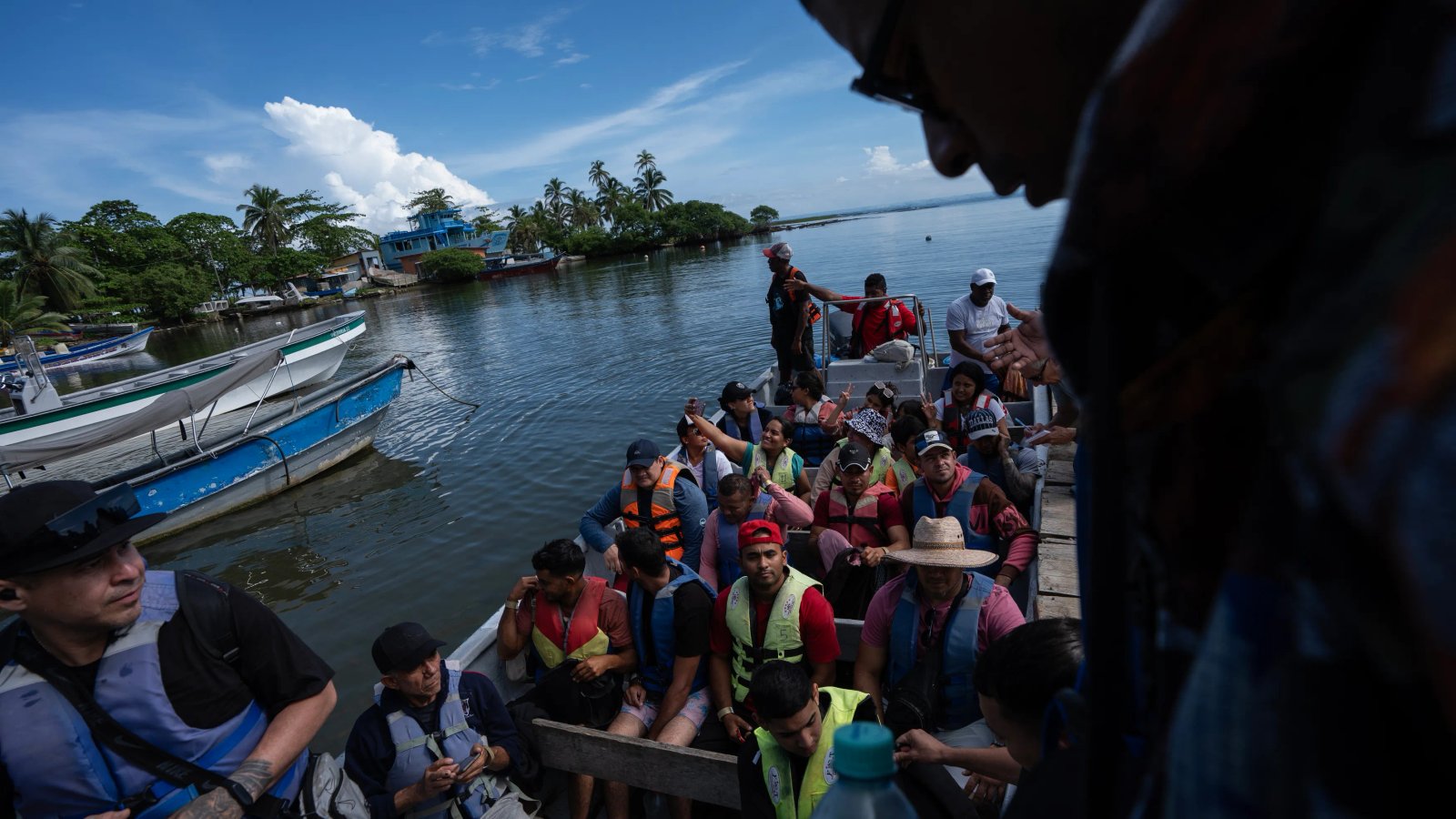
These specific Panama boat journeys are often part of a broader strategy, supplementing deportation flights. While flights are typically used for direct return to countries of origin, these boats might shuttle individuals to nearby South American nations, like Colombia, or even to transit points within Panama itself, from where further repatriation can be arranged. “We’ve seen an increase in these river returns,” stated a local aid worker, who wished to remain anonymous due to the sensitivity of the topic. “It’s quicker, quieter. But the faces… the faces tell a story of absolute despondency. They thought they had left all that behind.” It’s a critical component of regional efforts to manage irregular migration, one that often escapes international headlines but significantly impacts thousands of lives.
Dreams Drowned: The Crushing Weight of Expectation
What drives someone to leave everything behind, to face death in the jungle, only to end up on a boat pointing in the wrong direction? The answer is almost always the pursuit of the American dream—a potent symbol of economic opportunity, safety, and a better future for one’s children. Many migrants carry tales of unbearable poverty, political instability, or violent threats in their home countries. They imagine a life where their hard work is rewarded, where their children can go to school without fear, where basic necessities are a given. The expectation is palpable, a fierce flame that fuels their every step.
To have that flame extinguished, not by a sudden storm or an impassable mountain, but by a government policy that physically turns them around, must be utterly devastating. “I sold everything, everything I owned, to make this trip,” recounted a young man from Ecuador, barely old enough to shave. His eyes were downcast, his shoulders slumped. “My grandmother gave me her last savings. I promised her I would send money. Now… now what will I tell her?” The emotional toll is immeasurable. It’s not just the physical exhaustion; it’s the profound sense of failure, the shame, and the fear of returning to the very circumstances they risked everything to escape. These individuals believed they were on the cusp of something new, something better, only to be yanked back into the old, familiar suffering. The contrast between their hopeful departure and their despairing return is a cruel irony.
The Daunting Logistical Maze of Repatriation
So, how exactly do these operations work? It’s a complex dance involving multiple governmental agencies, sometimes international bodies like the International Organization for Migration (IOM), and various national border forces. The decision to send migrants south is often born out of agreements designed to control the flow of people and to alleviate the burden on transit countries like Panama. Panama, with its strategic location, plays a crucial role in interdicting and processing migrants. When migrants are apprehended or processed, officials assess their nationality and potential eligibility for asylum. If they are deemed inadmissible or do not claim asylum, and if there are agreements in place with their country of origin or other transit nations, repatriation becomes an option.

These operations require coordination, funding, and often, a fleet of buses and boats. For example, some agreements allow for the transfer of migrants to the Colombian border, where they are then taken over by Colombian authorities for further processing or repatriation to their home countries. “It’s a massive undertaking,” explained a Panamanian immigration official, who preferred to stay anonymous. “We have to ensure safety, provide humanitarian aid during the process, and coordinate with multiple agencies. It’s not just putting people on a boat; there’s a protocol for every step, even if it feels harsh to those involved.” The goal, from a governmental perspective, is to maintain order and manage resources, but the human cost remains a difficult aspect to reconcile.
Beyond Panama: The Wider Implications for Regional Migration
This strategy of returning migrants south, particularly by boat, isn’t just a localized Panamanian issue; it’s a symptom of a much larger, regional challenge in managing migration. It signifies a hardening stance across several Central American nations, often pressured by the United States, to stem the flow before it reaches their own borders. The implications are profound. Firstly, it creates a new layer of danger for migrants, who may attempt more perilous routes to avoid detection and return. Secondly, it places an additional burden on countries of origin, which may already be struggling with economic and social crises that prompted the migration in the first place. Returning large numbers of people can destabilize already fragile communities.
We’re seeing a trend where the traditional pathways are being closed or made significantly more difficult, leading to a desperate search for alternatives. This strategy might offer a temporary deterrent for some, but for others, it merely delays the inevitable. “They send us back, but to what?” asked a woman carrying a small child, her voice cracking with exhaustion. “Our homes are still broken, our families still hungry. We will try again. We have to.” Her words encapsulate the persistent, undeniable force of human desperation and hope. This isn’t just about border security; it’s about understanding the root causes of migration and addressing them comprehensively, rather than just managing the symptoms. Without this broader approach, these southward journeys will likely continue, a tragic testament to unresolved global issues.
Voices from the Journey: Stories of Resilience and Despair
Every person on that boat has a story, a complex tapestry of hopes, fears, and profound experiences. Let’s listen to a few fragments:
* Diego, 32, from Venezuela: “I worked as a teacher back home, but my salary couldn’t buy food for a week. My wife is pregnant. I thought if I could just make it to the US, I could send money. Now, I’m going back to nothing. How do I tell my wife?” His hands trembled as he spoke, illustrating the depth of his anxiety.
* Elena, 20, from Ecuador: “My brother was killed by gangs. I had to leave. I dreamed of becoming a nurse in America. I’m not giving up. They can send me back south a hundred times, but I will find a way north. This is just a delay.” Elena’s defiant stance, despite her obvious fatigue, highlighted incredible resilience.
* A Panamanian Border Agent (anonymous): “It’s difficult, you know? We see their faces, their children. We understand why they come. But we have our orders, our laws. We can’t let everyone pass, or our system would collapse. It’s a lose-lose situation for everyone involved.” His words reflected the moral quandary faced by those enforcing these policies.
These stories paint a vivid picture of the human dimension of the crisis. While governments wrestle with policy and logistics, individuals grapple with shattered lives and uncertain futures.
Common Reasons for Southward Repatriation
| Reason for Return | Impact on Migrant | Policy Context |
|---|---|---|
| Lack of Valid Entry Documents | Immediate detention and processing for return. | Standard immigration law enforcement. |
| No Asylum Claim in Panama | No legal basis to remain or travel north. | Panamanian national sovereignty and immigration policy. |
| Denied Asylum Claim | Exhaustion of legal avenues; forced removal. | Adherence to international and national asylum protocols. |
| Bilateral Repatriation Agreements | Specific nationalities targeted for return to specific countries. | Agreements between Panama and countries of origin/transit. |
| Humanitarian Returns (often voluntary) | Assisted return for vulnerable individuals; still a failed journey. | Cooperation with NGOs and international bodies (e.g., IOM). |
The Ethics of Forced Return: A Moral Compass Tested
The sight of a boat carrying individuals south, away from their perceived refuge, forces us to confront uncomfortable ethical questions. Is it truly humane to send people back to conditions that may still be dangerous or utterly destitute? What about their right to seek asylum, a fundamental principle of international law? While sovereign nations have the right to control their borders, humanitarian concerns often clash with national security and economic pressures. The argument for border control often centers on maintaining stability, preventing overwhelm of social services, and deterring illegal migration. However, ignoring the underlying reasons for migration can lead to more desperate measures by migrants, exacerbating human suffering.
Organizations like Amnesty International and Human Rights Watch frequently highlight cases where individuals are returned without adequate assessment of their protection needs, potentially violating the principle of non-refoulement, which prohibits returning anyone to a country where they would face persecution. “Every person deserves to have their asylum claim heard fairly,” insisted a spokesperson from a prominent human rights group. “Sending them back without due process, especially when their lives could be at risk, is a serious violation of international law.” This tension between national sovereignty and universal human rights is at the heart of the global migration debate. It challenges societies to find solutions that are both pragmatic and compassionate, upholding the dignity of every individual, regardless of their nationality or legal status.
The journey south from Panama is a harsh reminder of the complex realities of global migration. It’s a testament to the resilience of the human spirit, yet also a poignant illustration of shattered dreams. As these boats ply the rivers, carrying their human cargo further away from their hopes, we are compelled to ask ourselves: what kind of world do we want to live in? One where desperation overrides dignity, or one where humanity prevails, even in the face of immense challenges? The answers will shape not only the future of migration but also the very fabric of our shared global community. The American dream, for these individuals, may be postponed indefinitely, but the universal dream of safety and dignity must never be abandoned.
Frequently Asked Questions
| Why are migrants on boats in Panama being carried south? | Migrants are carried south from Panama primarily due to repatriation agreements and border control policies. If they do not claim asylum in Panama, their asylum claims are denied, or they are deemed inadmissible, they may be returned to their country of origin or to a neighboring South American country like Colombia, often by boat or bus, as part of regional migration management efforts. |
| What is the “American dream” that these migrants are moving away from? | The “American dream” refers to the pursuit of a better life, often characterized by economic opportunity, personal safety, political stability, and the chance for upward mobility. For migrants, it symbolizes a hope for secure jobs, freedom from violence, and a brighter future for their families, which they believe can be found in the United States. |
| What are the conditions like for migrants on these southward journeys? | Conditions on these boats can be basic, often involving overcrowding and a lack of comfort. Beyond the physical discomfort, migrants experience immense psychological distress, including feelings of despair, shame, and failure, as their hopes for a new life are brutally reversed, forcing them back towards the difficult situations they tried to escape. |
| How do these repatriation operations impact regional migration patterns? | These operations signify a tightening of border controls in Central America, often influenced by external pressures. They can deter some migrants but may also push others toward more dangerous or clandestine routes to avoid detection and return. It places a significant burden on countries of origin and transit, highlighting the need for comprehensive solutions to the root causes of migration. |
| What ethical concerns are raised by the forced return of migrants? | Forced returns raise significant ethical and human rights concerns, particularly regarding the principle of non-refoulement, which protects individuals from being returned to countries where they face persecution or serious harm. Critics argue that returns without proper asylum claim assessments can violate international law and exacerbate human suffering, challenging the balance between national sovereignty and universal human rights. |
Important Notice
This FAQ section addresses the most common inquiries regarding the topic.