The Battle Over the Grocery Bill: Trump’s Claims Under Scrutiny
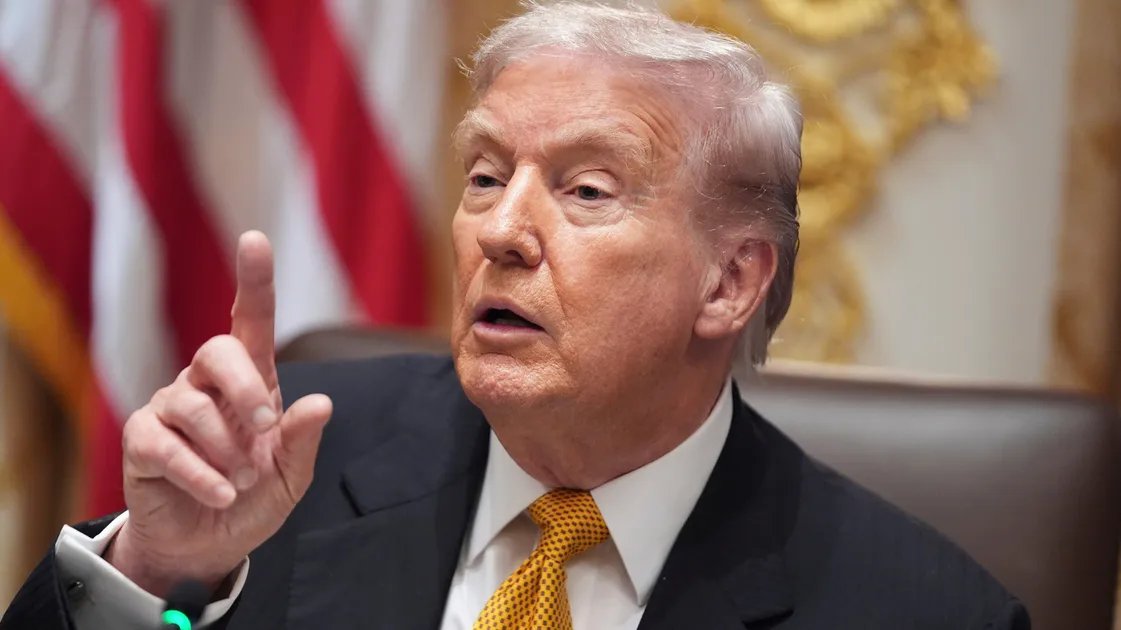
The cost of living, particularly the rising expense of putting food on the table, has undeniably become a central concern for families across the United States. It’s a topic that resonates deeply, often shaping how people perceive the overall health of the economy. Against this backdrop, former President Donald Trump recently delivered a series of remarks that painted a bleak picture of current food prices, attributing the increases directly to the current administration’s policies. He spoke of grocery bills skyrocketing to unimaginable heights, suggesting an economic crisis unfolding in American kitchens. His narrative, echoed across various rallies and social media platforms, was designed to tap into the very real frustrations felt by consumers. “You can’t even afford a gallon of milk anymore!” I overheard one supporter passionately declare at a local diner the other day, reflecting the sentiment Trump aims to capture. It’s an easy claim to make, because frankly, things *do* feel more expensive. We all feel it. But the question remains: do his broad assertions align with the granular details of official economic reports?
The CNN Host’s Incisive Rebuttal
This is precisely where a sharp-witted CNN host stepped in, turning the spotlight from political rhetoric to statistical reality. The host, whose name we’ll keep under wraps for a moment to emphasize the message over the messenger, meticulously dismantled Trump’s claims live on air. The studio lights glinted off the graphics showing various economic indicators, each number presented with a calm, deliberate tone. “We hear these claims often,” the host began, their voice steady, “but it’s our job to look at what the economic data actually tells us.”
The host didn’t just dismiss the claims; they presented a compelling counter-narrative, relying heavily on data from the Bureau of Labor Statistics (BLS) and other reputable financial institutions. They pointed out that while food prices certainly rose significantly in previous years, the rate of increase has been moderating. “The Consumer Price Index for food at home, while still up from pre-pandemic levels, has actually seen much slower growth in recent months, even declining for some categories,” the host explained, showing a clear chart. “The spike we saw was a global phenomenon, driven by supply chain disruptions, the war in Ukraine, and massive pandemic-era stimulus. To suggest it’s uniquely worsening now, or solely attributable to current policies, simply ignores the broader context and the current trends.” It was a masterclass in using facts to cut through the noise, a stark reminder that perception and reality can often diverge wildly when it comes to complex economic issues.
Unpacking the Economic Data: What Do the Numbers Really Say?
When we talk about food prices and inflation, it’s easy to get lost in the jargon, but the core idea is simple: how much does it cost to buy the same basket of goods over time? The primary metric economists use for this is the Consumer Price Index (CPI), specifically the CPI for food. While it’s true that grocery bills have increased over the past few years, a closer look at the data reveals a more nuanced picture than what Trump presented.
Consider the recent trends:
- From early 2020 through mid-2022, we witnessed a significant surge in food inflation. This period was marked by the COVID-19 pandemic, unprecedented demand shifts, labor shortages, and global supply chain bottlenecks.
- The Russian invasion of Ukraine further exacerbated food commodity prices, impacting everything from wheat to cooking oils.
- However, beginning in late 2022 and continuing into 2023 and 2024, the rate of food inflation has demonstrably slowed. In some instances, month-over-month prices for certain staples have even decreased.
“We’ve moved past the peak of food inflation,” noted Dr. Eleanor Vance, an independent economic analyst, in a recent interview. “While prices haven’t returned to pre-pandemic levels, the *rate* at which they are rising has significantly decelerated. This is a crucial distinction that often gets lost in political discussions.” It’s like the difference between a car accelerating quickly and then slowing its acceleration; it’s still moving forward, but not as fast.
The CNN host specifically highlighted how certain categories, like eggs and some meats, had seen dramatic price swings but were now stabilizing or even declining. For instance, egg prices, which famously soared due to an avian flu outbreak, have largely returned to more typical levels. “To paint a picture of relentless, escalating increases across the board just isn’t what the data supports right now,” the host asserted, displaying a table comparing year-over-year food inflation rates from different periods. This careful presentation of facts ensures that the audience gets a clearer, more accurate understanding of the economic landscape, rather than relying solely on generalized political statements. It’s about empowering people with the truth, allowing them to make informed decisions about who and what to believe.
Consumer Impact and Real-World Experiences
Despite the official numbers showing a moderation in the *rate* of price increases, it’s important to acknowledge that the cumulative effect of past inflation still means that your grocery bill is higher than it was a few years ago. This is where the human element truly comes into play. My neighbor, Sarah, a single mother of two, told me just last week, “Sure, maybe the prices aren’t shooting up as fast as they were, but my budget is still stretched thin. I’m buying more store brands, fewer treats, and making bigger batches of food to save money.” Her experience resonates with many.
Across the country, consumers have adapted their spending habits, demonstrating remarkable resilience and ingenuity. A recent survey indicated that over 70% of Americans are actively seeking out sales, buying generic brands, or simply purchasing less of certain items. This shift in consumer spending patterns is a direct consequence of the higher price levels established during the peak inflation period. It’s a testament to how profoundly economic shifts can alter daily routines and personal choices.
“The psychological impact of consistently higher prices, even if they’re not accelerating, is immense,” shared Dr. Vance. “People remember what they used to pay, and that benchmark often makes them feel poorer, regardless of current trends.” This sentiment is often what politicians like Trump tap into, as it bypasses the detailed economic analyses and goes straight to the gut feeling of the electorate. It’s a clever, albeit often misleading, tactic.
Political Ramifications of Economic Narratives
The debate over food prices is more than just an economic discussion; it’s a deeply political one. For any administration, the economy is often seen as the ultimate report card. High inflation, particularly in essential goods like food and fuel, can quickly erode public confidence and become a major vulnerability in an election cycle. Trump, like many political figures, understands this instinctively. By emphasizing the pain at the pump and the grocery store, he aims to create a compelling narrative of economic mismanagement under the current leadership.
Both political parties employ different strategies when discussing the economy:
- The Opposition’s Playbook: Focus on pain points, cherry-pick data showing high prices, and attribute all woes to the incumbent administration. Exaggeration is a common tool.
- The Incumbent’s Defense: Highlight positive trends (like moderating inflation, job growth), emphasize external factors (global events), and point to inherited problems.
The challenge for voters is to sift through these competing narratives to discern the truth. “It’s a constant battle of framing,” explained a veteran political strategist who preferred to remain anonymous. “If you can make people *feel* that things are bad, even if the data shows improvement, you’ve won half the fight. The facts often come second to emotion in political messaging.” This makes the role of reliable media and fact-checkers absolutely indispensable. Without them, the public risks being swayed by incomplete or misleading information.
The Role of Media in Fact-Checking Economic Claims
This brings us back to the crucial role played by the CNN host in this particular instance. In an era saturated with information, and often misinformation, the media’s responsibility to provide accurate, context-rich reporting has never been greater. When a public figure, especially one with the reach of a former President, makes claims about the economy, it’s not enough for journalists to simply report that the claims were made. They must also interrogate those claims, comparing them against verifiable data and providing the necessary context for the audience.
The host’s approach wasn’t one of partisan attack, but rather a methodical presentation of facts. “Our goal isn’t to take sides, but to ensure our viewers are informed by reality, not just rhetoric,” the host reportedly told a colleague after the broadcast, according to an anonymous production staff member. This kind of diligent fact-checking helps the public understand complex issues, fostering a more informed electorate. It holds powerful figures accountable and reinforces the idea that in a healthy democracy, claims must withstand the scrutiny of evidence.
In a world where algorithms can amplify misinformation and echo chambers solidify biases, the commitment to “The numbers don’t lie” becomes a powerful antidote. It’s about showing people the spreadsheets, the charts, and the historical comparisons, allowing them to draw their own conclusions based on a fuller understanding. And honestly, it’s refreshing to see someone cut through the noise with such precision. It makes you feel a little more confident that there are still voices out there dedicated to objective truth.
Conclusion
The recent confrontation between a CNN host and former President Donald Trump over food prices serves as a vivid reminder of the ongoing struggle between political narratives and objective reality. While the public’s perception of high grocery bills is a legitimate concern, the host’s use of concrete economic data to challenge Trump’s claims underscored a vital principle: facts matter, especially when discussing issues that directly impact every household budget. The reality of inflation is complex, influenced by a myriad of global and domestic factors, and it’s essential to distinguish between the actual rate of price increases and the cumulative effect of past hikes.
As we move forward, the discourse around the economy will undoubtedly remain a cornerstone of political debate. It’s up to us, as consumers and citizens, to seek out reliable sources of information, to scrutinize claims, and to appreciate the efforts of those in the media who prioritize accuracy over sensationalism. Because ultimately, while political rhetoric can sway emotions, it’s the verifiable numbers that paint the truest picture of our economic landscape. And as the CNN host so powerfully articulated, “The numbers don’t lie.” Let’s hope that message resonates far beyond the confines of a television studio.
Frequently Asked Questions
| What were Donald Trump’s recent claims about food prices? | Donald Trump recently claimed that food prices have skyrocketed to unprecedented levels under the current administration, suggesting a severe economic crisis at the grocery store for American families. |
| How does a CNN host fact-checking claims benefit the public? | A CNN host fact-checking claims benefits the public by providing accurate, data-driven information that counters misleading political rhetoric. This helps citizens make informed decisions, understand complex economic issues, and hold public figures accountable. |
| What economic data is typically used to assess food inflation? | The primary economic data used to assess food inflation is the Consumer Price Index (CPI) for food, specifically “food at home” and “food away from home.” This index tracks the average change over time in the prices paid by urban consumers for a market basket of consumer goods and services, including various food items. |
| What are the main challenges in accurately communicating economic data to the public? | Main challenges include the complexity of economic data, the tendency for political figures to cherry-pick or oversimplify statistics, the emotional impact of personal financial struggles which can override factual information, and the risk of public misunderstanding of nuanced concepts like “rate of inflation” versus “cumulative price levels.” |
| How might food price trends impact upcoming political discussions? | Food price trends will likely remain a significant talking point in upcoming political discussions. High cumulative prices, even with moderating inflation rates, will continue to be used by opposition parties to criticize economic policy. Incumbents will highlight any signs of price stability or decline, making it a critical battleground for public perception and voter sentiment. |
Important Notice
This FAQ section addresses the most common inquiries regarding the topic.