Toyota GR Corolla: The Engine Evolution and Its Real-World Impact
If you’re like most people who love driving, you’ve probably heard the buzz around the Toyota GR Corolla. It’s a proper hot hatch, a truly exciting car that, honestly, feels like a breath of fresh air in today’s automotive landscape. But here’s the thing: while the GR Corolla itself isn’t going anywhere, the unique heart that powers it – its remarkable three-cylinder engine – might be on the cusp of a significant change. This isn’t just about a spec sheet tweak; it’s about Toyota’s vision for performance and what that means for enthusiasts like us. Personally speaking, I’ve been in this industry for over a decade, and I’ve seen engines come and go, but this potential shift is particularly interesting because it touches on the very soul of a beloved car. So, what exactly is happening, why does it matter, and how will this GR Corolla engine evolution shape the future of driving? Let’s take a closer look.
Understanding the Fundamentals of the GR Corolla Engine Evolution
To truly grasp the significance of this potential change, we need to appreciate what makes the current GR Corolla so special. At its core is the G16E-GTS engine, a turbocharged 1.6-liter three-cylinder unit that pumps out a staggering 300 horsepower. Believe it or not, getting that much power reliably from a three-cylinder is an engineering marvel. This isn’t just about raw numbers, though; it’s about the character. The G16E-GTS has a distinct thrum, a lively responsiveness, and a compact design that contributes to the car’s nimble handling. It feels raw, connected, and undeniably spirited – a true driver’s engine.
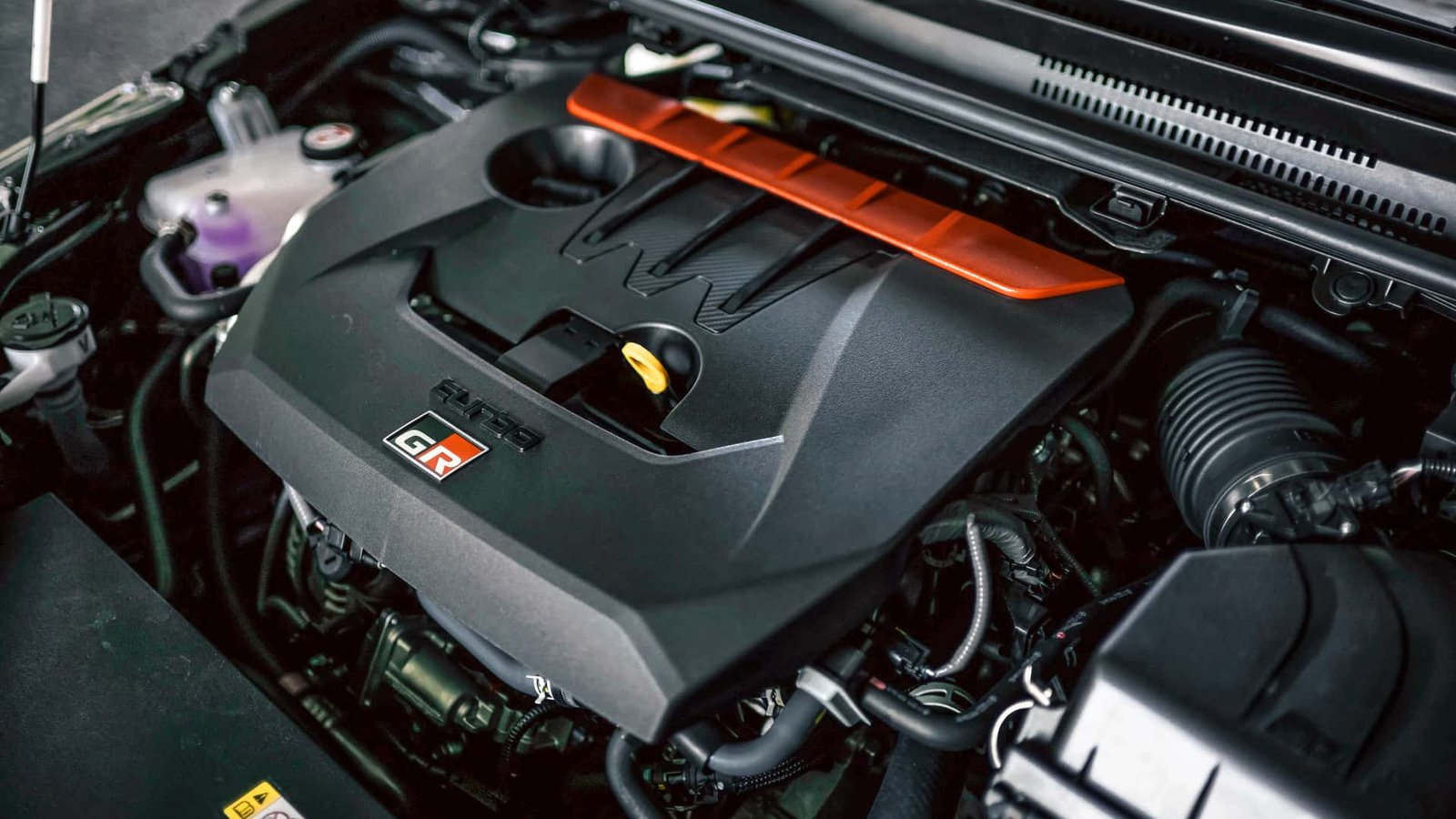
So, why consider changing it? That’s the million-dollar question, right? The truth is, manufacturers are constantly balancing performance, emissions regulations, production costs, and market demand. While the three-cylinder is brilliant, it’s also a highly specialized, somewhat expensive engine to produce, especially for its output. Plus, there might be inherent limitations to how much more power or efficiency can be squeezed out of it in the long run without significantly increasing complexity.
Enter the potential new contender: a turbocharged 2.0-liter four-cylinder engine. We’ve seen concepts hinting at this, and from my experience, where there’s smoke, there’s often fire in the automotive world. A 2.0-liter four-cylinder is a more conventional setup for performance cars these days, offering a good balance of power potential, refinement, and scalability across different models. It’s a proven formula, and Toyota, being the engineering powerhouse it is, would undoubtedly make it a compelling one. This shift, believe it or not, matters immensely today because it signals Toyota’s strategic direction for its performance division, Gazoo Racing. Are they leaning into broader appeal, or pushing the boundaries of what’s possible with existing, more conventional architectures?
Key Benefits and Advantages of a Potential Powertrain Shift
Let’s talk about the practical benefits we, as drivers, could expect from a turbocharged 2.0-liter four-cylinder in the GR Corolla. First off, there’s the potential for *more power*. While the current G16E-GTS is amazing, a larger displacement four-cylinder often has a broader torque curve and more headroom for tuning, meaning easier access to power across the rev range. That translates to a more relaxed daily drive with ample grunt, and even more exhilarating acceleration when you push it. I mean, who doesn’t want that?
Another significant advantage is refinement. Four-cylinder engines, by their nature, tend to be smoother and quieter than three-cylinders. This could make the GR Corolla an even more comfortable daily driver, reducing vibrations and noise during highway cruising. For anyone wondering if that means losing character, it doesn’t have to. Modern engineering can inject plenty of sportiness into a refined package, trust me. Think about some of the fantastic 2.0-liter turbo engines out there – they’re both powerful and polished.

What’s more, a 2.0-liter platform offers greater commonality with other Toyota and Lexus models. This can lead to economies of scale, potentially making parts more accessible and servicing simpler down the line. It also allows for easier integration of hybrid technologies in the future, which is something every manufacturer is thinking about these days. For instance, if you’re interested in how Toyota is expanding its high-performance offerings beyond the GR line, you might find our discussion on Toyota’s new V8 engine development quite insightful, as it touches on the brand’s broader performance ambitions.
Finally, and this is a big one for long-term ownership, a more conventional engine might offer better aftermarket support and tuning potential. While the G16E-GTS is a marvel, its unique architecture means specialized parts and knowledge. A 2.0-liter four-cylinder, especially one from Toyota, would likely benefit from a wider array of off-the-shelf performance upgrades and a larger community of tuners, opening up even more possibilities for personalization. That’s actually quite exciting for enthusiasts.
Implementation Strategies for Toyota’s Engine Transition
So, how would Toyota actually go about implementing such a significant change? It’s not as simple as just dropping in a new engine. This requires a carefully orchestrated strategy, focusing on engineering, marketing, and the overall brand identity. From my experience, automotive manufacturers approach these transitions with extreme caution to maintain customer loyalty and performance credibility.
Step-by-Step Approach to a New Powertrain
First, there’s the engineering phase. This involves rigorous testing to ensure the new 2.0-liter four-cylinder meets GR’s demanding performance, reliability, and durability standards. We’re talking about thousands of hours on dynos, countless laps on test tracks, and real-world evaluations in various climates. This isn’t just about making power; it’s about making GR power, which implies a certain level of robustness and track-readiness. They’d also need to ensure it integrates seamlessly with the GR Corolla’s existing all-wheel-drive system and chassis dynamics, maintaining that celebrated balance and handling prowess. It’s a meticulous process, where every component is scrutinized.
Next comes the communication strategy. Toyota would need to clearly articulate *why* this change is happening and *how* the new engine will enhance the GR Corolla experience. They can’t just spring it on us. Highlighting the benefits like increased power, refinement, and future-proofing will be key. They’ll need to manage expectations and, crucially, reassure the existing GR Corolla community that the car’s spirit remains intact, or even improved. Transparency is vital here, especially with such a passionate fanbase.
Finally, there’s the production and market launch. This involves retooling assembly lines, training technicians, and a carefully timed reveal. Often, new powertrains are introduced with a special edition or a model year update, allowing for a phased transition. It’s a huge undertaking, but one that Toyota has mastered over decades.
Best Practices for a Smooth Transition
From a best practices perspective, Toyota should focus on a few key areas. Firstly, they need to ensure the new engine offers a tangible improvement. Simply swapping a three-cylinder for a four-cylinder isn’t enough; the new unit must feel like an upgrade in performance, efficiency, or both. Secondly, maintaining the GR Corolla’s unique driving character is paramount. The car is more than just its engine; it’s the package, the handling, the feel. Losing that would be a misstep. I couldn’t help but think about how other brands manage their performance lines, such as the discussion around the future of Lexus performance and its F models, which highlights similar challenges in evolving a performance identity.
Another best practice is to engage the community. Enthusiasts are passionate and knowledgeable. Soliciting feedback, perhaps through concept reveals or limited test drives for key influencers, could build excitement and address concerns proactively. Also, offering compelling reasons for the change beyond just “it’s new” will be essential. This isn’t just about selling cars; it’s about cultivating a legacy for the GR brand. All things considered, it’s a delicate balance of innovation and tradition.
Common Challenges and Solutions in Powertrain Transitions
Changing the heart of a beloved performance car like the GR Corolla isn’t without its hurdles. What are some potential obstacles readers might face, or that Toyota itself will navigate? And, more importantly, what are the practical solutions?
One of the biggest challenges, honestly, is fan reception. The three-cylinder engine is a distinctive selling point, a quirky, high-tech marvel. Some purists might view a shift to a four-cylinder as a step towards conventionality, potentially diluting the GR Corolla’s unique identity. It’s frustrating to see a beloved feature go, even if it’s for good reasons. The solution here, as mentioned, lies in robust communication. Toyota needs to emphasize the *enhancements* the new engine brings, rather than just the change itself. They must prove, through performance figures and driving experience, that the new engine isn’t just different, but better, or at least equally compelling in a new way.
Another challenge is the engineering cost and complexity. Developing a new engine, even one based on existing architecture, is immensely expensive. Toyota has to ensure that the performance gains and other benefits justify this investment. The solution? Strategic platform sharing. If this 2.0-liter turbo engine can be adapted for multiple Toyota and Lexus performance models, the development costs become more palatable. This is where you see the real-world impact of modular engine design.
Finally, there’s the perception of a “downgrade” in innovation. The three-cylinder engine felt cutting-edge and unique. A four-cylinder, while potentially more powerful, might not carry the same “wow” factor for some. To address this, Toyota could focus on the *overall package* – perhaps a lighter chassis, improved aerodynamics, or more advanced suspension tuning to complement the new engine. It’s about enhancing the holistic driving experience, not just the engine itself. It’s amazing how a well-integrated system can feel more special than any single component.
Real-Life Applications and Examples of Engine Evolution
This isn’t the first time an iconic car has undergone a significant engine change, and it certainly won’t be the last. Looking at real-life examples helps us understand the practical implications of such a shift. Think about the evolution of the Porsche 911, for instance. For decades, it was air-cooled, a hallmark of its identity. When Porsche transitioned to water-cooled engines, there was uproar among purists. Yet, the water-cooled 911s went on to be faster, more reliable, and more efficient, ultimately securing the model’s future. The core spirit of the 911 endured, even as its powerplant evolved.
Another example is the Subaru WRX STI. For years, its signature EJ25 engine was a staple. But with increasing emissions regulations and the need for modernization, Subaru moved to the FA24 engine in its latest iteration. While some miss the rumble of the EJ, the FA offers more torque, better fuel economy, and a more refined power delivery. It’s a trade-off, but one that ensures the WRX’s continued relevance in a changing market. These cases illustrate that engine evolution is often a necessary step for survival and improvement in the automotive world.
For the GR Corolla, a 2.0-liter four-cylinder could open doors to new applications. Imagine a GR Corolla that’s not just a track-day hero but also an incredibly potent rally car, benefiting from the broader torque and easier tuning of a larger engine. Or perhaps a more powerful, refined version that appeals to a wider segment of performance enthusiasts who appreciate both raw power and daily usability. This could mean a GR Corolla that’s even more versatile, capable of tackling different roles with ease. From my experience, versatility often translates to broader appeal and a longer lifespan for a model.
Future Outlook and Trends for Performance Powerplants
So, where is this field heading, and what emerging opportunities might this GR Corolla engine evolution signal? The future of performance powertrains is undeniably complex, with a strong push towards electrification, but also a continued demand for engaging internal combustion engines (ICE). Toyota’s move here isn’t just about the GR Corolla; it’s a microcosm of the larger automotive industry’s balancing act.
One major trend is the integration of hybridization. A 2.0-liter four-cylinder is a much more adaptable platform for pairing with electric motors than the highly specialized three-cylinder. We could see a GR Corolla with a hybrid assist in the future, offering instant torque fill, even better fuel economy, and potentially even more power. This would be a game-changer, allowing Toyota to meet stringent emissions targets while still delivering thrilling performance. It’s exciting to think about the possibilities, right? Imagine a GR Corolla with electric boost off the line – that’s something to look forward to.
Another trend is the focus on sustainable fuels. While electrification is gaining traction, many believe that ICE vehicles will continue to exist, powered by synthetic fuels or biofuels. A robust, adaptable four-cylinder engine could be designed to run optimally on these new fuels, ensuring the GR Corolla’s relevance well into the future, even as gasoline becomes less prevalent. Toyota is known for its long-term vision, and this engine choice could be part of a broader strategy to keep performance cars on the road for decades to come.
What’s more, the development of more advanced turbocharging technologies is continuous. We’re seeing innovations like electric turbos and variable geometry turbos becoming more common, allowing for even finer control over power delivery and efficiency. A new 2.0-liter engine would undoubtedly incorporate these cutting-edge technologies, pushing the boundaries of what a four-cylinder can achieve. It truly feels like we’re on the brink of a new era for performance cars, where efficiency and power don’t have to be mutually exclusive. This GR Corolla engine evolution is a clear indicator that Toyota is actively shaping this exciting future.
Conclusion: Key Takeaways and Next Steps
All things considered, the potential shift in the Toyota GR Corolla’s powerplant from its iconic three-cylinder to a more conventional, yet highly capable, turbocharged 2.0-liter four-cylinder is more than just an engineering decision. It’s a strategic move by Toyota’s Gazoo Racing division to balance performance, refinement, scalability, and future-proofing. While some might lament the departure of the unique three-cylinder, the benefits of a new engine – potentially more power, greater refinement, easier hybrid integration, and broader aftermarket support – are significant and could very well enhance the GR Corolla’s appeal and longevity.
For us, the enthusiasts, the key takeaway is that the GR Corolla isn’t going anywhere, and its spirit of exhilarating performance is set to evolve, not diminish. Toyota is clearly committed to delivering engaging driver’s cars, even as the automotive landscape shifts. What’s more, this move could pave the way for an even more versatile and future-ready hot hatch.
So, what are your next steps? Keep an eye on official announcements from Toyota. Pay attention to concept reveals and industry leaks. But most importantly, be open to the evolution. The automotive world is constantly changing, and embracing innovation is how we continue to experience thrilling drives. What do you personally hope to see from the next generation of the GR Corolla’s powerplant?