Asteroid 2007 FT3: Assessing the Earth Impact Risk
Have you ever looked up at the night sky and wondered what’s really out there? We often think about planets and stars, but what about asteroids? Asteroid 2007 FT3 is one such space rock that briefly caught our attention back in March 2007. It was observed for just a single day before disappearing, leaving scientists with a puzzle and a lingering question: Could this “lost asteroid” pose a threat to Earth?
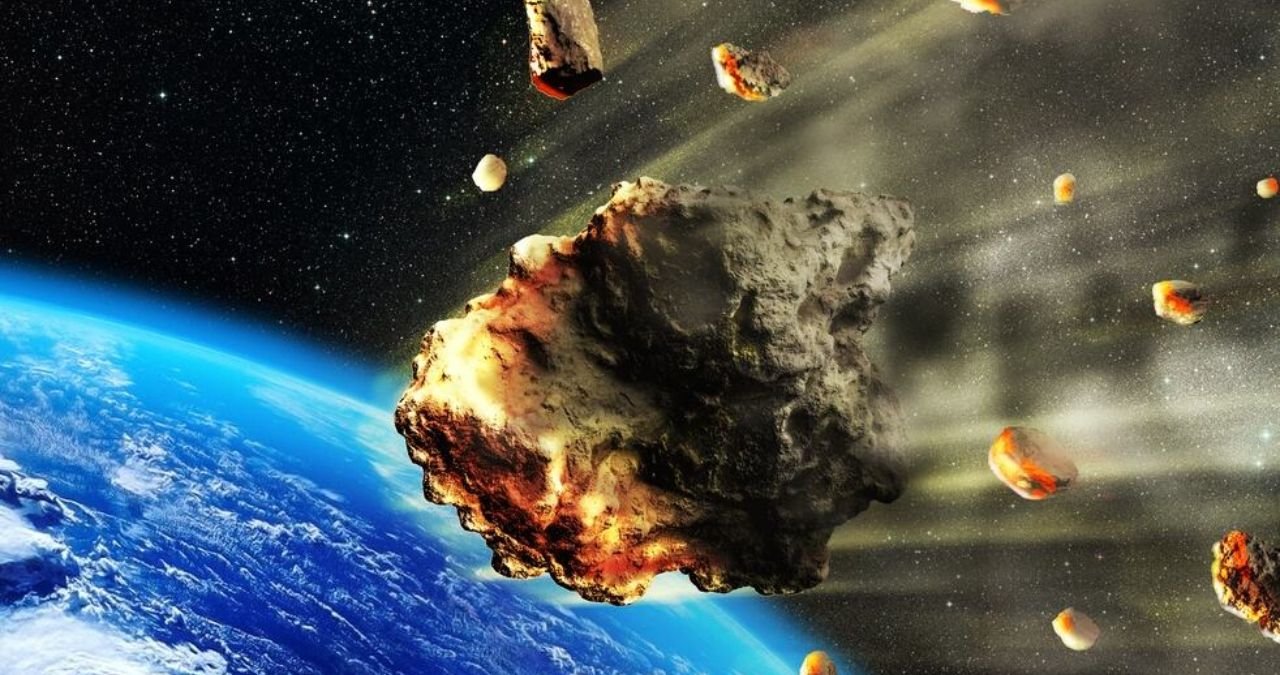
Honestly, the idea of an asteroid impact can sound like something straight out of a movie. But it’s a real concern that scientists take seriously. While the chances of a major impact are relatively low, the potential consequences are so significant that it’s worth understanding the risks and what’s being done to mitigate them. This article aims to break down the facts about Asteroid 2007 FT3, exploring what we know, what we don’t know, and what it all means for us here on Earth.
Understanding the Fundamentals of Asteroid Tracking
So, what exactly are we talking about when we mention asteroids? Asteroids are rocky remnants from the early solar system, orbiting the Sun much like planets do. Most reside in the asteroid belt between Mars and Jupiter, but some, called Near-Earth Objects (NEOs), have orbits that bring them closer to our planet. These are the ones we keep a close eye on. It seems that programs like 3I/ATLAS are essential in tracking these NEOs.
The core concept here is risk assessment. Scientists use telescopes and sophisticated algorithms to calculate the orbits of NEOs. The more observations they have, the more accurately they can predict an asteroid’s future path. When an asteroid is first discovered, its orbit is uncertain. As more data is collected, the uncertainty shrinks, and we can better determine whether it poses a threat. If that sounds confusing, don’t worry, it’s basically like trying to predict where a baseball will land after only seeing it for a split second.
Why does this topic matter today? Because the Earth has been hit by asteroids before, and it will happen again. While small asteroids burn up in the atmosphere, larger ones can cause significant damage. The Tunguska event in 1908, where a relatively small asteroid exploded over Siberia, flattening an area of forest the size of London, serves as a stark reminder of the potential consequences. And that’s actually quite surprising. Understanding the risks and developing strategies to deflect or mitigate potential impacts is crucial for protecting our planet.
Key Benefits and Advantages of Asteroid Monitoring
What are the benefits of tracking asteroids? Well, the most obvious one is planetary defense. By identifying potentially hazardous asteroids early, we can develop strategies to deflect them or, in a worst-case scenario, evacuate areas that might be affected. It’s kind of like having an early warning system for natural disasters.
But there are other advantages as well. Asteroid exploration can provide valuable insights into the formation of the solar system and the origins of life. Asteroids contain valuable resources, such as water and precious metals, that could potentially be mined in the future. Think about it, it’s like having a cosmic treasure chest floating around in space. As Toyota’s new V8 engines are more than just supercar dreams, asteroid mining could be more than just science fiction.
In real-world applications, the data collected from asteroid tracking is used to refine our understanding of orbital mechanics, improve telescope technology, and develop new methods for space navigation. This knowledge can be applied to other areas of space exploration, such as satellite deployment and interplanetary missions. I mean, who doesn’t want that?
Implementation Strategies for Asteroid Threat Assessment
Step-by-Step Approach to Risk Evaluation
So, how do scientists assess the threat posed by an asteroid like 2007 FT3? The process typically involves these steps:
- Discovery: Telescopes around the world continuously scan the sky, searching for new asteroids.
- Observation: Once an asteroid is detected, astronomers collect as many observations as possible to determine its orbit.
- Orbit Determination: Scientists use sophisticated algorithms to calculate the asteroid’s orbit based on the available data.
- Risk Assessment: The calculated orbit is then used to predict the asteroid’s future path and assess the likelihood of an Earth impact.
- Follow-up Observations: If an asteroid is identified as a potential threat, astronomers prioritize follow-up observations to refine its orbit and reduce the uncertainty.
Here’s the thing: the more observations you have, the more accurate your predictions will be. That’s why it’s so important to continue tracking NEOs, even if they don’t currently pose a threat. As Shroud backs Arc Raiders for GOTY, continuous monitoring backs successful asteroid tracking.
Best Practices in Asteroid Tracking
To improve the accuracy and efficiency of asteroid tracking, scientists employ several best practices:
- Use of Multiple Telescopes: Combining data from different telescopes around the world provides a more comprehensive view of an asteroid’s orbit.
- Radar Observations: Radar can be used to directly measure an asteroid’s distance and velocity, providing highly accurate data.
- Advanced Algorithms: Sophisticated algorithms are used to analyze the data and calculate the asteroid’s orbit.
- International Collaboration: Sharing data and expertise among different countries and organizations is crucial for effective asteroid tracking.
It seems that international collaboration is key, as no single country has all the resources and expertise needed to tackle this challenge alone. By working together, we can improve our chances of detecting and mitigating potential asteroid impacts.
Common Challenges and Solutions in Asteroid Tracking
What are some of the challenges in tracking asteroids, and how can we overcome them? One major challenge is the sheer number of asteroids in the solar system. There are millions of asteroids, and only a small fraction of them have been discovered and tracked. This is why continuous surveys and improved detection technology are so important.
Another challenge is the faintness of many asteroids. Small and distant asteroids can be difficult to detect, even with powerful telescopes. To address this, scientists are developing new telescopes and detectors that are more sensitive to faint light. Plus, advanced image processing techniques can help to tease out faint signals from the background noise.
A third challenge is the “lost asteroid” problem, as exemplified by Asteroid 2007 FT3. When an asteroid is only observed for a short period, its orbit is poorly determined, and it can be difficult to find again. To mitigate this, astronomers are developing strategies for prioritizing follow-up observations of newly discovered asteroids. This includes using predictive models to estimate where an asteroid is likely to be located in the future. Trust me, that can save you a lot of time.
Real-Life Applications and Examples of Asteroid Defense
Let’s take a closer look at some real-life examples of how asteroid tracking and defense strategies are being implemented.
- NASA’s Planetary Defense Coordination Office: This office is responsible for coordinating NASA’s efforts to detect and mitigate potential asteroid impacts. It oversees the Near-Earth Object Observations Program, which funds the search for and tracking of NEOs.
- The Double Asteroid Redirection Test (DART): This mission, launched in 2021, tested the feasibility of deflecting an asteroid by crashing a spacecraft into it. The target was Dimorphos, a small moon orbiting the asteroid Didymos. The DART mission successfully altered Dimorphos’ orbit, demonstrating that this technique could be used to deflect a potentially hazardous asteroid.
Personally speaking, the DART mission was a major milestone in planetary defense. It showed that we have the technology to actively protect our planet from asteroid impacts. While it’s still early days, the success of DART gives us hope that we can develop more advanced deflection techniques in the future.
Another interesting example is the European Space Agency’s (ESA) Hera mission, which is planned to follow up on the DART mission. Hera will conduct a detailed study of Dimorphos and Didymos, providing valuable data on the effects of the DART impact. This data will help us to better understand how to deflect asteroids and refine our deflection strategies. Understanding the effects of impacts is crucial for planning any future asteroid deflection missions.
Future Outlook and Trends in Asteroid Research
Where is the field of asteroid research heading? Several exciting trends are emerging.
- Improved Detection Technology: New telescopes, such as the Vera C. Rubin Observatory, will significantly increase our ability to detect and track NEOs. These telescopes will have larger apertures and wider fields of view, allowing them to scan the sky more quickly and detect fainter asteroids.
- Advanced Deflection Techniques: Scientists are exploring a variety of advanced deflection techniques, such as using lasers to vaporize asteroid material, deploying gravity tractors to slowly nudge asteroids off course, and even detonating nuclear devices near asteroids. While some of these techniques are still in the early stages of development, they hold promise for the future of planetary defense.
It’s exciting to see the progress being made in asteroid research. With improved detection technology and advanced deflection techniques, we are becoming increasingly capable of protecting our planet from asteroid impacts. The future of Lexus performance may depend on these technologies as well, as space exploration drives innovation in many fields.
Conclusion: Key Takeaways and Next Steps
So, what have we learned about Asteroid 2007 FT3 and the broader issue of asteroid impacts? Here are some key takeaways:
- Asteroid 2007 FT3 is a “lost asteroid” that was observed for only a short period in 2007. Its orbit is poorly determined, and it’s impossible to definitively rule out a future Earth impact.
- While the chances of a major asteroid impact are relatively low, the potential consequences are significant. That makes it important to track NEOs and develop strategies to mitigate potential impacts.
- Scientists are making significant progress in asteroid detection and deflection. New telescopes and advanced techniques are improving our ability to protect our planet.
What are the next steps? Well, one important step is to continue supporting asteroid research and development. This includes funding the search for and tracking of NEOs, developing new deflection techniques, and conducting research on the physical properties of asteroids. Another step is to promote international collaboration. Asteroid impacts are a global threat, and it’s important for countries to work together to address this challenge. Plus, keep an eye on the skies! You never know what you might see.
So, what do you think? Are you concerned about the threat of asteroid impacts? What steps do you think we should be taking to protect our planet? Let’s discuss in the comments below!