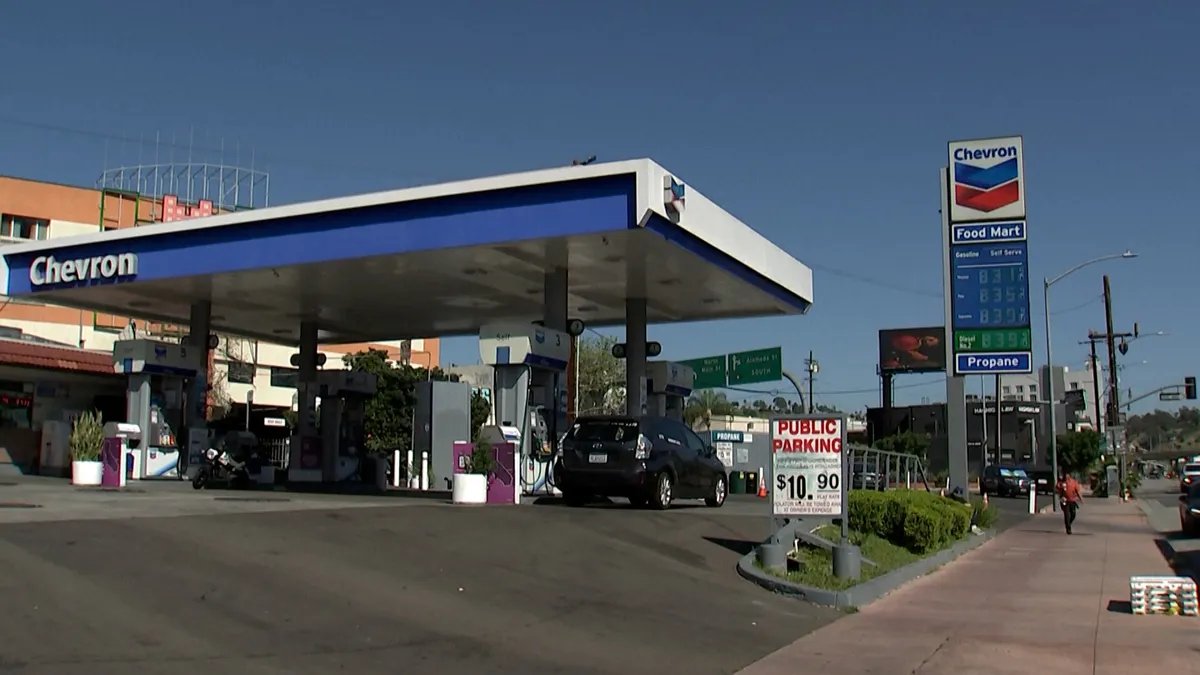
The crisp morning air usually means a smooth, quiet drive, but lately, the only thing on my mind when I pull up to the gas station is a sense of dread. You know the feeling, right? That moment when you glance at the digital numbers on the pump, watching them climb faster than your heart rate on a rollercoaster, and you just sigh. A heavy, resigned sigh. It’s not just the usual seasonal fluctuations or refinery hiccups anymore; there’s a persistent, unsettling hum beneath the surface of the global economy, and much of it whispers of geopolitical tensions. Specifically, the growing shadow of a potential Iran war hangs heavy over the world’s oil markets. It’s a scenario that could fundamentally reshape not just international relations, but also the very simple act of paying at the pump, turning an already tight budget into an outright crisis for millions. Every headline, every diplomatic maneuver, every skirmish in the region feels like a direct hit to your wallet, translating almost immediately into higher gas prices. We’re not talking about a few cents; we’re talking about a seismic shift that could see you asking, “How much more?!” every time you fill up. It truly feels like the world holds its breath, and our pockets are the first to feel the squeeze.
The Geopolitical Heartbeat of Oil: Why Iran Matters So Much
To truly grasp why a conflict involving Iran sends shivers down the spine of every driver and economic analyst, we need to understand its pivotal role in the global energy landscape. Iran isn’t just another oil-producing nation; it’s a behemoth, sitting atop some of the world’s largest proven oil and natural gas reserves. But its strategic importance extends far beyond its own wells. Think of the Strait of Hormuz, that narrow choke point at the mouth of the Persian Gulf. It’s not just a body of water; it’s the most critical oil transit pathway in the world. Imagine a funnel through which roughly one-fifth of the world’s total petroleum liquids consumption, including a substantial portion of the world’s liquefied natural gas, passes daily. That’s a staggering amount!
Any significant disruption in the Strait, whether through blockades, naval confrontations, or even the credible threat of such actions, would send immediate shockwaves through the global oil supply. “It’s not just about Iran’s oil,” explained Dr. Anya Sharma, a senior energy analyst I spoke with recently. “It’s about the security of transit for *all* major Gulf producers – Saudi Arabia, UAE, Qatar. If that pathway is jeopardized, the market doesn’t just react to a loss of Iranian oil; it reacts to the potential loss of *all* oil moving through there. That’s pure panic.” And panic, my friend, always translates to higher prices. The mere speculation of a conflict can add dollars to a barrel of crude oil overnight, long before the first shot is even fired.
A Ripple Effect: From Crude Barrels to Your Wallet
So, how exactly does a skirmish thousands of miles away translate into those agonizingly high numbers when you’re paying at the pump? It’s a chain reaction, swift and unforgiving. Crude oil, the raw material, makes up roughly 50-60% of the price of a gallon of gasoline. When the price of crude jumps, everything else follows. Refineries pay more for their feedstock, and they pass that cost directly onto distributors, who then pass it to gas stations, and finally, to you. It’s an almost immediate reflection.
Think about it: the minute news breaks of increased tensions, traders in New York, London, and Singapore react. Futures contracts for Brent crude (the international benchmark) and West Texas Intermediate (the U.S. benchmark) surge. These aren’t just abstract numbers; they are the foundation upon which your local gas price is built. “I remember the early 2000s, when every little rumor out of the Middle East sent prices soaring,” shared Mark Thompson, a veteran truck driver I met at a diner. “Now, it feels even more sensitive. A tweet, a speech, and boom – an extra fifty cents a gallon by morning. It’s exhausting, trying to budget around that kind of volatility.” And he’s right. The modern, interconnected market ensures that geopolitical instability anywhere means financial instability everywhere.
Echoes of History: When Conflicts Spiked the Pump
This isn’t just theoretical; history is rife with examples of how military conflicts, particularly in oil-rich regions, have sent energy costs spiraling. Cast your mind back to the 1970s oil crises, sparked by regional conflicts and embargoes. The lines at gas stations stretched for blocks, rationing became a reality, and the global economy staggered. Or consider the first Gulf War in 1990-1991. The invasion of Kuwait by Iraq led to a rapid spike in oil prices, nearly doubling in a matter of months, as fears of widespread supply disruption gripped the markets.
These historical events serve as stark reminders that the impact of a Middle East conflict on energy security and oil prices is not a matter of ‘if,’ but ‘how much’ and ‘how quickly.’ A conflict with Iran would likely eclipse many past events due to Iran’s strategic location and its capacity to directly threaten shipping lanes. The market’s reaction would likely be swift and severe, factoring in not just actual supply losses but the massive uncertainty and risk premium. We’ve seen how even a drone attack on a Saudi oil facility can cause immediate, significant jumps in crude prices, even if the damage is quickly repaired. The market hates uncertainty, and war is the ultimate uncertainty.
Beyond the Tank: The Broader Economic Strain
The pain of higher gas prices doesn’t stop at the pump. Oh no, it cascades through the entire economy, touching every aspect of our daily lives. When transportation costs rise, so does the price of nearly everything else. Think about it:
- Groceries: The fruits and vegetables you buy, the milk, the bread – they all need to be transported, often across vast distances. Higher fuel costs for trucks mean higher prices on the supermarket shelves.
- Retail Goods: From clothes to electronics, every item has a supply chain that relies on shipping, air freight, or ground transport. Expect to pay more for almost everything you purchase.
- Services: Delivery services, taxi fares, construction materials being hauled – these all become more expensive. This, in turn, can lead to increased costs for home repairs, moving services, and more.
- Inflation: This widespread increase in prices is the definition of inflation. Your purchasing power diminishes, meaning your hard-earned money simply doesn’t stretch as far as it used to.
“My small business relies on daily deliveries,” remarked Sarah Chen, owner of a local bakery. “If my delivery truck’s fuel costs go up by 30%, I have to either absorb that, which eats into my already thin margins, or I have to raise the price of my bread. Neither option is good, and it’s always the consumer who ultimately pays.” It’s a vicious cycle that can dampen consumer spending, slow economic growth, and potentially push economies into recession. The economic impact is truly widespread, affecting everything from investment decisions to everyday household budgets.
The Consumer’s Cry: Real People, Real Budgets
Let’s be real. Most of us are living paycheck to paycheck, or at least budgeting carefully. When gas prices jump, it’s not an abstract economic theory; it’s a tangible hit. “My commute is forty miles each way,” confided David Miller, a factory worker, as he painstakingly calculated his fill-up. “An extra dollar a gallon means an extra $20 a week, easy. That’s money that was supposed to go to my kids’ school supplies or a doctor’s visit. Now? It’s just gone.” You can see the frustration etched on his face, a common sight at gas stations across the country.
For families already struggling, this isn’t just an inconvenience; it’s a crisis. Decisions have to be made: Do I cut back on groceries to afford my commute? Do I skip that essential doctor’s appointment? Do I cancel plans to visit family because I can’t afford the drive? These are the human costs, the quiet anxieties that permeate homes when global events dictate local financial realities. “We’ve started carpooling, even though it adds time to our day,” said Maria Rodriguez, a mother of two. “Every penny counts now. It’s frustrating to know that something so far away can affect our daily lives so deeply.” These stories underscore the profound personal impact of geopolitical risk on ordinary citizens.
Governmental Levers and Global Responses
When the specter of soaring fuel costs looms, governments aren’t entirely powerless, although their options are often limited and fraught with their own complexities. One of the primary tools in many nations’ arsenals is the Strategic Petroleum Reserve (SPR). The U.S., for instance, maintains a vast underground store of crude oil, intended for emergency situations. Releasing oil from the SPR can temporarily increase supply and help stabilize prices, but it’s a short-term fix, not a sustainable solution for a prolonged conflict.
Beyond strategic reserves, diplomatic efforts are always paramount. De-escalation, negotiation, and finding peaceful resolutions are the ideal, though often elusive, goals. Governments also explore increasing domestic oil production or urging other non-OPEC+ producers to ramp up their output, but these measures can take time and face environmental or political hurdles. Some might consider temporary fuel tax holidays, which offer immediate but modest relief to consumers, though they also impact government revenue. During critical times, there’s also a renewed push for diversifying energy sources, accelerating the transition to renewables, and improving energy efficiency – long-term strategies aimed at reducing reliance on volatile fossil fuel markets. But these are foundational shifts, not quick fixes for an immediate crisis.
The Future on the Horizon: A Shift in Energy Landscape?
A major conflict involving Iran would undoubtedly serve as a harsh wake-up call, potentially accelerating a global pivot in energy policy. While the immediate pain at the pump would be undeniable, the long-term implications could see a more aggressive push towards true energy independence and diversification. Nations might redouble efforts in:
- Renewable Energy Investments: Solar, wind, geothermal, and hydropower projects could receive unprecedented funding and political will, aiming to reduce reliance on fossil fuels.
- Electric Vehicle Adoption: Higher gas prices make EVs far more attractive, potentially speeding up infrastructure development and consumer uptake.
- Energy Efficiency: Greater emphasis on insulation, smart grids, and more efficient industrial processes to simply use less energy.
- Decentralized Energy Systems: Moving away from massive centralized power grids to more localized, resilient energy production.
“This isn’t just about reducing emissions anymore,” observed Dr. Sharma during our last chat. “It becomes a matter of national security. Every dollar we spend on imported oil is a dollar tied to geopolitical instability. A war scenario in the Gulf would put that into stark, undeniable relief, forcing action.” It’s a bitter irony that a crisis could be the catalyst for a more sustainable future, but the journey there would be incredibly difficult for millions of people simply trying to make ends meet.
Ultimately, the thought of an Iran war isn’t just about abstract geopolitical chess; it’s about you, me, and everyone else who relies on a vehicle to get to work, school, or just live our lives. It’s about the cost of groceries, the feasibility of small businesses, and the overall stability of our economies. The connection between distant conflicts and the numbers flashing at the gas station is undeniable, a visceral reminder of our interconnected world. As we watch events unfold, the question isn’t whether conflict would affect gas prices, but rather, how much more we would be forced to pay, both financially and emotionally. It’s a somber prospect, urging us to consider the far-reaching consequences of every international decision.
Frequently Asked Questions
| How would an Iran war directly impact gas prices at the pump? | An Iran war would directly impact gas prices primarily by threatening the Strait of Hormuz, a critical transit point for global oil. Even the threat of disruption can cause immediate surges in crude oil prices, which directly translates to higher costs at the pump as refineries pay more for their raw material. Additionally, any actual reduction in Iran’s own oil exports would tighten global supply. |
| Are there any ‘benefits’ or alternative energy pushes that could arise from such a crisis? | While a crisis like an Iran war would bring immense hardship, one potential long-term outcome is an accelerated global push towards energy independence and renewable energy sources. The economic pain of high fuel costs could provide a strong impetus for governments and industries to invest more heavily in solar, wind, and electric vehicle infrastructure, viewing it as a matter of national security rather than just environmental policy. |
| What measures could governments take to mitigate rising fuel costs during a conflict? | Governments could implement several measures, including releasing oil from strategic petroleum reserves (like the U.S. SPR) to temporarily increase supply. They might also engage in diplomatic efforts to de-escalate tensions, encourage increased domestic oil production, or temporarily reduce fuel taxes. However, most of these are short-term solutions and may not fully offset the impact of a sustained major conflict. |
| Beyond fuel, what other economic challenges might consumers face due to a Middle East conflict? | Beyond fuel, consumers would likely face widespread inflation as transportation costs for goods and services increase. This means higher prices for groceries, retail items, and delivery services. Supply chains could be disrupted, leading to shortages. Reduced consumer spending due to strained budgets could also slow economic growth, potentially leading to job losses and broader economic instability. |
| How might a prolonged conflict in the Middle East reshape global energy policy in the long term? | A prolonged conflict in the Middle East would likely fundamentally reshape global energy policy. It would significantly heighten the priority of energy security, driving nations to reduce their reliance on volatile regions. This could lead to a massive acceleration in investment in renewable energy technologies, a faster transition to electric vehicles, and increased efforts in energy efficiency and conservation worldwide, aiming for greater energy independence. |
Important Notice
This FAQ section addresses the most common inquiries regarding the topic.