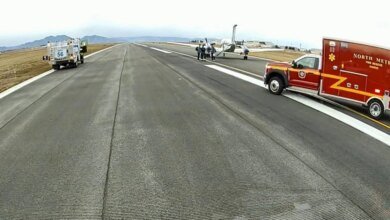
🔥 Qatar Halts LNG Output
Two Iranian drones were intercepted over Ras Laffan, forcing one of the world’s largest gas exporters to suspend operations.

🛢️ Ras Tanura Under Fire
Saudi Aramco has shut down units at the critical Ras Tanura complex after a drone strike caused a major refinery fire.
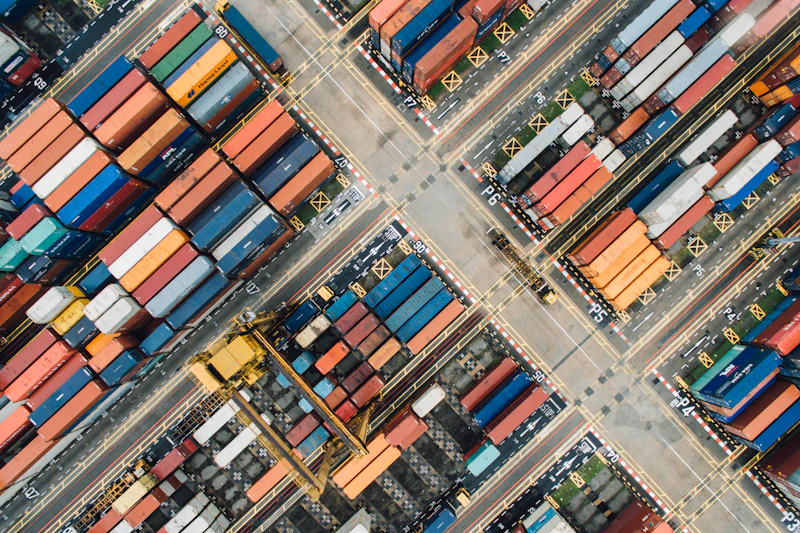
⛔ Hormuz Chokepoint Closed
Commercial traffic has effectively stopped as hundreds of tankers remain anchored outside the strategic waterway.
The Day the Energy World Stood Still: Strategic Hits on Qatar and Saudi Arabia ⚡
The geopolitical equilibrium of the Middle East was shattered early Monday when drone swarms targeted two of the most significant energy hubs on the planet. For years, the global economy has relied on the relative stability of the Persian Gulf monarchies to act as a buffer against supply shocks. However, the latest escalation indicates that this “buffer” is now the primary target. By striking Ras Laffan in Qatar and Ras Tanura in Saudi Arabia, Iranian-backed forces have demonstrated a capability to bypass sophisticated defense systems and strike at the economic “centers of gravity.”
The impact was instantaneous. In Qatar, the government took the drastic step of halting liquefied natural gas (LNG) production. Ras Laffan is not just a local facility; it is a global linchpin that provides a significant portion of the fuel used to heat homes and power industries in Europe and Asia. The mere threat of physical damage was enough to trigger a defensive shutdown, sending ripples through the natural gas markets. Investors, already wary of supply chain vulnerabilities, reacted with panic, leading to a historic intraday price surge.
Ras Laffan: The Fragility of Global LNG Supplies ❄️
Qatar’s Ras Laffan Industrial City is a fortress of energy infrastructure. As one of the world’s biggest exporters of LNG, any disruption here is a direct hit to global energy security. The interception of two drones targeting the facility served as a wake-up call for European nations that have increasingly relied on Qatari gas following the reduction of Russian pipeline supplies. The logistics of LNG are incredibly complex; unlike oil, which can be stored in tankers more easily, gas requires constant refrigeration and specialized terminals. A prolonged shutdown could lead to energy rationing in parts of the world that are currently experiencing peak winter demand.
Ras Tanura: Saudi Arabia’s Economic Core Under Fire 🔥
In Saudi Arabia, the situation is even more critical. The Ras Tanura complex, located on the kingdom’s Persian Gulf coast, is the cornerstone of the Saudi energy sector. It handles shipments of over 6.5 million barrels a day in oil and oil products. Early Monday, a drone strike caused a significant fire at a refinery within the complex, forcing Saudi Aramco to halt operations.
The visual of smoke rising from Ras Tanura—verified by social media footage—has become a symbol of the new vulnerability facing the kingdom. This isn’t just about a single refinery; it’s about the kingdom’s ability to maintain its role as the “central bank of oil.” If Saudi Arabia cannot guarantee the safety of its export terminals, the fundamental architecture of the global oil market is at risk.
The Strait of Hormuz: A Chokepoint in Cardiac Arrest 🚢
While the drone strikes targeted land-based facilities, the situation at sea is equally dire. The Strait of Hormuz, a narrow passage through which 20% of the world’s oil consumption flows, has become a “no-go zone.” The Islamic Revolutionary Guard Corps (IRGC) has claimed responsibility for multiple attacks on commercial shipping, effectively imposing a naval blockade.
The statistics provided by Kpler are staggering. Daily oil exports from Persian Gulf monarchies have collapsed from a standard 22 million barrels a day to a mere 2.8 million barrels. This is not a slight dip; it is a total system failure. With over 700 non-Iranian tankers currently anchored or adrift outside the strait, the logistical backlog will take months to clear, even if a resolution is reached today.
Market Impact Comparison Table
| Commodity/Indicator | Pre-Attack Level | Post-Attack Surge | Market Sentiment |
|---|---|---|---|
| Brent Crude Oil | Stable Pricing | +8% Jump | Highly Bullish / Panicked |
| European Natural Gas | Moderate Demand | +40% Explosion | Critical Supply Fears |
| Hormuz Tanker Traffic | ~22M Barrels/Day | 2.8M Barrels/Day | Paralyzed |
| Global Inflation Risk | Stable | Extreme High | Alarming |
The “Red Line”: Will Saudi Arabia Retaliate? ⚔️
For months, Crown Prince Mohammed bin Salman (MBS) has maintained a policy of strategic restraint. Saudi Arabia even went so far as to deny its airspace to U.S. warplanes to avoid being dragged into a direct war with Iran. However, the strike on Ras Tanura crosses a long-established “red line.” The Saudi government now faces a monumental dilemma: continue the path of neutrality or launch a direct military retaliation against Tehran.
Sources within the Crown Prince’s inner circle are reportedly divided. On one hand, maintaining neutrality is essential for the “Vision 2030” economic diversification plan, which requires massive foreign investment and stability. On the other hand, failing to respond to a direct attack on the kingdom’s economic heart could erode Saudi Arabia’s regional standing and invite further aggression. As Andreas Krieg of King’s College London noted, “Saudi Arabia needs to re-establish a credible level of deterrence to reduce the risk of further strikes.”
“Iran is deliberately targeting the Gulf states’ economic centers of gravity, the foundations of their prosperity, and this could become increasingly existential.”
— Andreas Krieg, Senior Lecturer at King’s College London
Collateral Damage: Data Centers and AI Ambitions 💻
The conflict is not limited to oil and gas. In a surprising development, the United Arab Emirates (UAE) reported a major disruption to Amazon Web Services (AWS) after unidentified objects struck a data center. This incident highlights a new front in the conflict: the digital infrastructure. The UAE has spent billions to brand itself as a global hub for Artificial Intelligence and cloud computing. By striking data centers, the attackers are signaling that no sector of the modern economy is safe.
The fire at the AWS facility, coinciding with Iranian projectiles striking the UAE, poses a significant threat to the country’s sovereign AI models and tech-driven diversification goals. If tech giants perceive the region as physically unsafe for their servers, years of diplomatic and economic effort could be undone in a matter of days.
Global Economic Fallout: Inflation and Consumer Stress 📉
The immediate surge in Brent crude futures is just the beginning. If the blockade of the Strait of Hormuz continues, the world will see a significant spike in gasoline prices, shipping costs, and the price of plastics and chemicals derived from petroleum. For consumers already struggling with post-pandemic inflation and high interest rates, this energy shock could be the tipping point into a global recession.
Central banks worldwide are watching these developments with extreme concern. High energy prices act as a “tax” on consumers, reducing discretionary spending and increasing the cost of goods. If natural gas prices in Europe remain 40% higher, the industrial backbone of Germany and other EU nations could face a winter of deindustrialization.
Frequently Asked Questions (FAQ) ❓
Why is the Strait of Hormuz so important for the global economy?
The Strait of Hormuz is the world’s most important oil chokepoint. It links the Persian Gulf with the Gulf of Oman and the Arabian Sea. Approximately one-fifth of the world’s total oil consumption passes through this waterway every day, making it vital for global energy security.
What happened at the Ras Laffan facility in Qatar?
Qatari authorities intercepted two Iranian drones targeting the Ras Laffan Industrial City. Although the drones were destroyed, Qatar chose to temporarily halt LNG production as a safety precaution, which caused a 40% spike in European natural gas prices.
How has Saudi Aramco responded to the attacks?
Following a drone strike on the Ras Tanura complex, Saudi Aramco shut down several refinery units. While they stated that petroleum supply was not immediately affected, the incident has raised serious questions about the vulnerability of Saudi Arabia’s export capacity.
Will oil prices continue to rise?
Market analysts suggest that as long as the Strait of Hormuz remains blocked and physical attacks on facilities continue, oil prices will remain volatile with an upward bias. If a full-scale war breaks out, some predict prices could exceed $120-$150 per barrel.
An Expert’s Perspective: The Systemic Shock 🩺
As a professional who looks at systems through the lens of precision and health, I view the current energy crisis as a “systemic embolism.” In medicine, when a main artery is blocked, the entire body begins to fail. The Strait of Hormuz is the global economy’s main artery. The drone strikes on Qatar and Saudi Arabia are like localized infections that, if left untreated, lead to total organ failure.
In my experience monitoring large-scale crises, I have seen how “stress” on a system can lead to unexpected complications. Patients—or in this case, global markets—can only tolerate high levels of tension for so long before they break. We have treated “patients” (economies) that suffered from the 2008 crash and the COVID-19 pandemic. This energy shock feels different; it is a deliberate, targeted trauma to the economic heart of the world. My “diagnosis” is that without immediate diplomatic intervention and a restoration of maritime security, the global economy will enter a period of prolonged instability that no “financial medicine” can easily cure. We have seen similar symptoms during the 1970s oil embargo, and the recovery period took nearly a decade.
Conclusion: A World on the Brink 🌍
The attacks on Qatar and Saudi Arabia represent more than just a regional skirmish; they are a direct challenge to the global order. The paralyzation of the Strait of Hormuz, the strikes on critical LNG and oil facilities, and the disruption of digital infrastructure in the UAE collectively form a nightmare scenario for policymakers. We are no longer talking about theoretical risks; we are witnessing the physical dismantling of the world’s energy supply chain.
The coming days will be decisive. Will the United States and its allies intervene to reopen the shipping lanes? Will Saudi Arabia launch a retaliatory strike that ignites a regional war? Or will diplomacy find a narrow path to de-escalation? What is certain is that the energy landscape has permanently changed. The perceived safety of the Gulf’s energy hubs has been compromised, and the cost of that insecurity will be paid by every consumer at the gas pump and in their heating bills. As we move forward, the focus must shift from mere “supply management” to “existential security.” The world cannot afford for these arteries to remain blocked for long, as the economic lifeblood of the planet depends on their flow.