The Genesis of a Vision: Ford’s Early 90s EV Explorations
Rewind to the early 1990s. The environmental movement was gaining traction, and there was growing pressure on automakers to explore cleaner alternatives to gasoline-powered cars. California, ever the trendsetter, was particularly instrumental with its Zero Emission Vehicle (ZEV) mandate. This regulation compelled manufacturers to offer a certain percentage of ZEVs, pushing companies like Ford to innovate. It was against this backdrop that Ford’s engineers, far from the public spotlight, began to seriously tackle the conundrum of electric propulsion. They knew pure battery electric vehicles had a hurdle: their limited range and long recharge times were a tough sell to consumers accustomed to quick refueling and hundreds of miles per tank.
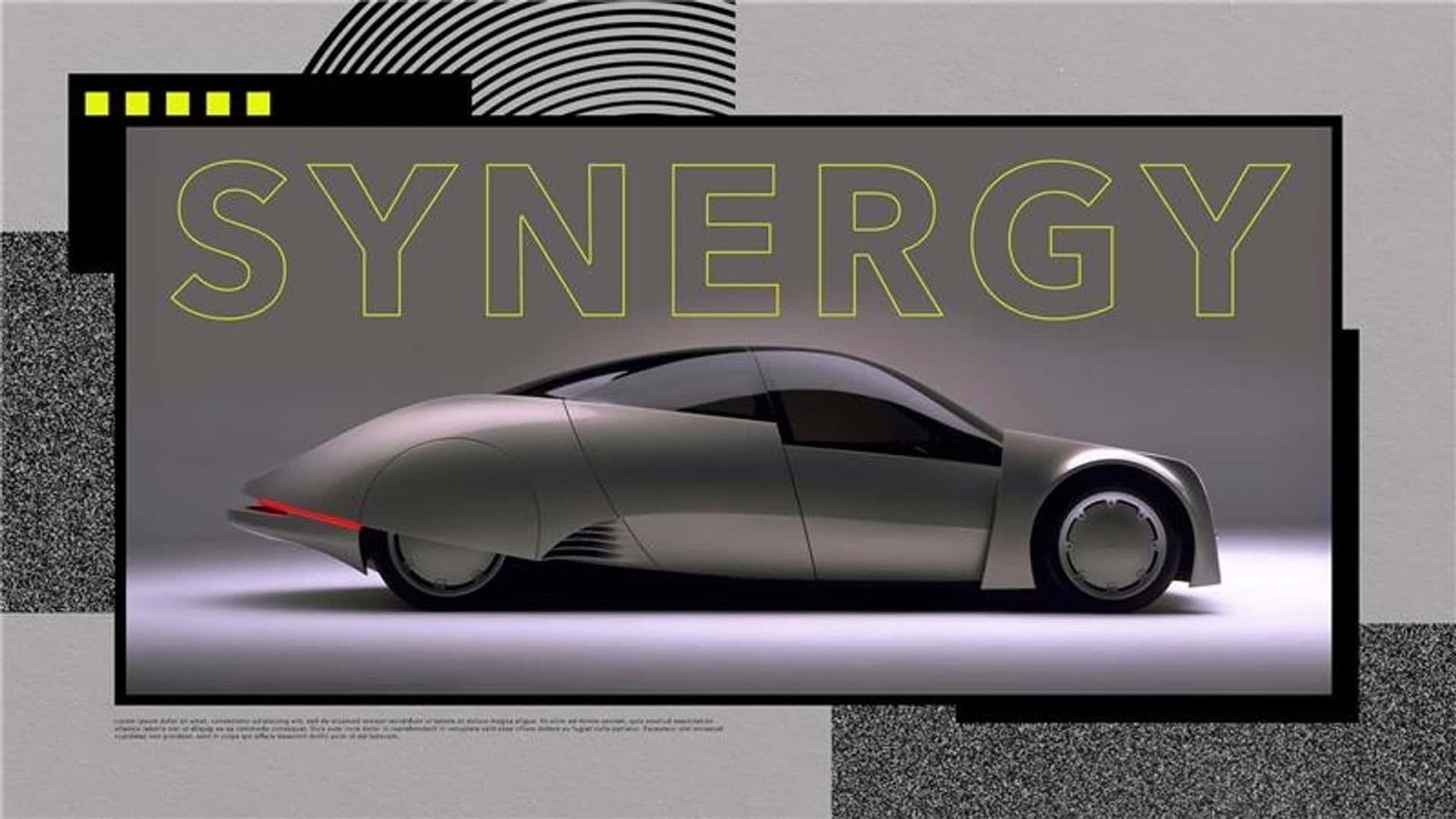
One engineer, then a young recruit at Ford’s research labs, recalled the atmosphere. “It felt like a secret mission,” he chuckled during a recent chat. “We knew we were working on something important, something ahead of its time, but the mainstream focus was still on bigger engines and more horsepower. Trying to explain the concept of a small gasoline engine acting purely as a generator for electric drive… well, let’s just say it raised a lot of eyebrows.” This sentiment perfectly captures the challenge of trying to introduce radical ideas into an industry steeped in tradition. Ford wasn’t just developing an EV; they were developing a specific type of EV, one that directly addressed the primary concern of potential buyers: “What if I run out of juice?”
The ECC Program: A Prophetic Prototype
Ford’s answer came in the form of the Electric Vehicle Concept Car, or ECC. The ECC-I and ECC-II, unveiled in the early 90s, weren’t just design studies; they were fully functional prototypes. These vehicles were, in essence, a masterclass in hybrid technology, long before the Toyota Prius made the term commonplace. The core innovation was a small, onboard internal combustion engine, not directly connected to the wheels, but rather serving as a generator. Its sole purpose was to recharge the battery pack, extending the vehicle’s electric range significantly. Think about that for a moment. This is precisely the principle behind modern vehicles like the BMW i3 REx or the Chevrolet Volt, which captivated the market years later.
The ECC-I, for instance, featured a direct-drive electric motor and a substantial battery pack for its era. However, it was the ECC-II, introduced in 1992, that truly showcased Ford’s visionary thinking. This particular concept was designed as a series hybrid. It had an electric motor driving the wheels, powered by a nickel-cadmium battery pack. When the battery charge dropped below a certain level, a tiny 1.2-liter three-cylinder gasoline engine would kick in, acting as a generator to replenish the batteries. “The idea was simple, really,” explained a former Ford designer who worked on the project, reminiscing over old sketches. “Provide emission-free driving for daily commutes, but give people the freedom to take a long trip without a charging worry. It was about practicality, about bridging the gap between today and a fully electric tomorrow.” This commitment to practicality, to solving real-world problems, is what made Ford’s approach so groundbreaking.
Why the Future Was Put on Hold
Despite the brilliance of the ECC program, these extended-range EVs didn’t take off commercially in the 1990s. Several significant factors conspired against them. Firstly, battery technology simply wasn’t ready for prime time. The nickel-cadmium batteries used were heavy, expensive, and offered a relatively limited electric-only range before the generator had to kick in. They also suffered from the “memory effect,” requiring full discharge before recharging to maintain capacity, which was inconvenient for drivers. Imagine trying to manage that in your daily routine!
Secondly, the cost of these advanced powertrains was prohibitive. Developing and manufacturing the complex interplay of electric motors, battery packs, and a dedicated generator engine made the ECC vehicles far more expensive than their gasoline counterparts. “We could build them, yes,” another engineer recalled, “but making them affordable for the average family car buyer? That was a monumental challenge given the technologies available then. It felt like trying to build a smartphone with 1980s computer parts.”

Then there was the public perception and infrastructure. Gasoline was cheap, plentiful, and filling up took minutes. The idea of “plugging in” a car was foreign, and charging infrastructure was non-existent outside of experimental labs. The urgency for environmentally friendly vehicles, while growing, hadn’t yet reached a critical mass where consumers were willing to pay a premium and adapt their habits for early-stage electric cars. “People just weren’t ready to embrace the change,” commented a former marketing executive. “The benefits weren’t clear enough, and the perceived inconveniences were too great. We were selling a solution to a problem most people didn’t think they had yet.” It’s a classic case of being ahead of your time, a truly bittersweet reality for the innovators involved.
The Modern Echo: Extended-Range EVs Today
Fast forward to today, and Ford’s early vision for extended-range EVs has become a significant part of the electric vehicle conversation. Modern battery technology, particularly lithium-ion, has dramatically improved energy density, reduced weight, and lowered costs. This has made the concept of a range extender far more viable and appealing. Vehicles like the Chevrolet Volt, which spearheaded the modern range-extended EV movement, or the BMW i3 with its optional Range Extender (REx), directly follow the blueprint laid out by Ford’s ECC program. Nissan’s innovative e-POWER system, popular in Japan and increasingly elsewhere, also uses a small gasoline engine exclusively as a generator for its electric powertrain.
These modern iterations prove that the fundamental idea behind Ford’s 90s concepts was incredibly sound. They offer the best of both worlds: zero-emission electric driving for the majority of daily commutes, coupled with the peace of mind of a gasoline-powered generator for longer trips. This significantly mitigates range anxiety, which remains one of the biggest psychological barriers to widespread EV adoption. “When I bought my BMW i3 with the REx, it was a game-changer,” shared Sarah, a graphic designer from Portland, Oregon. “I loved the idea of electric, but I regularly visit family two states away. The REx meant I could enjoy electric driving every day without stressing about those longer journeys. It’s like having your cake and eating it too, genuinely.” Her experience is a common one, highlighting how Ford’s prediction addresses a very real consumer need.
Lessons Learned and Enduring Legacy
The story of Ford’s early extended-range EVs is a powerful reminder that innovation often takes time to mature. Sometimes, a brilliant idea is simply too far ahead of its technological or societal context to immediately succeed. Yet, these early explorations are rarely wasted. They lay the groundwork, provide crucial data, and inspire future generations of engineers and designers. Ford’s ECC program wasn’t a commercial triumph, but it was an intellectual triumph, a clear demonstration of visionary thinking in the automotive industry.
What does this tell us about innovation? It suggests that true progress isn’t always linear. It often involves cycles of experimentation, failure, learning, and eventual resurgence. Ford’s engineers in the early 90s saw a future that many others couldn’t, or wouldn’t, acknowledge. They understood the limitations of pure battery electrics for the era and conceived an elegant workaround. Their work undoubtedly contributed to the broader knowledge base that eventually led to the successful development of modern hybrid and extended-range electric vehicles. It’s a testament to the fact that even seemingly failed projects can plant the seeds for future success.
The Continuing Evolution of Range Extension
Looking ahead, the concept of range extension continues to evolve. While pure battery electric vehicles are becoming more common with improving battery technology and charging infrastructure, the demand for flexible solutions remains. Some manufacturers are exploring alternative fuels for range extenders, such as hydrogen fuel cells or even small, highly efficient rotary engines. The core principle – using a compact, efficient generator to ensure uninterrupted travel – continues to hold immense appeal for many drivers.
We might not see “range extender” as a primary selling point in every EV of the future, especially as battery densities continue to soar and charging networks become ubiquitous. However, for specific use cases, for markets with nascent charging infrastructure, or simply for consumers who crave ultimate flexibility, the extended-range EV remains a compelling option. Ford’s early venture into this space wasn’t just a historical footnote; it was a foundational stone, a beacon that illuminated a path forward for sustainable transport long before the world was truly ready to follow. It stands as a powerful reminder that sometimes, the future isn’t just predicted; it’s meticulously prototyped, decades in advance. The foresight exhibited by those engineers at Ford truly shaped the possibilities we now take for granted.
Frequently Asked Questions
| What did Ford predict about extended-range EVs 30 years ago? | Ford predicted the need for electric vehicles that could overcome range limitations through the use of a small, onboard gasoline engine acting as a generator. Their ECC (Electric Vehicle Concept Car) prototypes in the early 1990s showcased a series hybrid design where an electric motor drove the wheels, and a generator engine recharged the batteries when needed, effectively creating what we now call extended-range EVs. |
| What are the benefits of extended-range EVs? | Extended-range EVs offer the primary benefit of mitigating “range anxiety” by providing the flexibility of electric-only driving for daily commutes while having a gasoline-powered generator for longer trips. This allows for reduced emissions in urban areas and convenience for long-distance travel without relying solely on charging infrastructure, offering a smooth transition for consumers. |
| How did Ford attempt to implement this technology then? | Ford implemented this technology through their ECC-I and ECC-II concept vehicles in the early 1990s. These prototypes featured nickel-cadmium battery packs, an electric motor for propulsion, and a small, efficient gasoline engine (like a 1.2-liter three-cylinder in the ECC-II) that would activate to generate electricity and recharge the batteries, not to directly power the wheels. |
| What challenges prevented early extended-range EVs from succeeding? | Several challenges hindered their success: high cost due to nascent technology, heavy and expensive battery packs (like nickel-cadmium) with limited capacity and inconvenient maintenance requirements, lack of public charging infrastructure, low gasoline prices making traditional cars more appealing, and general consumer unfamiliarity and resistance to new electric propulsion concepts. |
| What is the future outlook for extended-range EV technology? | While pure battery EVs are gaining prominence, extended-range EV technology still holds relevance, particularly for specific markets or use cases where charging infrastructure is developing or for consumers desiring maximum flexibility. Modern advancements in battery tech make them more efficient, and innovations like alternative fuel generators (e.g., hydrogen fuel cells) could further evolve the concept, ensuring it remains a viable option for many years. |
Important Notice
This FAQ section addresses the most common inquiries regarding the topic.