Miami Dolphins’ Season Woes: Examining Tua Tagovailoa’s Accountability
The air in the Miami Dolphins’ locker room on Thursday night was thick with disappointment, a palpable weight pressing down after a crushing 28-6 defeat at the hands of the Baltimore Ravens. For a franchise that began the 2025 season with burgeoning playoff aspirations under the innovative leadership of head coach Mike McDaniel, this loss felt less like a setback and more like rock bottom. The aftermath, as quarterback Tua Tagovailoa himself suggested, could prove to be a pivotal moment for the team. His post-game comments, and the subsequent revelation of a “heartfelt conversation” among players, have ignited a fierce debate regarding team accountability, with much of the focus landing squarely on Tagovailoa’s shoulders.
The narrative surrounding the Dolphins’ season has rapidly shifted from hopeful optimism to critical scrutiny. What started as a promising campaign, fueled by offseason moves and the expectation of Tagovailoa’s continued development, has devolved into a mire of inconsistent performances, costly turnovers, and fading playoff dreams. This article delves into the complexities of the Dolphins’ disastrous season, scrutinizing the various factors at play, and critically examining the role and perception of Tua Tagovailoa’s accountability in the face of mounting pressure.
The Crushing Weight of Unmet Expectations: Dolphins’ Season in Review
Before the 2025 season kicked off, the Miami Dolphins were a popular pick for a significant leap forward. Analysts lauded their offensive weaponry, the strategic mind of Mike McDaniel, and the perceived growth of Tua Tagovailoa. The preseason buzz hinted at a team ready to challenge for the AFC East title and make a deep playoff run. However, reality has unfolded dramatically differently, leaving fans and pundits alike questioning where it all went wrong.
The Dolphins’ descent into a 2-7 record by mid-season was not a sudden plunge but a gradual erosion marked by specific, recurring issues. Early wins, often hard-fought, masked underlying vulnerabilities that stronger opponents consistently exposed. The team struggled to establish a consistent running game, placing immense pressure on Tagovailoa’s arm. Defensive lapses, particularly in crucial moments, allowed opponents to capitalize on Miami’s mistakes. What was once a promising outlook transformed into a desperate fight for relevance, where every game felt like a must-win, and every loss deepened the crisis of confidence.
Key Turning Points and Statistical Anomalies
Several games served as critical junctures, exposing the Dolphins’ weaknesses. Close losses against divisional rivals highlighted an inability to close out games, while blowout defeats like the one against the Ravens underscored a significant talent gap or strategic misexecution. Statistically, the Dolphins’ season became a tale of alarming trends. Their red-zone efficiency plummeted, turning promising drives into field goals or, worse, turnovers. The team’s penalty count remained stubbornly high, often negating big plays or extending opponent drives. These statistical anomalies weren’t isolated incidents but patterns that painted a clear picture of a team struggling to execute at a high level.
The offensive line, a perennial concern, continued to be an Achilles’ heel, contributing to a lack of protection for Tagovailoa and hindering the run game. Defensively, while flashes of brilliance were present, consistency proved elusive. The combination of these factors created a perfect storm, where individual errors compounded into collective failure, making it incredibly difficult for the team to find any semblance of rhythm or momentum.
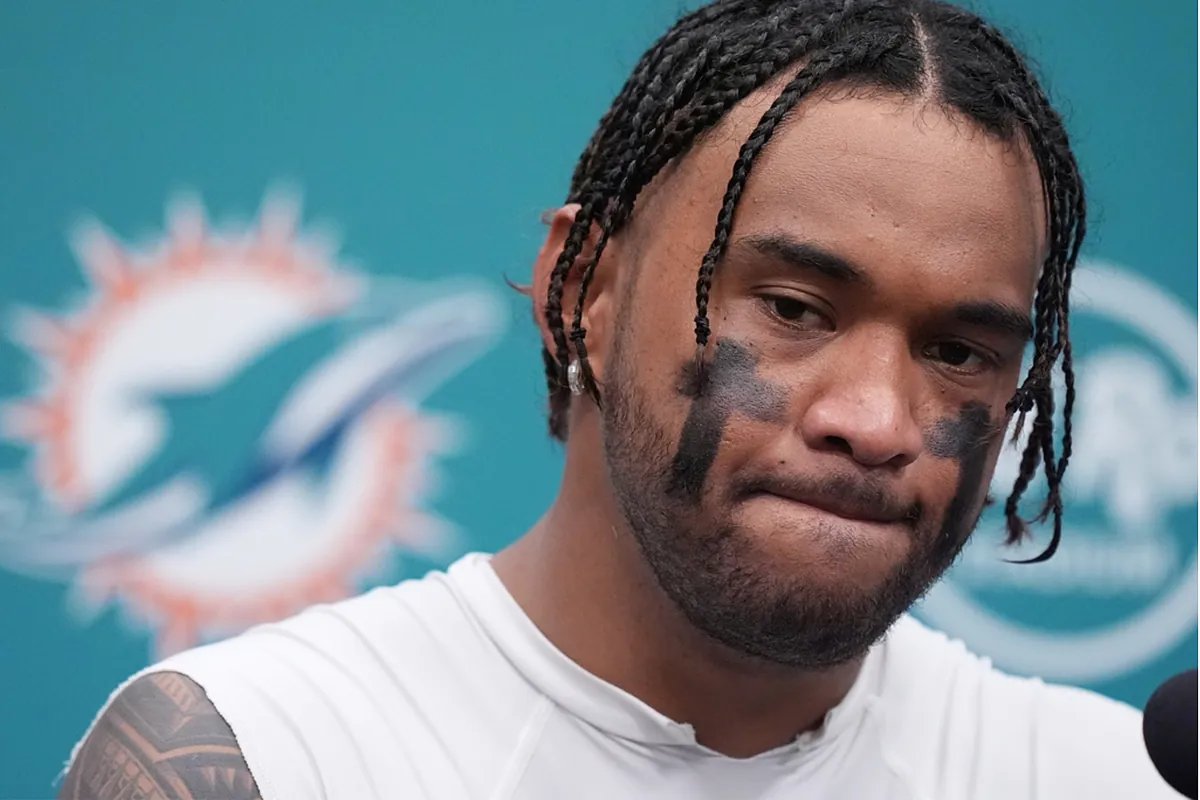
The Ravens Debacle: A Catalyst for Crisis and Conversation
The 28-6 loss to the Baltimore Ravens was more than just another defeat; it was a resounding affirmation of the Dolphins’ struggles and a stark reminder of how far they had fallen from their preseason perch. The game was a microcosm of their season-long woes, plagued by familiar mistakes that have become hallmarks of their disappointing campaign. From the opening whistle, the Ravens dictated the pace, showcasing a clinical efficiency that starkly contrasted with Miami’s disjointed efforts.
Mistakes Compounded: A Night of Self-Inflicted Wounds
Miami’s offense, meant to be a high-flying unit, sputtered and stalled, particularly in critical situations. Two costly fumbles handed possessions directly to the Ravens, who, under the guidance of a red-hot Lamar Jackson, wasted no time in converting those opportunities into points. Red-zone drives, which should have resulted in touchdowns, frequently ended in field goals or, more frustratingly, empty possessions. This inability to convert scoring chances into maximum points has been a consistent theme throughout the season, highlighting a fundamental flaw in offensive execution.
Perhaps most concerning was Tua Tagovailoa’s performance, which included another interception, pushing his league-high total to 11. While not all interceptions are solely the quarterback’s fault, such a high number inevitably draws scrutiny, especially when the team is losing. These turnovers not only halted offensive momentum but also put immense pressure on an already struggling defense, forcing them back onto the field against a potent Ravens attack. Lamar Jackson, meanwhile, delivered a masterful performance, throwing four touchdowns and showcasing the kind of decisive, mistake-free football that the Dolphins desperately lacked.
The “Heartfelt Conversation”: A Locker Room Reckoning
Following the demoralizing loss, the Dolphins’ locker room became the scene of an intense, private team-only meeting. Tua Tagovailoa’s admission to reporters about a “heartfelt conversation” confirmed the gravity of the situation. This kind of player-led meeting often signifies a critical juncture for a struggling team, a moment where players confront uncomfortable truths and attempt to self-correct. It suggests a desire for internal resolution and a collective effort to address the deep-seated issues that have plagued their season.
These conversations, while painful, are often necessary. They represent an attempt to foster greater team cohesion and shared responsibility. The hope is that by airing grievances and identifying problems without the immediate influence of coaches, players can forge a stronger bond and a renewed commitment to collective success. However, the true impact of such a meeting can only be measured by the team’s subsequent performance. Will it be a turning point, or merely another footnote in a season defined by disappointment?
Tua Tagovailoa’s Perspective: Navigating the Blame Game and Accountability
In the wake of the Ravens loss and the subsequent locker room meeting, Tua Tagovailoa’s public comments quickly became a focal point of discussion. His perceived refusal to explicitly “take blame” for the team’s disastrous season ignited a firestorm of criticism, particularly from a media and fan base desperate for answers and a clear sense of leadership. This situation highlights the complex nature of quarterback accountability in professional sports, where the line between individual performance and collective responsibility often blurs.
When asked about the team’s struggles, Tagovailoa emphasized the collective nature of the problems, stating that the entire team needed to improve and that the “heartfelt conversation” was about moving forward together. While this perspective can be seen as a commendable display of team-first leadership, it was also interpreted by some as a deflection, an unwillingness to acknowledge his own role in the team’s downturn. The expectation for a franchise quarterback, especially one drafted with such high hopes, is often to absorb criticism, even when it’s not entirely deserved, and to project an image of unwavering responsibility.
Analyzing Tua’s Stance: Deflection or Strategic Leadership?
It’s crucial to analyze Tagovailoa’s statements within the broader context of professional sports communication. Quarterbacks are often advised to protect their teammates and avoid throwing anyone under the bus, even implicitly. By emphasizing collective responsibility, Tua might have been attempting to foster unity rather than create division within a struggling locker room. In high-pressure environments, a quarterback who publicly shoulders all the blame might inadvertently demoralize his team, while one who deflects entirely might appear disengaged. Finding the right balance is a delicate act.
However, the optics of his comments were undoubtedly challenging. In a season defined by turnovers, stalled drives, and a rapidly deteriorating record, the fans and media are hungry for a leader to step forward and own the predicament. For many, a true leader accepts accountability, even for aspects beyond their direct control, setting an example for the rest of the team. This is where the debate over Tua Tagovailoa accountability truly intensifies. Is his approach a sign of maturity, attempting to rally the troops, or a symptom of a deeper issue regarding his willingness to confront personal shortcomings publicly?
The pressure on a franchise quarterback is immense, extending far beyond the field. They are the face of the organization, the primary spokesperson, and often the scapegoat when things go wrong. Navigating this public scrutiny requires a unique blend of confidence, resilience, and communication skills. Tua’s situation is a prime example of how even well-intentioned statements can be misinterpreted under the harsh glare of the spotlight, fueling the narrative of a quarterback struggling not just with his play, but with the expectations of his leadership role.
Beyond the Quarterback: Broader Team Dynamics and Coaching Scrutiny
While the quarterback often bears the brunt of criticism in a losing season, it is rarely a solitary endeavor. A football team’s performance is a complex tapestry woven from individual talents, strategic decisions, and collective execution. To solely place the blame for the Dolphins’ disastrous season on Tua Tagovailoa would be an oversimplification, ignoring the myriad of other factors that have contributed to their downfall. The broader team dynamics, coaching philosophy, and roster construction all play significant roles in the current predicament.
Mike McDaniel’s Role and Offensive Philosophy
Head coach Mike McDaniel, initially hailed for his innovative offensive mind, has also come under increasing scrutiny. His play-calling, once celebrated for its creativity, has at times appeared predictable or ill-suited to the personnel. Questions have arisen regarding his ability to adapt his scheme when opponents successfully counter his initial strategies. The offensive line’s persistent struggles, despite investments, suggest either a failure in talent evaluation, coaching, or scheme implementation. A coach’s ability to maximize the potential of his players, particularly his quarterback, is paramount, and the Dolphins’ current offensive output raises legitimate concerns about this aspect of McDaniel’s leadership.
Furthermore, the team’s discipline, reflected in their high penalty count, often points back to coaching. Unforced errors, false starts, and procedural penalties are often indicative of a lack of focus or preparation, areas directly influenced by the coaching staff. For a team to truly succeed, there must be a seamless synergy between the coaching staff’s vision and the players’ execution, a synergy that appears to be missing in Miami this season.
Roster Construction, Injuries, and Defensive Inconsistencies
The Dolphins’ roster, while boasting some high-profile talents, also has glaring weaknesses. The offensive line struggles are well-documented, directly impacting both the run game and pass protection. Key injuries to essential players have also disrupted continuity and forced less experienced players into critical roles, exposing a lack of depth. The defense, despite significant investments, has shown flashes but struggled with consistency, particularly in stopping the run and generating pressure when it matters most.
Even superstar players have had their moments of inconsistency, contributing to the overall decline. The collective performance of the special teams unit has also been uneven, failing to provide the hidden yardage and critical plays that can swing close NFL games. All these elements combined paint a picture of a team facing systemic challenges, where no single individual, including Tua Tagovailoa, can be solely blamed for the entirety of the team’s struggles. True accountability must extend across the entire organization, from the general manager and coaching staff to every player on the roster.
Historical Parallels and the Franchise Legacy of Struggle
The Miami Dolphins’ current struggles are not an isolated incident in the annals of their franchise history. For decades, the team has grappled with periods of mediocrity and unfulfilled potential, creating a legacy that weighs heavily on every new coaching staff and quarterback. Understanding this historical context provides a deeper appreciation for the immense pressure facing the current team, and particularly Tua Tagovailoa, as they navigate another disappointing season.
The Weight of the Past: A Legacy of Near Misses and Rebuilds
Since the golden era of the 1970s and early 80s, the Dolphins have often been characterized by fleeting moments of success followed by prolonged periods of rebuilding. Fans remember the promise of Dan Marino’s era, which, despite his individual brilliance, never culminated in a Super Bowl victory. Subsequent eras have seen a revolving door of quarterbacks and coaches, each promising a return to glory, only to fall short. This history creates a unique burden for current players; every slump is viewed through the lens of past failures, intensifying the scrutiny and magnifying the perceived shortcomings.
The current situation with Tua Tagovailoa and the Dolphins echoes past instances where highly drafted quarterbacks struggled to elevate the franchise. It’s a pattern that can be incredibly difficult to break, as the collective memory of disappointment can seep into the culture, impacting player confidence and fan morale. The challenge for the Dolphins, therefore, is not just to win games, but to fundamentally alter a narrative that has persisted for far too long.
Lessons from Other Franchises: Overcoming Adversity
Examining other NFL franchises offers both cautionary tales and blueprints for success. Teams like the Kansas City Chiefs, who endured their own decades of struggle before finding sustained success with Patrick Mahomes and Andy Reid, demonstrate that a turnaround is possible with the right leadership, strategic vision, and patience. Conversely, teams that fail to address systemic issues often find themselves stuck in a cycle of repeated disappointment, perpetually searching for answers without truly confronting the root causes.
The key often lies in a clear organizational philosophy, consistent coaching, and a commitment to player development. When teams embrace a culture of genuine accountability, where every member understands their role and is held responsible for their performance, regardless of their status, positive change can begin. For the Dolphins, this means a thorough self-assessment, not just of individual players, but of the entire organizational structure and strategy. The “heartfelt conversation” in the locker room, if truly genuine, could be the first step towards a broader, more impactful shift in the franchise’s trajectory.
The Path Forward: What’s Next for Tua and the Dolphins?
As the Miami Dolphins stare down the barrel of another lost season, the focus