The autumn air in Berea, Ohio, has always carried the scent of crisp leaves and the weight of fervent football hopes, but this season, a different kind of chill has settled—one born of unspoken anxieties and a leader’s stark declaration. It feels like just yesterday we were celebrating the Browns’ improbable playoff run, fueled by grit and a coaching philosophy that seemed to finally click. Yet, beneath the surface of what was, until recently, a remarkably resilient season, whispers have grown into a roar, and now, the loudest voice in the locker room, the formidable Myles Garrett himself, has thrown a significant wrench into the perception of stability. You can almost feel the collective intake of breath across the Dawg Pound as news broke: Garrett, the cornerstone of the Cleveland Browns’ defense and a usually unwavering advocate for the team’s direction, has reportedly withdrawn his implicit support for Kevin Stefanski’s continuity. This isn’t just a minor disagreement; it’s a seismic shift, a direct challenge from the team’s most dominant player. It’s a warning, loud and clear, echoing through the halls of the Browns’ headquarters, a stark message to Cleveland that the status quo is no longer acceptable, and perhaps, the very foundation of their future needs a serious re-evaluation. The implications are enormous, threatening to unravel years of painstaking effort to build a winning culture, leaving fans wondering what exactly is going on behind those closed doors.
The tension has been palpable, simmering just below the surface during what many considered a surprisingly successful year given the litany of quarterback injuries. But resilience can only mask underlying issues for so long. When your star defensive end, a man known more for his ferocious sacks than his public pronouncements on coaching staff, speaks up, everyone listens. And what Myles Garrett said, or rather, what he implied through carefully chosen words, wasn’t a ringing endorsement.
Garrett’s Candid Assessment: A Crushing Blow to Continuity
It wasn’t a fiery, expletive-laden rant after a tough loss, nor was it a demand issued through a third party. Instead, it was a subtle yet powerful shift in tone and a calculated refusal to publicly back Kevin Stefanski‘s long-term future in Cleveland. This isn’t the Myles Garrett we’ve known, the one who consistently preached patience and belief in the system. The sudden change has sent shockwaves, leaving many to wonder if this is the beginning of the end for the Stefanski era, or a desperate plea for change from within. “Myles has always been the ultimate team player, a guy who puts his head down and works,” a team insider, who preferred to remain anonymous given the sensitivity of the situation, told us earlier this week. “For him to even hint at a lack of faith in the coaching staff… that’s huge. It tells you there’s a serious disconnect, or at least a growing frustration that’s gone beyond just on-field performance.”
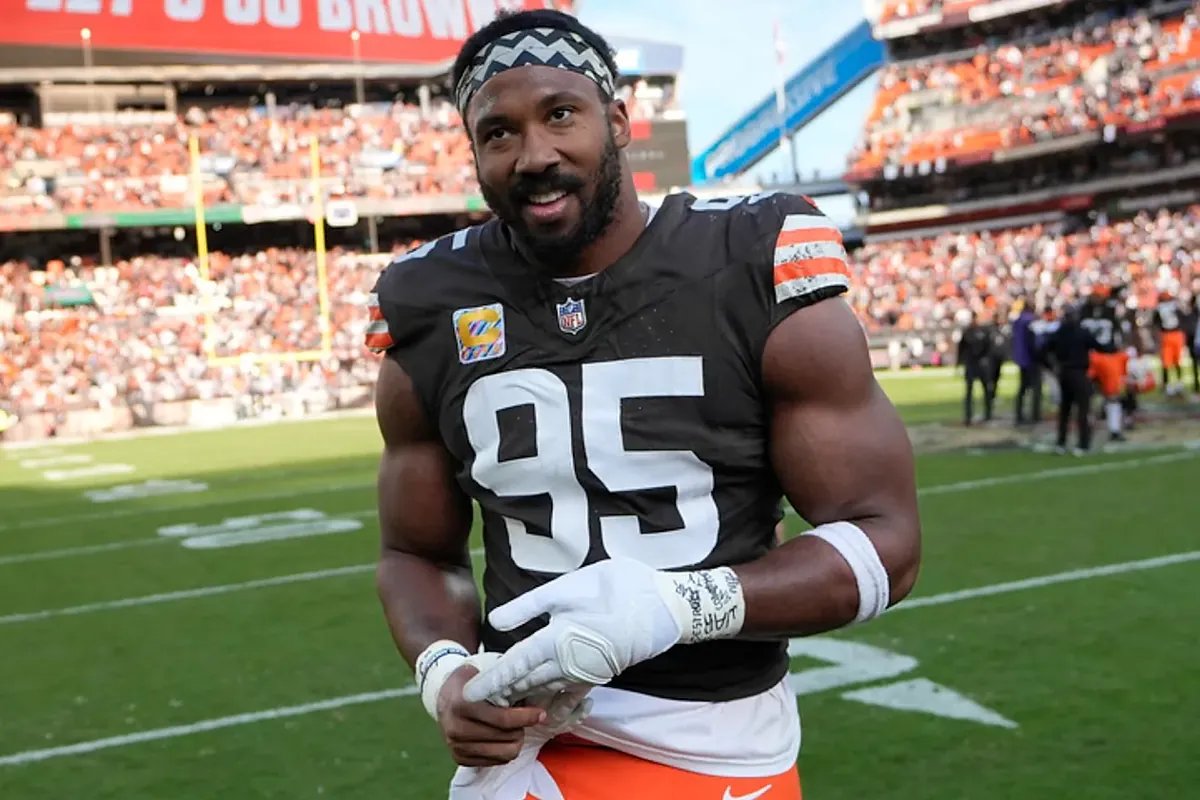
Garrett, when pressed by local reporters recently, avoided the usual platitudes about teamwork and future success under the current leadership. Instead, he reportedly emphasized the need for “accountability” and “everyone doing their part” – generic enough to be applicable to any team, but pointedly lacking any specific mention of Stefanski’s role in the desired future. This is a far cry from his previous staunch defense of the coach, even through challenging periods. It feels like a politician subtly withdrawing an endorsement without explicitly condemning their former ally. The message to Cleveland is clear: the most important player on the roster is no longer content to simply ride the wave. He wants to steer the ship, or at least ensure it’s heading in the right direction. And if it’s not, well, someone needs to pay the price.
The Subtle Language of Dissatisfaction
Understanding Garrett’s warning requires reading between the lines. He didn’t come out and say, “Fire Stefanski.” That’s not his style, nor would it be productive. Instead, his comments have been interpreted as a clear signal to the front office that he believes the team’s potential is being hindered by something fundamental. A prominent Cleveland sports radio host, during his morning show, mused, “When a player of Myles Garrett’s caliber, a true leader and the face of the defense, stops giving the full, unequivocal backing to his head coach, it’s a death knell. It means the locker room might be fractured, or at least a significant portion of it shares his sentiment.” This isn’t just about winning and losing, it’s about trust, vision, and the belief that the person at the helm can truly maximize the talent around them.
Stefanski’s Rollercoaster Ride: Highs, Lows, and Lingering Questions
Kevin Stefanski arrived in Cleveland amidst a flurry of optimism, a perceived breath of fresh air after years of coaching instability. He delivered almost immediately, leading the Browns to their first playoff victory in decades in 2020. That season was a fairytale, a testament to his innovative offensive schemes and his ability to rally a team. But since then, the narrative has been far more complex, a real mixed bag of results that has left fans and, evidently, star players, questioning the long-term viability of the project.
The Promise and the Problems
The initial success was undeniable. Stefanski brought structure, discipline, and a modern offensive philosophy that seemed to unleash the Browns’ potential. His play-calling was praised, his demeanor calm, and he was even named NFL Coach of the Year. It felt like the curse was finally broken. Fast forward a few seasons, and while the Browns have maintained a respectable record, especially considering the unprecedented quarterback injuries in a recent season, the offensive identity has often felt muddled. The consistency, particularly in crunch time, has been elusive. “We saw glimpses of greatness, sure,” commented a season ticket holder who has endured decades of Browns football, “but it always felt like we were one step forward, two steps back. The offense, at times, looked brilliant, and at others, completely lost. And that’s on the play-caller.”
The Deshaun Watson saga has certainly complicated matters, creating a tumultuous environment and forcing Stefanski to adapt to multiple backup quarterbacks, a challenge few coaches face to such an extreme. Yet, even with these valid excuses, questions persist about player development, in-game adjustments, and the overall trajectory of the team. Garrett’s comments suggest that for a player who gives his all on every snap, these excuses might no longer be enough. The desire for unequivocal excellence, regardless of external factors, is paramount.

It’s a tough spot for any coach, trying to navigate high expectations, significant roster investments, and the constant pressure of a passionate fan base. Stefanski has shown flashes of brilliance, particularly in his ability to maintain competitiveness despite adversity. But the consistent, dominant performance that a team with Myles Garrett’s talent demands hasn’t always been there. And when your best player starts to lose faith, that’s when the real trouble begins.
The Weight of Expectation: Cleveland’s Frustration Boils Over
For fans of the Cleveland Browns, the phrase “wait till next year” is less a hope and more a recurring nightmare. Decades of futility, punctuated by brief moments of tantalizing success, have instilled a deep-seated skepticism. When the team invests heavily, bringing in superstar talent like Garrett and Deshaun Watson, the expectation isn’t just to compete; it’s to contend for championships. Anything less feels like a betrayal of that investment, both financial and emotional.
A City’s Lingering Hope and Deepening Scars
The city of Cleveland has seen its share of sports heartbreak. The Browns represent more than just a football team; they are a cultural touchstone, a source of pride, and often, profound disappointment. The early success under Stefanski felt like a genuine turning point, a promise of sustained winning that had eluded the franchise for so long. The current situation, with Garrett’s public disengagement from full support, threatens to unravel that fragile hope. “We’ve been through so much,” lamented Sarah Jenkins, a lifelong Browns fan encountered outside a local coffee shop. “You start to believe, really believe, and then something like this happens. It just makes you wonder if anything will ever truly change for the better here.”
The general manager, Andrew Berry, and owner Jimmy Haslam, now face a pivotal moment. Do they back their coach, risking alienating their most valuable player? Or do they heed the warning from Garrett, potentially signaling another change at the top, which in Cleveland, often feels like a cyclical curse? The decision carries immense weight, not just for the immediate future but for the long-term morale and identity of the franchise.
Decoding Garrett’s Warning: What Does it Mean for the Browns?
Garrett’s statement, subtle as it may be, is far more than just locker room chatter. It’s a strategic move, a powerful player leveraging his influence to force a conversation that might otherwise be avoided. This isn’t just about Kevin Stefanski; it’s a direct challenge to the entire organization, a warning to Cleveland that the trajectory needs to be altered, and quickly.
Potential Repercussions and Future Scenarios
What could be the fallout? Several scenarios come to mind, none of them simple.
- Coaching Change: The most obvious, and perhaps most drastic, is that the Browns’ front office may feel compelled to make a change at head coach. When a franchise player of Garrett’s stature signals discontent, it’s often a precursor to a coaching shift. The pressure to keep their superstar happy and productive is immense.
- Increased Scrutiny: Even if Stefanski retains his job, he will now operate under an unprecedented level of scrutiny, not just from the media and fans, but from within his own locker room. Every decision, every play call, every adjustment will be viewed through the lens of Garrett’s comments.
- Roster Adjustments: Garrett’s concerns might extend beyond just the coach, hinting at broader issues with player personnel or team philosophy. This could lead to significant roster changes in the offseason, as the front office attempts to realign the team to meet Garrett’s implied standards.
- Leadership Crisis: If the situation isn’t handled delicately, it could lead to a full-blown leadership crisis, fracturing the locker room and making it impossible to achieve cohesion. The front office needs to demonstrate strong, decisive leadership to navigate these troubled waters.

This isn’t just about Garrett’s personal feelings; it’s about a leader identifying what he perceives as fundamental flaws preventing the team from reaching its ultimate goal: a Super Bowl. His warning to Cleveland isn’t just a lament; it’s a demand for action.
The Deshaun Watson Factor: An Added Layer of Complexity
It’s impossible to discuss the Browns’ continuity and Kevin Stefanski’s future without acknowledging the enormous shadow cast by the Deshaun Watson contract. The team made a massive, franchise-altering investment, trading away significant draft capital and signing Watson to a fully guaranteed deal. His performance, often hampered by injury and inconsistency since his return, has undeniably put additional pressure on Stefanski and the entire offensive scheme.
The hope was that Watson would elevate the offense to an elite level, making Stefanski’s job easier and leading to consistent high-level production. That hasn’t quite materialized, at least not consistently. This has forced Stefanski to constantly adapt, often simplifying the offense or relying heavily on the run game, which might not always align with the aggressive, innovative identity he initially promised. Garrett’s implicit criticism could also be seen as a broader critique of the team’s ability to maximize its offensive talent, regardless of who is under center. The investment in Watson was supposed to stabilize the quarterback position for years, yet it has only amplified the scrutiny on coaching and offensive output.
Looking Ahead: An Uncertain Offseason for Cleveland
As the offseason looms, the air in Cleveland will be thick with speculation and anticipation. The front office, led by Andrew Berry, must carefully weigh the desires of their star player against their commitment to Kevin Stefanski. This isn’t a situation where a quick fix will suffice. The warning to Cleveland from Myles Garrett demands a comprehensive response.
Will Stefanski be given another year to prove he can integrate Watson fully and lead the team to consistent contention, or will the front office decide that Garrett’s message signals a deeper issue that requires a fresh start? It’s a high-stakes poker game, and the chips are the future of the Cleveland Browns. Fans, after years of enduring disappointment, are demanding results, and it seems their defensive superstar is echoing that sentiment with greater urgency than ever before. Whatever the outcome, this offseason promises to be one of the most pivotal in recent Browns history, with the eyes of the entire NFL — and certainly the entirety of Cleveland — watching closely. The path forward is murky, but one thing is clear: Myles Garrett has made his position known, and the ball is now firmly in the Browns’ court.
Frequently Asked Questions
| What exactly did Myles Garrett say about Kevin Stefanski? | Myles Garrett reportedly made comments that subtly withdrew his full support for Kevin Stefanski’s long-term continuity with the Cleveland Browns. While not explicitly calling for his dismissal, Garrett’s statements emphasized the need for “accountability” and “everyone doing their part,” notably omitting the usual strong endorsements for his coach, signaling a significant shift in his stance. |
| Why is Garrett’s warning to Cleveland significant? | Garrett is the face of the Browns’ defense and one of the NFL’s most dominant players. His public comments, even if subtle, carry immense weight within the organization and among the fanbase. They signal potential unrest in the locker room and put direct pressure on the front office to re-evaluate the coaching situation, indicating that the team’s top talent may no longer believe in the current direction. |
| What is Kevin Stefanski’s track record with the Browns? | Kevin Stefanski led the Browns to a playoff victory in his first season (2020) and was named NFL Coach of the Year. However, subsequent seasons have been marked by inconsistency, particularly on offense, and navigating numerous quarterback injuries. While he has kept the team competitive, questions remain about offensive identity and maximizing the team’s overall talent. |
| What are the potential consequences of Garrett’s comments for the Browns? | The consequences could range from increased scrutiny on Stefanski’s performance, significant roster changes in the offseason, or even a coaching change. The front office faces immense pressure to address Garrett’s implicit concerns to maintain locker room cohesion and ensure their star player remains committed to the franchise’s long-term success. |
| How does the Deshaun Watson situation impact Stefanski’s future? | The massive investment in Deshaun Watson, coupled with his inconsistent performance and injuries, has put additional pressure on Stefanski to produce an elite offense. Garrett’s comments might also reflect a broader dissatisfaction with the team’s ability to maximize its offensive talent, regardless of the quarterback, further complicating Stefanski’s position. |
Important Notice
This FAQ section addresses the most common inquiries regarding the topic.