Imagine you’re cruising at 35,000 feet, the gentle hum of the engines a comforting lullaby against the backdrop of endless blue sky. You’re halfway through a transatlantic flight, perhaps just dozing off, when suddenly, a jolt. Not a violent one, but enough to make you open your eyes. Then, a chilling announcement – or rather, the *lack* of one. The cabin crew looks unusually tense, whispering amongst themselves, their smiles replaced by tight, worried expressions. A few minutes later, a more senior flight attendant makes a strained announcement, her voice wavering slightly: “Ladies and gentlemen, we are experiencing an in-flight emergency. Please remain calm.” Panic begins to ripple through the cabin. People exchange terrified glances. What could it be? Engine failure? A medical emergency with the pilots? The thoughts race, heart pounding like a drum against your ribs. Just when the fear threatens to overwhelm, something extraordinary happens. The aircraft, seemingly on its own accord, begins a controlled descent. It adjusts its course, aligns perfectly with a distant runway, and with an uncanny precision that defies belief, the airplane automatically lands itself. No pilot input, no frantic radio calls – just a silent, technological miracle unfolding before stunned eyes. This isn’t science fiction; it’s a rapidly evolving reality, thanks to sophisticated autonomous landing systems that are redefining aviation safety and pushing the boundaries of what we thought possible in the skies. It makes you wonder, doesn’t it? How did we get here? And what does it mean for the future of travel?
The Unfolding Drama: A Pilot’s Worst Nightmare Averted
Let’s put ourselves in that scenario again, perhaps on a late-night flight from Chicago to Seattle. The weather had been a bit dicey on departure, but nothing the experienced crew of Flight 714 couldn’t handle. Captain Miller, a seasoned aviator with over 20,000 hours in the cockpit, had just handed controls to First Officer Chen for a routine cruise segment. “Keep an eye on that turbulence ahead, Sarah,” he’d remarked, before leaning back, perhaps thinking of his family waiting at home. Minutes later, the cabin plunged into a dreadful silence. Not the quiet of a peaceful flight, but a heavy, unsettling quiet that signaled something was profoundly wrong. “Captain Miller collapsed in his seat,” First Officer Chen later recounted, her voice still shaky days after the incident. “He just… slumped over. I tried to rouse him, but he was unresponsive.”
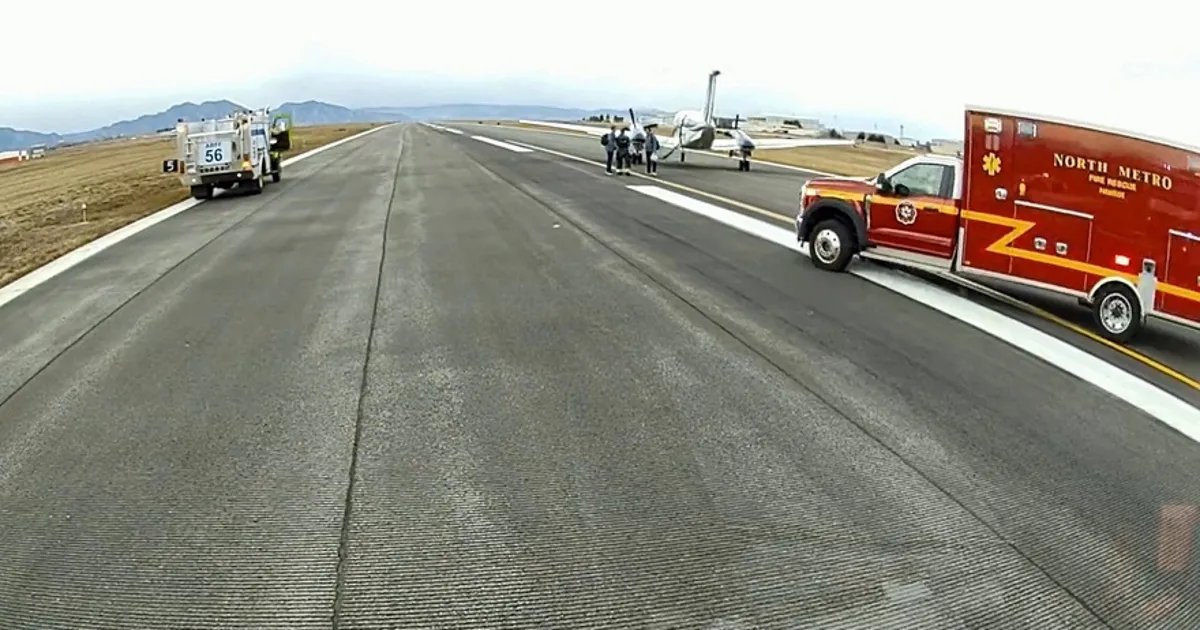
Suddenly, a massive responsibility fell upon First Officer Chen. She was now the sole active pilot, facing a potential pilot incapacitation scenario. She immediately declared an emergency, but the pressure was immense. Air traffic control tried to guide her, but the situation was rapidly deteriorating. The aircraft was entering a complex weather front, and the nearest diversion airport required a challenging approach. “I was getting overwhelmed,” she admitted. “My heart was racing. I could barely think straight.” This is precisely the kind of moment that cutting-edge aviation technology is designed for. As the aircraft approached a pre-selected emergency landing strip, a subtle shift occurred. The sophisticated autonomous flight systems, sensing the pilot’s distress and the declared emergency, began to take over. Passengers reported a noticeable change; the aircraft seemed to glide with a newfound smoothness, almost as if an invisible hand had taken the controls. “It was surreal,” said passenger David Lee, still wide-eyed from the experience. “One moment, everyone was freaking out, then the plane just… settled. It felt incredibly calm, considering what was happening.”
How Does it Work? Deconstructing the Autonomous Landing System
The ability for an airplane to automatically land itself is not a single, monolithic piece of technology, but rather a complex symphony of interconnected systems working in perfect harmony. At its core, it leverages decades of advancements in avionics, flight control software, and sensor technology. When we talk about an autonomous landing system, we’re really talking about a high-fidelity integration of several critical components:
Key Components of an Autoland System:
- Flight Management System (FMS): This is the brain of the operation, pre-programmed with flight plans, navigation data, and performance parameters. In an emergency, it can be updated with new destination data.
- Inertial Navigation System (INS) and GPS: These provide highly accurate positional data, crucial for guiding the aircraft with precision, especially during approach and landing.
- Autopilot: The primary system responsible for controlling the aircraft’s pitch, roll, and yaw, executing commands from the FMS.
- Auto-throttle: Manages engine thrust to maintain desired airspeeds during various flight phases, ensuring the correct speed for approach and touchdown.
- Instrument Landing System (ILS) or GPS-based Augmentation Systems (GBAS/LAAS): These ground-based or satellite-based systems provide precise lateral and vertical guidance to the runway. The aircraft’s receivers interpret these signals to stay on the glideslope and centerline.
- Radar Altimeters: Crucial for accurate height measurements, especially during the final stages of landing, allowing the system to initiate the flare maneuver at the perfect altitude.
- Automatic Braking System: Engages the wheel brakes after touchdown to bring the aircraft to a safe stop on the runway.
- Advanced Sensors: Beyond standard altimeters and air speed indicators, modern systems might incorporate advanced lidar or radar for even greater environmental awareness, especially in low visibility.
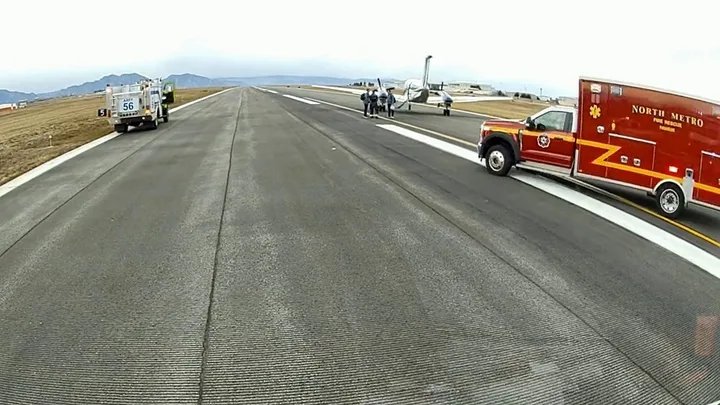
When activated – either by a pilot in extreme distress, automatically in a critical incapacitation scenario, or even as part of a routine operation under specific conditions – the FMS calculates the optimal descent profile. It then commands the autopilot and auto-throttle to execute this profile, continuously cross-referencing its position with ILS signals or GPS data. As the aircraft descends, the radar altimeter precisely measures its height above the runway. At a pre-determined altitude, typically around 50 feet, the system initiates the “flare” – a gentle nose-up maneuver to reduce the rate of descent for a smooth touchdown. Immediately upon contact with the runway, the spoilers deploy, and the automatic braking system kicks in, bringing the aircraft to a controlled halt. It’s a ballet of bytes and hydraulics, executed with a precision that often surpasses human capability, especially under duress.
The Path to Full Autonomy: A Brief History of Automated Landing
The concept of an automated landing isn’t entirely new; it has roots stretching back decades. Early forms of autopilots, developed in the 1910s, could hold an aircraft’s heading and altitude, a marvel for their time. But guiding an aircraft all the way to a landing required far greater precision and reliability. The real breakthrough came with the development of the Instrument Landing System (ILS) in the 1930s and its widespread implementation post-WWII. ILS provides pilots with lateral (localizer) and vertical (glideslope) guidance to the runway, allowing them to land in conditions of poor visibility.
By the 1960s, aircraft manufacturers and airlines began exploring “autoland” capabilities, integrating the ILS signals directly into the autopilot system to perform the entire landing sequence without pilot intervention. These early systems were primarily designed for extremely low visibility conditions, often categorized as Cat II or Cat III ILS approaches, where human pilots simply couldn’t see enough to land safely. British European Airways (BEA) was a pioneer, achieving the world’s first fully automatic landing by a civil aircraft in scheduled passenger service in 1965 with a Hawker Siddeley Trident. This was a monumental achievement, proving that machines could indeed land an aircraft.
Over the years, these systems have become incredibly robust and reliable, incorporating redundancy (multiple independent systems to prevent single-point failures) and self-monitoring capabilities. Today, most modern commercial airliners are equipped with autoland capabilities, routinely used by pilots to reduce workload, particularly in challenging weather or at busy airports. What’s different now, however, is the increasing ability of these systems to act not just as an aid, but as an independent operator in a truly critical, unforeseen emergency, making decisions autonomously that would traditionally require human judgment. It’s an evolution from pilot assist to pilot surrogate, especially in scenarios like pilot incapacitation.
Real-World Implications and Passenger Confidence
The successful automatic landing of an airplane during an emergency sends a powerful message, doesn’t it? It’s a testament to human ingenuity and the relentless pursuit of safer skies. For passengers, it can be a source of profound relief, knowing that even in the gravest circumstances, there’s a technological guardian watching over them. “Honestly, before this, I always worried about what would happen if both pilots became incapacitated,” confessed Maria Rodriguez, a frequent flyer. “Now, knowing the plane can land itself? It makes me feel a lot safer, even though it’s still a terrifying thought.”
However, this reliance on automation also sparks a crucial debate: What about the human element? Are we becoming too dependent on machines? “The systems are incredibly sophisticated, yes, but they’re designed by humans and operated by humans,” states Dr. Evelyn Reed, an aerospace engineering professor. “The pilot is still the ultimate authority, the one who can make nuanced decisions a computer might not be programmed for. These systems are meant to augment, not replace, human pilots.” The challenge lies in striking the right balance. Passengers want to feel safe, but they also want to trust the competence of the people flying the plane. The news of an airplane automatically landing itself can be both reassuring and slightly unsettling – a reminder of how much control we’ve ceded to algorithms.
Aviation authorities worldwide, such as the FAA and EASA, are meticulously evaluating the operational and regulatory frameworks required for more widespread use of such advanced autonomous capabilities. The certification process is incredibly stringent, demanding exhaustive testing and validation to ensure these systems are fail-safe. It’s not just about the technology working, but about it working flawlessly, every single time, under every conceivable condition. The goal isn’t to remove pilots, but to provide an ultimate safety net, an intelligent co-pilot that can step in when human capability is compromised.
Beyond Emergencies: The Future of Autonomous Flight
While the dramatic scenario of an airplane automatically landing itself after an in-flight emergency captures headlines, the implications of advanced autonomous flight stretch far beyond crisis management. This technology is paving the way for a future where aircraft operate with unprecedented efficiency and safety.
Consider the potential for single-pilot operations in cargo flights. Reducing crew size could lead to significant operational cost savings for airlines. Furthermore, the development of urban air mobility (UAM) – think flying taxis and delivery drones – is entirely predicated on highly autonomous systems. These vehicles simply cannot operate safely and efficiently in crowded urban airspace without sophisticated self-flying capabilities.
The concept of “gate-to-gate” autonomy, where an aircraft handles everything from taxiing out, takeoff, cruise, approach, landing, and taxiing back to the gate, is no longer a distant dream. Companies like Airbus and Boeing are heavily investing in research and development, exploring technologies that could allow commercial flights to operate with minimal human intervention. Projects like Airbus’s “Autonomous Taxi, Take-Off, and Landing” (ATTOL) demonstrate these capabilities are well within reach.
However, the journey to widespread autonomous flight is not without its hurdles. Regulatory bodies face the monumental task of creating new rules and certification standards for aircraft that operate with less human oversight. Public acceptance is another significant factor; convincing passengers that a computer is as safe, if not safer, than a human pilot will require transparent communication and a flawless safety record. There are also complex ethical considerations: who is responsible if an autonomous system makes a decision that leads to an incident? Cybersecurity also becomes paramount, as highly automated systems could be vulnerable to malicious attacks.
Despite these challenges, the trajectory is clear. Just as autopilots transformed aviation in the 20th century, advanced aircraft automation is set to redefine it in the 21st. We’re moving towards an ecosystem where human pilots transition from being active controllers to vigilant monitors, overseeing highly intelligent systems that manage the intricate dance of flight.
The Human Element: Still Crucial in a World of Automation
Even as we marvel at an airplane automatically landing itself, it’s vital to remember that the human element remains absolutely crucial. Automation, no matter how advanced, is a tool. It’s designed to assist, enhance, and provide redundancy, not to completely eliminate the need for human intelligence, adaptability, and judgment. Pilots are, and will continue to be, at the heart of aviation safety.
Modern pilot training increasingly emphasizes monitoring skills and effective decision-making, especially in scenarios where automation might fail or behave unexpectedly. The concept of “human-in-the-loop” is fundamental. This means pilots are actively engaged, aware of what the automation is doing, and ready to take over at any moment. They understand the intricacies of the systems, their limitations, and how to troubleshoot problems that even the most advanced AI might not anticipate. Unexpected weather phenomena, unique mechanical failures, or complex air traffic scenarios often require human intuition and problem-solving abilities that still surpass current AI capabilities.
Moreover, the pilot is the ultimate manager of the flight, responsible for passenger well-being, communication with air traffic control, and adherence to complex operational procedures. The trust that passengers place in their pilots is intangible but profound. While an automated system can land a plane, it cannot reassure a nervous passenger, adapt to a last-minute runway change due to debris, or make the ethical judgment calls that sometimes arise in extraordinary circumstances.
The future of aviation will likely see a partnership between highly skilled human pilots and incredibly sophisticated autonomous systems. It’s a synergy where the strengths of each compensate for the weaknesses of the other, ultimately leading to an even safer, more efficient, and more reliable air travel experience for everyone. The incident where an airplane automatically lands itself isn’t a sign of pilots becoming obsolete; it’s a testament to the incredible tools they now have at their disposal to ensure that every journey ends safely, no matter the challenges encountered along the way.
Frequently Asked Questions
| What exactly happened when the airplane automatically landed itself? | In scenarios like pilot incapacitation or severe in-flight emergencies, advanced autonomous flight systems can take over control of an aircraft. These systems, utilizing GPS, inertial navigation, radar altimeters, and sophisticated flight control software, can guide the plane through descent, approach, flare, and touchdown, bringing it to a safe landing on a pre-selected runway without direct human pilot input. |
| What are the primary benefits of advanced autonomous landing systems in aviation? | The primary benefits include significantly enhanced safety, particularly in critical emergencies such as pilot incapacitation or severe weather conditions where human pilots might be overwhelmed. They reduce pilot workload, improve precision, and can operate reliably in low-visibility conditions. These systems act as a crucial safety net, ensuring the aircraft can land safely even when human intervention is compromised. |
| How are these autonomous landing systems integrated into modern aircraft? | Autonomous landing systems are deeply integrated into the aircraft’s avionics suite. They typically connect to the Flight Management System (FMS), autopilot, auto-throttle, and navigation sensors (like ILS receivers, GPS). These components work together, with the FMS providing the flight plan and commands, and the autopilot executing them, constantly referencing precise position and altitude data to guide the aircraft to the runway. |
| What challenges does the widespread adoption of fully autonomous flight systems face? | Widespread adoption faces several challenges, including stringent regulatory hurdles for certification and approval, public acceptance concerns about safety and reliance on machines, cybersecurity risks, and ethical considerations regarding responsibility in case of an incident. The complex integration with existing air traffic control systems and the need for robust redundancy are also significant challenges. |
| What does the future hold for autonomous flight technology in commercial aviation? | The future of autonomous flight technology looks promising, extending beyond emergency landings. It could lead to single-pilot operations in cargo flights, gate-to-gate autonomy for commercial aircraft, and enable the growth of urban air mobility (flying taxis). The goal is to create a more efficient, safer, and highly automated air travel ecosystem, with pilots transitioning to a more supervisory role, managing sophisticated AI systems. |
Important Notice
This FAQ section addresses the most common inquiries regarding the topic.