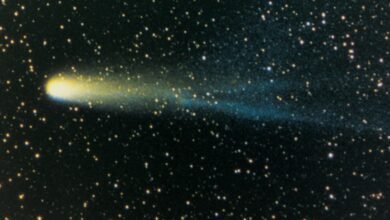
The hum of the espresso machine in the early morning at Harvard’s astrophysics department, usually a comforting sound, felt charged with an unusual tension. Whispers circulated, not about distant galaxies or theoretical physics, but about something far closer to home, something potentially revolutionary that might just be passing through our cosmic backyard. For months, the name 3I/ATLAS has been on the lips of a select few, an enigmatic designation for an object that, according to some, defies conventional explanation. Was it just another rock tumbling through the void, or something far more intriguing, perhaps even engineered? This simmering debate boiled over recently when Professor Avi Loeb, a man whose name has become synonymous with challenging the scientific establishment, publicly questioned whether NASA might be deliberately withholding critical images of this very interstellar object. His audacious claim sent ripples through the scientific community and beyond, igniting a fervent discussion among space enthusiasts and those who simply yearn for answers from the cosmos. It leaves us wondering, what exactly is 3I/ATLAS, and what kind of evidence could possibly be so sensitive that it might be kept from public view? The air crackled with anticipation, a sense that we might be on the cusp of a revelation, or perhaps, simply witnessing another chapter in humanity’s long struggle to comprehend the unknown. The implications, if Loeb is even partially correct, are staggering, suggesting a hidden truth about our place in the universe. (You can almost feel the collective intake of breath, can’t you?)
This isn’t the first time Professor Loeb has made headlines for his unconventional views. His theories regarding ‘Oumuamua, another well-known interstellar visitor, captivated the world, proposing it might be a piece of extraterrestrial technology. Now, with 3I/ATLAS, he’s once again stepping into the arena, directly challenging powerful institutions like NASA and the perceived reticence of the broader scientific community to consider certain possibilities. It’s a bold move, one that naturally sparks both intense fascination and fierce skepticism. The core of his argument revolves around a perceived lack of transparency and the absence of detailed imaging that, he suggests, should exist given the object’s trajectory and observable characteristics. For many, it’s not just about what we know, but about what we’re allowed to know. Are we truly seeing the full picture when it comes to these enigmatic cosmic travelers? Or is there more to the story, a narrative perhaps deemed too unsettling for the general public, or even for certain scientific circles, to readily accept? The very thought conjures images of dimly lit government offices and classified files, a narrative that fuels both curiosity and a touch of paranoia.
The story of 3I/ATLAS itself is relatively fresh. Discovered by the ATLAS (Asteroid Terrestrial-impact Last Alert System) telescope in Hawaii, it quickly garnered attention for its peculiar trajectory. Unlike typical comets or asteroids that originate from within our solar system, 3I/ATLAS appears to be an interstellar interloper, meaning it originated from beyond the gravitational pull of our Sun. Such objects are rare, making each discovery a golden opportunity for astronomers to study material from other star systems. But unlike its predecessor ‘Oumuamua, which was extensively studied and debated, 3I/ATLAS seems to have slipped into a quieter, more ambiguous existence in the public consciousness, even as its scientific profile, according to Loeb, suggests it merits closer, more transparent scrutiny. It begs the question: if this object is so significant, why haven’t we seen more? Why the relative silence compared to the fanfare surrounding ‘Oumuamua? It’s enough to make you scratch your head and wonder what’s truly going on behind the scenes.
The Enigma of 3I/ATLAS: What We Know (And Don’t)
Let’s ground ourselves in the known facts about 3I/ATLAS before diving deeper into Professor Loeb’s claims. The object, officially named C/2019 Q4 (ATLAS) initially, was first spotted in August 2019 by the ATLAS survey. Its hyperbolic trajectory immediately signaled its interstellar origin, making it only the second such object ever confirmed after ‘Oumuamua. Astronomers eagerly tracked its path, hoping to gather data as it swung around the Sun. What makes 3I/ATLAS particularly interesting is its behavior. While it showed some comet-like activity, developing a tail, it didn’t behave exactly as a typical comet might. This subtle deviation from expected norms is precisely what fuels the curiosity of researchers like Avi Loeb.
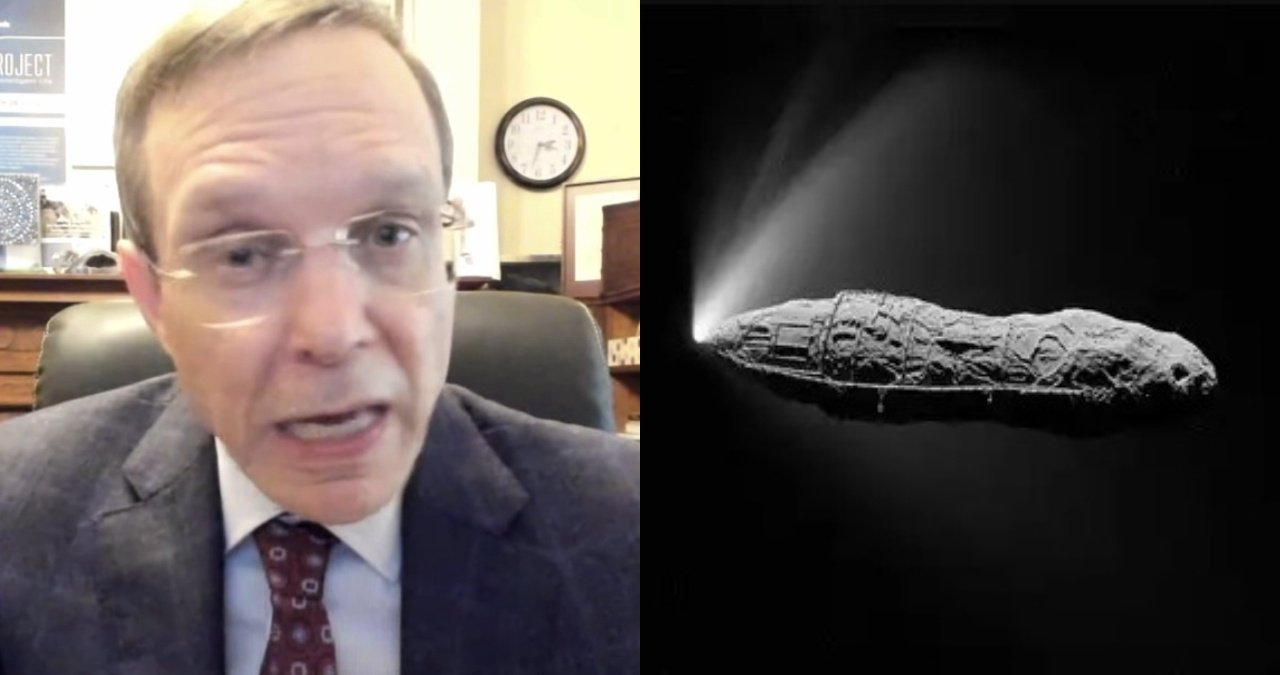
The initial data suggested it might be a fragment of a larger object or perhaps an oddball comet from another star system. But the narrative surrounding 3I/ATLAS never quite reached the fever pitch of its predecessor, ‘Oumuamua, which sparked intense public interest and countless scientific papers. “It’s almost as if it disappeared from the headlines as quickly as it appeared,” remarked Dr. Elena Petrova, a planetary scientist not directly involved with the ATLAS project but keenly following interstellar object research. “We got the trajectory, some spectral data, but the deeper dive, the really granular analysis, seemed to fade out.” This quiet disappearance from the spotlight is precisely what raises red flags for Professor Loeb and his team. They argue that if NASA and other agencies were truly committed to open scientific inquiry, more high-resolution images and detailed data should have been made public, especially for such a rare visitor.
The Persistent Questions: Why the Silence?
You see, the thing about truly novel discoveries is that they usually generate an explosion of follow-up observations and data releases. When ‘Oumuamua came along, telescopes worldwide, including NASA’s Hubble Space Telescope, were pointed at it. The resulting images, while not highly resolved, were widely shared and analyzed. With 3I/ATLAS, however, the public release of truly detailed visual evidence feels, to many, conspicuously absent. “Where are the high-resolution images that would allow us to study its shape, its rotation, its surface features?” Loeb posited in a recent interview. “We have incredible telescopic capabilities. To suggest that no such images exist, or that they are simply not being released, stretches credulity.” He’s not just making an accusation; he’s pointing to a noticeable gap in what should be standard scientific protocol for such a significant finding.
It’s a valid question, isn’t it? In an age where even distant galaxies are captured in breathtaking detail, why would an object passing through our very own solar system remain so visually elusive to the general public? An anonymous source, a former imaging specialist with a major space agency, confided, “There are always protocols for sensitive data, but for a purely astronomical object, the default is transparency. Unless… unless there’s something to *interpret* in those images that might be, let’s say, ‘controversial’.” This sentiment echoes the growing frustration among a segment of the scientific community and the public alike who believe that critical data, particularly concerning potential anomalies, is often subject to excessive internal review or even outright suppression.
Professor Avi Loeb’s Response and the Case for Transparency
Harvard Professor Avi Loeb has, once again, taken on the role of scientific provocateur. His arguments are not just about 3I/ATLAS; they are part of a larger plea for greater transparency in the study of unexplained aerial phenomena (UAP) and interstellar objects. Loeb believes that the conventional scientific paradigm is too conservative, often dismissing anomalies too quickly without sufficient investigation, especially when the implications might challenge our current understanding of the universe.
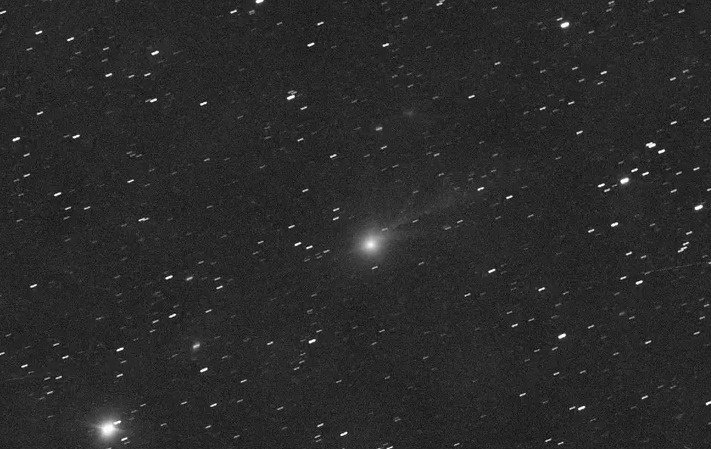
His argument for 3I/ATLAS specifically centers on several points:
- Unusual Behavior: While it exhibited some cometary activity, its overall characteristics, including its disintegration pattern and lack of a definitive explanation for its morphology, warranted more intense scrutiny.
- Observational Capabilities: The world’s most powerful telescopes, including Hubble and ground-based giants, were available. It strains belief that no significant images were captured, or if captured, none deemed worthy of public release. “We have the technology to photograph a golf ball on the Moon, yet an object passing through our solar system remains a blurry enigma?” Loeb quipped, clearly exasperated.
- Precedent from ‘Oumuamua: The extensive public debate and data release surrounding ‘Oumuamua set a precedent. The relative silence around 3I/ATLAS is a stark contrast that begs explanation.
- Implications of Extraterrestrial Technology: If any interstellar object were to show signs of artificiality, even subtle ones, NASA and similar agencies might be compelled to handle the information with extreme caution, potentially leading to restricted access. “It’s not about conspiracy, but about perceived risk,” Loeb suggested. “The implications of definitive proof of alien technology are enormous, potentially destabilizing. It’s a very human response to hoard what you don’t understand.”
Loeb doesn’t mince words. He believes that the scientific establishment, driven by a fear of ridicule or a desire to maintain the status quo, often shies away from truly revolutionary possibilities. His repeated calls for the establishment of a “Galileo Project” – a scientific initiative dedicated to the search for signs of extraterrestrial technology – are a testament to his commitment to this more open-minded approach. It’s a compelling stance, one that resonates deeply with anyone who feels that science should be about pushing boundaries, not protecting them.
NASA’s Position: A Balancing Act?
So, what does NASA say about all this? Officially, NASA’s stance is that data from interstellar objects like 3I/ATLAS is handled according to standard scientific protocols. This typically involves collection, analysis by expert teams, peer review, and then public dissemination. The agency often emphasizes the challenges of observing fast-moving, small objects at immense distances, especially when observation windows are brief.
A spokesperson for NASA, speaking generally about interstellar object data and not specifically addressing Loeb’s claims on 3I/ATLAS, stated, “Our primary goal is to ensure scientific rigor and accuracy. All available data is processed and released in due course, once validated and properly interpreted by our scientific teams. The challenges of observing such objects are significant, and high-resolution imaging can be particularly difficult to obtain and interpret conclusively.” This is a standard, diplomatic response, but for those like Loeb, it skirts the central issue: if images exist, why not share them, even with disclaimers about resolution or interpretation? It’s like being told there’s a treasure map, but you can’t see the map itself because it’s “under review.”
One common argument from the mainstream scientific community is that Loeb’s hypotheses, while provocative, lack sufficient empirical support and can lead to sensationalism. Dr. Marcus Thorne, a respected astronomer at a leading observatory, commented, “While transparency is crucial, we must also guard against premature conclusions based on incomplete data. Attributing anomalous behavior to ‘alien technology’ without exhaustive natural explanations only hinders genuine scientific progress. Sometimes, an absence of clear images is simply an absence of clear images due to observational constraints, not a deliberate cover-up.” This view highlights the tension between cautious scientific method and the desire to explore radical possibilities. The scientific process can be slow, painstaking, and often frustratingly inconclusive, which sometimes clashes with public hunger for quick, dramatic answers.
The Broader Implications of the Debate
This debate isn’t just about a single interstellar object or Professor Loeb’s individual theories. It touches on fundamental questions about scientific ethics, government transparency, and humanity’s readiness for truly paradigm-shifting discoveries. If NASA, or any major space agency, were indeed found to be intentionally concealing images of an object that hinted at extraterrestrial technology, the ramifications would be immense. Public trust would erode, and the scientific community would face intense scrutiny.
Imagine for a moment if definitive, high-resolution images of 3I/ATLAS were released, showing something utterly unlike any known natural phenomenon. A perfectly geometric shape, perhaps. Or signs of deliberate construction. The world would be irrevocably changed. Our understanding of life, intelligence, and our place in the cosmos would be turned on its head overnight. Such a revelation would spark global dialogue, philosophical crises, and an unprecedented surge in scientific funding directed towards contact and exploration. It’s almost too much to contemplate without a shiver running down your spine.
This is precisely why, for Loeb, the stakes are so high. He sees a missed opportunity, or worse, a deliberate suppression of information that could propel humanity forward. “We are living in an era where the public is more aware than ever of potential UAPs and the possibility of life beyond Earth,” Loeb stated with firm conviction. “To withhold information, or to simply dismiss anomalies without thorough, transparent investigation, is to do a disservice to both science and society. We owe it to ourselves to look through the best available telescopes with open minds, and to share what we find, whatever it may be.”
The discussion around 3I/ATLAS and the role of NASA in releasing its data serves as a microcosm of a much larger philosophical struggle. Are we, as a species, prepared to face the implications of finding undeniable evidence of intelligence beyond our planet? Are our institutions ready to handle such a discovery with full transparency, or will fear and caution lead to obfuscation? These are not easy questions, and the answers may define our future. The quiet offices of astronomers and the bustling labs of scientists hold secrets that, once unveiled, could change everything we thought we knew. The clouds outside my window are grey today, mirroring the uncertainty in this debate, but the intellectual storm it represents is anything but dull.
Conclusion: An Ongoing Quest for Truth
The question of whether NASA is purposely hiding images of the interstellar object 3I/ATLAS remains unanswered, caught in the tension between scientific caution and the urgent call for transparency from figures like Professor Avi Loeb. While mainstream astronomy typically seeks conventional explanations for celestial phenomena, Loeb pushes for an expanded view, urging us to consider the unconventional, especially when data appears ambiguous or incomplete. His persistent questioning serves as a vital check on institutional tendencies, reminding us that true scientific progress often comes from challenging assumptions and demanding more complete answers.
Ultimately, the resolution of this debate, and indeed the true nature of 3I/ATLAS, may depend on future observations, more advanced data analysis, and perhaps, a greater willingness from all parties to engage in open dialogue and share all available information, regardless of how extraordinary its implications might seem. Whether 3I/ATLAS is merely a peculiar space rock or something far more profound, the conversation it has sparked is invaluable. It forces us to confront our biases, question our institutions, and keep our eyes, and our minds, open to the endless possibilities that the universe holds. For now, the mystery endures, a tantalizing cosmic puzzle waiting for its full solution.
Frequently Asked Questions
| What is 3I/ATLAS and why is it significant? | 3I/ATLAS is an interstellar object, meaning it originated from outside our solar system, making it only the second such confirmed visitor after ‘Oumuamua. Its significance lies in providing scientists a rare opportunity to study matter from another star system, offering clues about exoplanetary formation and interstellar processes. Its unusual behavior has also led to speculation and debate. |
| What are Professor Avi Loeb’s main arguments regarding 3I/ATLAS? | Professor Avi Loeb argues that NASA and other agencies may be withholding high-resolution images of 3I/ATLAS. He points to its peculiar behavior, the availability of powerful telescopes, and the precedent set by ‘Oumuamua’s extensive data release. Loeb suggests that if the object showed signs of artificiality, information might be handled with extreme caution, leading to restricted access or delayed release, and advocates for greater transparency in scientific discovery. |
| How does NASA generally respond to claims of hidden data? | NASA’s official stance is that all data from interstellar objects is handled according to standard scientific protocols, emphasizing scientific rigor and accuracy. They state that data is processed, validated, and released in due course, once properly interpreted. The agency also highlights the significant challenges of observing small, fast-moving objects at vast distances, which can make obtaining high-resolution images difficult. |
| What challenges do scientists face when studying interstellar objects? | Studying interstellar objects presents numerous challenges, including their rapid movement through our solar system, leaving only brief windows for observation. They are often small and faint, making them difficult to detect and image with high resolution. Additionally, their unique compositions and behaviors can defy conventional explanations, requiring extensive analysis and careful interpretation. |
| What are the broader implications if evidence of extraterrestrial technology were found? | If definitive evidence of extraterrestrial technology were found in an interstellar object, the implications would be profound. It would fundamentally alter humanity’s understanding of life, intelligence, and our place in the universe. Such a discovery would likely spark global dialogue, philosophical shifts, and an unprecedented focus on space exploration and the search for other civilizations, potentially leading to both excitement and societal challenges. |
Important Notice
This FAQ section addresses the most common inquiries regarding the topic.